
Lieferung heute & morgen

Qualitätsgarantie

Willkommens-Angebote freischalten: KOSTENLOSE Lieferung | Bis zu 80 % RABATT | Kostenlose 30-Tage-JoyPlus-Testphase
App herunterladen
Storage shelving is designed to create order, but choosing the right unit requires careful thought. A shelf that looks sturdy in product photos may be too narrow in everyday use, difficult to assemble or unsuitable for the intended load. This is particularly important in small kitchens, larders, cellars and garages, where precise dimensions and load specifications matter more than decorative descriptions.
A specification such as “650 kg load capacity” often refers to the total static load under certain conditions. What matters is whether the load is evenly distributed, how many tiers are included and whether the floor is level. Heavy tools or crates of drinks should not automatically be placed on every shelf.
Look out for:
A narrow kitchen shelf may fit the available width but still block doors, drawers or walkways because of its depth. With a microwave stand, you also need to consider the appliance dimensions, ventilation and the position of power sockets. For a larder shelf, it is also useful to measure the height of bottles, jars and storage containers in advance.
Adjustable shelves, stackable elements and pull-out holders offer several ways to use a unit. However, they are only useful if the connections are sturdy and the maximum load is observed. In kitchen furniture, moisture, steam and cleaning products can put greater strain on materials and surfaces than in a dry living area.
Measure the intended space at three points: width, depth and height. Also take the following into account:
A multi-purpose shelf should not only fit well when empty, but also remain practical when used with boxes, baskets or appliances. In a small kitchen, compact tiers or a vertical kitchen shelf are often more practical than a wide freestanding unit.
A metal shelf with a steel frame is generally suitable for heavier loads than lightweight plastic solutions, provided the construction has been designed accordingly. MDF or engineered-wood shelves may be suitable for household items, but should be protected from prolonged exposure to moisture.
Depending on how they are used, the following options may be suitable for the kitchen:
If the shelf comes into contact with water, the surface should be easy to clean. A dish drying rack with a drainboard or water deflector prevents moisture from collecting on the worktop over time.
Check whether tools are required, whether the shelves are height-adjustable and whether clear instructions are included. A tip-over prevention feature is important for tall or heavily loaded shelving. The unit should stand on a level, load-bearing surface and be secured to the wall in accordance with the manufacturer's instructions.
For a pot lid holder or pull-out storage solution, non-slip feet, suitable dividers and a secure base are more important. Such systems should not be used as steps and must not be loaded beyond the stated weight limit.
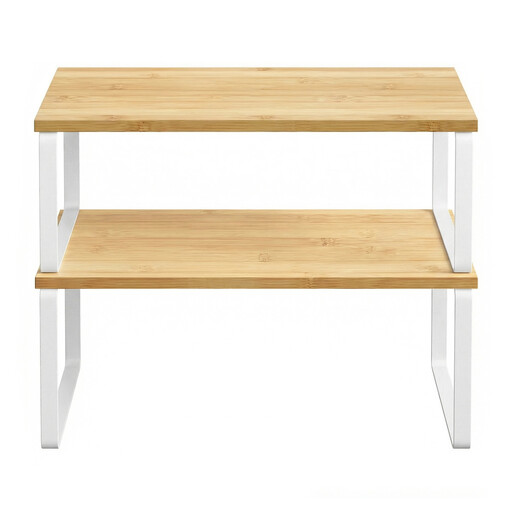
Why this product suits this profile: Two different-sized shelves can be stacked, placed side by side or used separately. Measuring 19,5 × 39,7 × 15,8 cm and 18,5 × 39,7 × 13,7 cm respectively, they are suitable for spices, tins, crockery or cookbooks.
The flexible arrangement reduces the risk of misjudging a fixed shelf width. The stated maximum static load is 15 kg per shelf.
Two separate elements, a metal and engineered-wood construction, and quick assembly with clear instructions.
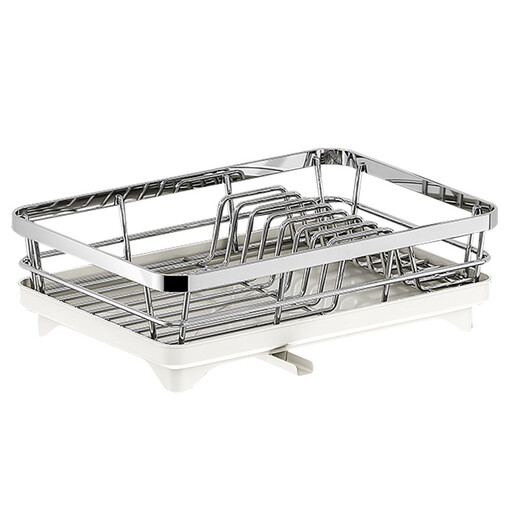
Why this product suits this profile: This dish drying rack is designed for the worktop beside the sink. Stainless steel and a PP tray make up the material combination, while a rotating water outlet directs moisture towards the sink or collection area.
The dimensions are clearly stated before purchase. The integrated drainboard addresses the common problem of water collecting on the kitchen worktop.
Stainless steel construction, integrated drainage and no need for fixed installation to the sink.
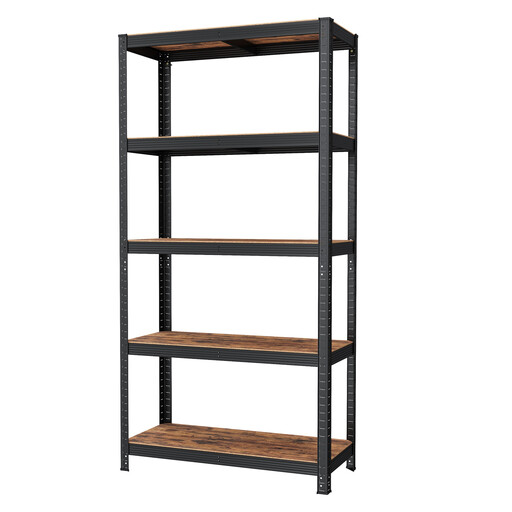
Why this product suits this profile: At 150 cm high, this five-tier shelf offers five adjustable levels for cellars, garages, workshops or larders. According to the product specifications, the static load capacity is 130 kg per tier and 650 kg in total.
The load capacity is specified separately for each tier and for the shelving unit as a whole. The included tip-over prevention feature highlights the need for wall mounting.
Steel frame, assembly requiring minimal tools and a divisible design that can be used as two units or a work surface.
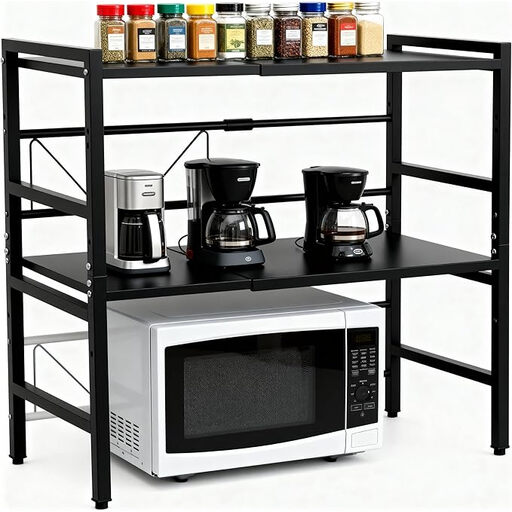
Why this product suits this profile: This microwave stand makes use of the space above the worktop. Its width can be adjusted from 40 to 60 cm, its total height is 78 cm and its stated load capacity is up to 36 kg.
The adjustable width allows it to fit different spaces. Before assembly, check the appliance weight, base area and ventilation clearances.
Adjustable shelves, removable hooks and a rust-resistant stainless steel construction according to the product description.
We have put together a complete, regularly updated list of products that fully meet these strict selection criteria and the safety regulations applicable in the EU.
First place the shelf on a level, load-bearing surface. Then attach the included tip-over prevention feature to a suitable wall in accordance with the instructions. Use wall plugs and screws suitable for the type of wall. Heavy items should preferably be placed on the lower tiers.
Its lifespan depends on the material, room conditions, assembly and load. A metal shelf in a dry environment may face different conditions from one beside the sink or in a damp garage. Regularly check screws, connecting joints, shelves, feet and any signs of rust. Do not exceed the load capacity specified by the manufacturer.
A standard storage shelf does not use electricity. Ongoing costs may arise from cleaning, replacement parts or subsequent wall mounting. With a microwave stand, however, it is the appliance placed on it—not the stand itself—that uses electricity. When choosing a product, you should therefore distinguish between additional storage space, material maintenance and assembly requirements.