
Lieferung heute & morgen

Qualitätsgarantie

Willkommens-Angebote freischalten: KOSTENLOSE Lieferung | Bis zu 80 % RABATT | Kostenlose 30-Tage-JoyPlus-Testphase
App herunterladen
Clutter often builds up not because you lack storage, but because your shelving doesn’t suit the space available or the weight of the items you want to store. A slim kitchen shelf may be ideal for spices but become unstable under heavy pans. A heavy-duty shelving unit, on the other hand, needs enough floor space and should be secured against tipping.
There are three common pitfalls to watch out for when buying storage shelving:
Before buying, consider where you’ll use the shelving, its dimensions, material, load capacity and fixing method together.
Measure more than just the width and height. Check the depth, door openings and distance from sockets or worktops too. A compact two-tier kitchen shelf could be a good choice for a small kitchen. A corner shelf makes use of a space that often goes unused with straight shelving.
For extendable designs, the adjustment range is important. The SRD 0175 Retractable Pantry Pot Organizer, for example, extends from 12 to 23 inches. This lets you adjust it to fit cupboards or worktops of different widths. Before ordering, compare the internal width of your space with the product dimensions.
The maximum load should be suitable for the heaviest items you plan to store. A pot and pan holder for individual kitchen items needs a different load capacity from a shelf for tools, provisions or bottles.
Look out for the following details:
According to the product details, the JOYFURNOS 5-Tier Steel Shelving Unit is designed for a static load of up to 120 kg per shelf and 600 kg in total. The included anti-tip kit should be secured to the wall before use. According to the description, this model isn’t intended for damp rooms.
In the kitchen, coated steel, stainless steel or moisture-resistant finishes are practical, as long as liquids aren’t left standing on the material for long periods. A kitchen organiser with non-slip feet can help protect worktops and reduce movement.
For garages and cellars, consider the room’s humidity as well as the load capacity. Galvanised steel or powder-coated finishes may be suitable for dry storage areas; always follow the manufacturer’s specific care and usage recommendations.
When choosing a wooden wall shelf, the fixings are particularly important. The wall material, bracket positions and permitted load all need to be suitable for one another. Don’t place heavy books, ceramics or bottles on a structure if its wall anchors aren’t designed to support them.
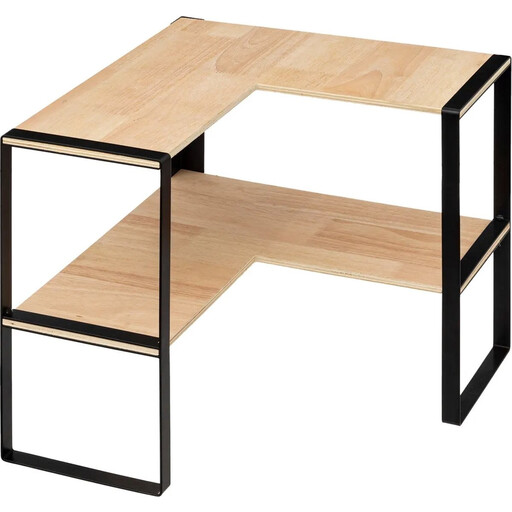
Why it suits this profile: This corner shelf is designed for small spaces on worktops, under the sink or inside cupboards, and measures 40 × 40 × 35 cm.
The fixed dimensions make it easy to check how much space you’ll need. Before buying, make sure the corner is actually clear and deep enough.
Two tiers, steel and plywood components, and versatile storage for spices, food containers or pans.
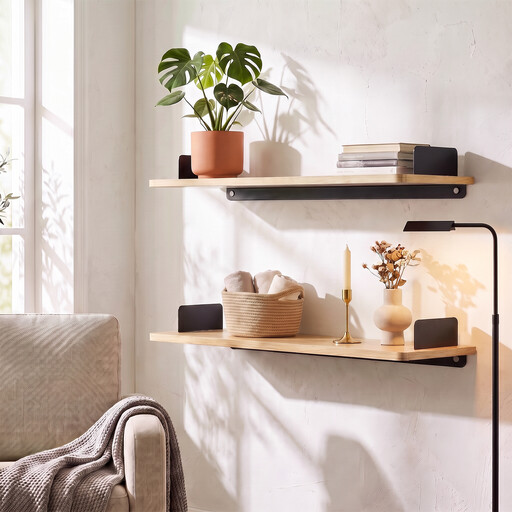
Why it suits this profile: This floating shelf combines a Rubberwood shelf with aluminium alloy fittings, making it suitable for living rooms, bathrooms, kitchens or offices.
The stated maximum load of 20 kg doesn’t replace a check of your wall. You’ll need suitable wall plugs and secure fixings.
Varnished finish, aluminium brackets and a stated load capacity of up to 20 kg.
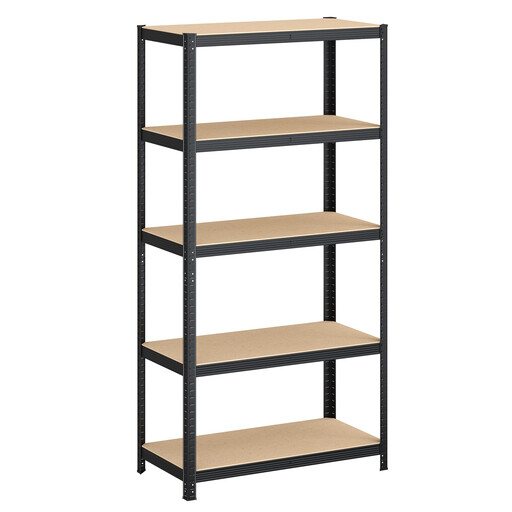
Why it suits this profile: Measuring 50 × 100 × 200 cm, this heavy-duty shelving unit has five tiers and adjustable shelves. It’s designed for garages, cellars, sheds or utility rooms.
The product details distinguish between 120 kg per shelf and a total load of 600 kg. Fit the anti-tip kit before use.
Galvanised steel frame, MDF shelves, tool-free assembly and adjustment in 5 cm increments.
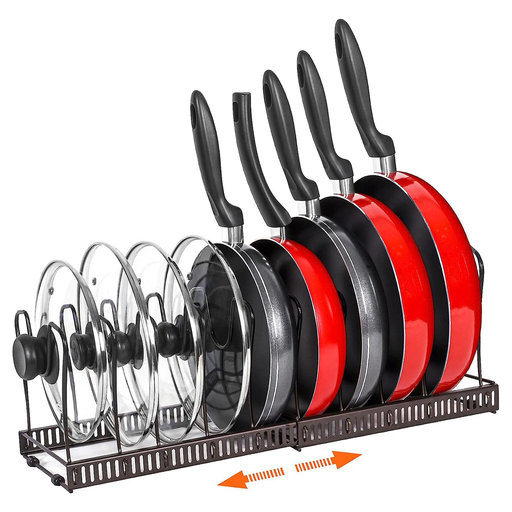
Why it suits this profile: Two pull-out organisers, each with ten adjustable dividers, keep pan lids, chopping boards, baking trays and cookware neatly arranged vertically.
The adjustable frame and dividers help you avoid buying a unit with fixed compartments that don’t fit your items. Place it on a level, stable surface.
304 stainless steel frame, ten adjustable dividers per rack and non-slip rubber feet; no tools are needed for assembly.
We’ve put together a comprehensive, regularly updated list of products that meet these strict selection criteria and fully comply with the safety regulations in force in the EU.
Store heavy items on the lower shelves. Tall or loaded shelving units should be secured to the wall with a suitable anti-tip device. Use wall plugs that are appropriate for the wall material and check the fixings regularly.
Its lifespan depends on the material, load, humidity, assembly and care. Distributing the load evenly, keeping the shelving in a dry place and staying within the stated load capacity can help it last longer. Check damaged screws, shelves or finishes as soon as possible.
A shelving unit normally has no ongoing energy costs. However, you may need to budget for wall fixings, spare parts, corrosion protection or replacing damaged components. When choosing a unit, it’s worth checking what’s included, the care instructions and what’s needed for assembly.