
Lieferung heute & morgen

Qualitätsgarantie

Willkommens-Angebote freischalten: KOSTENLOSE Lieferung | Bis zu 80 % RABATT | Kostenlose 30-Tage-JoyPlus-Testphase
App herunterladen
A storage shelving unit should help you stay organised, take up as little space as possible and suit the room it’s in. Whether you need a kitchen shelf for spices, a wall shelf for the hallway, a freestanding bookcase or display shelving for collectibles, product images can give you a useful first impression, but they don’t tell you everything about how practical a unit will be day to day.
Three common buying mistakes are particularly likely to lead to the wrong choice:
Measure not only the available wall or floor space, but also allow for skirting boards, doors and nearby furniture. For a small shelving unit in the bathroom, bedroom or home office, depth and shelf height are particularly important.
A 2-tier shelf is suitable for smaller items such as spice jars, cosmetics or decorative bowls. For books and larger home accessories, a taller bookcase with several shelves is a better choice. A corner shelf makes use of room corners, but needs the right shape and enough clearance from adjoining walls.
Be sure to distinguish between:
A metal and wood shelving unit often combines a steel or iron frame with MDF, chipboard, plywood or solid wood. Metal can make the frame sturdier, while engineered wood offers a consistent finish and lower weight.
When choosing a unit, consider the following:
Specific material details are more useful than general design descriptions. Check whether the manufacturer lists materials such as steel, cast iron, plywood, MDF or chipboard.
A freestanding shelving unit should be placed on a level surface. It’s best to put heavier items on the lower shelves. Tip-over protection is important, especially in households with children or pets. For wall shelves, the fixings must be suitable for the type of wall: plasterboard, concrete and brick all have different requirements.
A stated load capacity makes it easier to judge what a shelving unit can hold. For example, the 5five Blackwood 2-Tier Shelf Kitchen Shelf has a stated total load capacity of 10 kg, or 5 kg per shelf. These limits should not be exceeded. If no load capacity is given, take care when storing heavy books, ceramics or food storage containers.
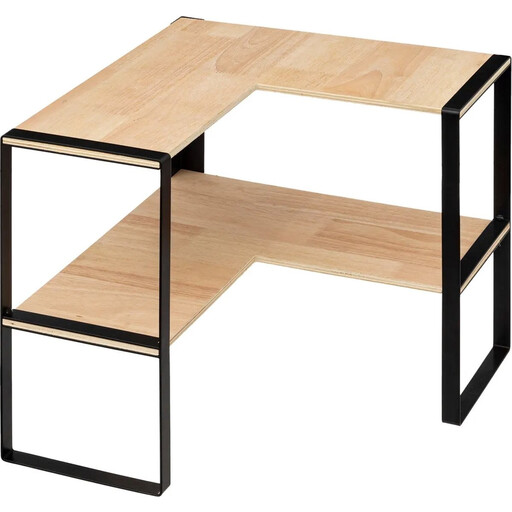
Why this product suits this type of user: Measuring 40 × 40 × 35 cm, this compact corner unit is designed for worktops, cupboards or the space under the sink. Its two tiers provide extra room for spices, containers or pans.
The precise overall dimensions and clearly stated two-tier layout make it easier to plan for smaller spaces.
Steel and plywood; designed for self-assembly; product-listed weight of 2.26 kg.
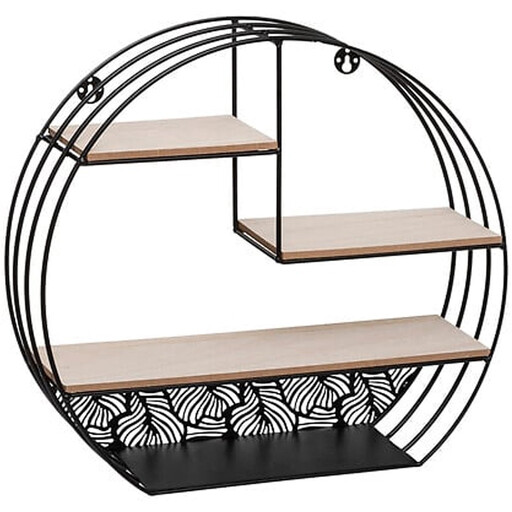
Why this product suits this type of user: Measuring 39.3 × 10.5 × 36 cm, this wall shelf makes use of the space above a desk, in a hallway or in a bedroom. Black metal details and wooden surfaces complement modern, minimalist and industrial-style interiors.
Its shallow depth is clearly stated, helping to avoid choosing a shelf that looks large but isn’t suitable for narrow spaces.
Metal construction according to the product description; slim design; designed for wall mounting.
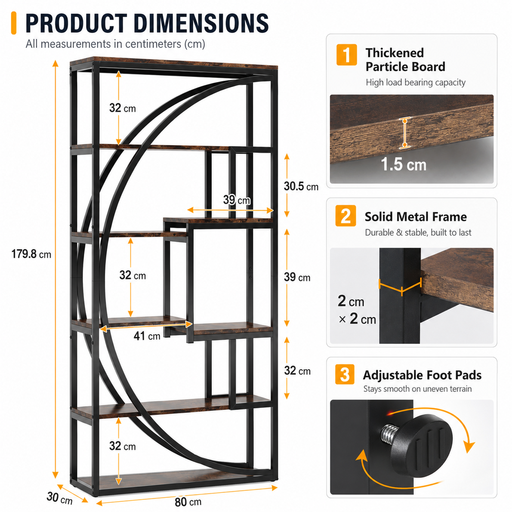
Why this product suits this type of user: Measuring 80 × 30 × 179.8 cm, this tall freestanding shelving unit makes use of vertical space in the living room, office, bedroom or shop. Its eight open compartments are suitable for books, decorations and displaying products.
The number of tiers and open compartments, as well as the height, are all clearly specified. This makes it easier to compare the actual storage space with your needs.
Chipboard with a black metal frame; five tiers and eight open compartments; assembly fittings and instructions are included according to the product information.
We’ve put together a comprehensive, regularly updated list of products that meet these strict selection criteria and fully comply with the safety regulations applicable in the EU.
For the kitchen, a kitchen shelf with a wipe-clean surface and clearly defined shelves is a practical choice. A compact corner unit can free up worktop space. In the living room, an open bookcase or a display and storage shelf works well if you want to keep items visible.
In a home office, the depth should suit your monitor, folders and desk. Tiered display units are a good choice for cosmetics, perfume or collectibles. Retailers and exhibitors should also check whether customers can access the shelving and whether the compartments can accommodate the products they intend to display.
Place a freestanding shelving unit on a level surface and put heavier items on the lower shelves. For tall or narrow furniture, additional wall fixings are recommended. Use wall plugs and screws suited to the wall material, and follow the assembly instructions.
Its lifespan depends on the material, load, moisture, assembly and care. Don’t exceed the stated load capacity, and avoid standing water and heavy impacts. Engineered wood should be cleaned regularly with a dry or only slightly damp cloth.
A shelving unit doesn’t use electricity in normal day-to-day use, so there are no ongoing electricity costs. However, you may need to pay for assembly fittings, additional tip-over restraints or replacement shelves if any are damaged. Choosing the right size and not overloading it can help you avoid having to buy replacements later.