
Lieferung heute & morgen

Qualitätsgarantie

Willkommens-Angebote freischalten: KOSTENLOSE Lieferung | Bis zu 80 % RABATT | Kostenlose 30-Tage-JoyPlus-Testphase
App herunterladen
A storage shelving unit can help you stay organised, but the wrong choice can quickly take up extra space. Common buying mistakes aren’t just about price. They often stem from unclear load ratings, unsuitable dimensions or an assembly method that doesn’t suit the way you plan to use the unit every day.
Before you buy, check how much weight you actually need to store, whether the shelving will fit in the space available and whether it needs to be fixed to a wall. Different options suit different locations: a heavy-duty shelving unit for the garage, a compact freestanding unit for a utility room, a cellar shelving unit for supplies or a wall shelf for decorative items and smaller belongings.
A high total load capacity can sound impressive at first. What matters, though, is how that figure is made up. For example, a unit with five shelves and a total load capacity of 875 kg might be rated to hold a maximum of 175 kg per shelf. These ratings usually apply to static loads – that is, evenly distributed weight when the unit is stationary.
So don’t automatically load toolboxes, paint tins or drinks crates up to the stated limit. Also check that the weight is evenly distributed and that the unit is standing on a level surface.
A shelving unit with adjustable shelves is particularly useful for storing items of different heights. Check that the unit is designed to allow the shelves to be repositioned and that you can move them without having to take the whole thing apart. Fixed shelf heights often leave valuable storage space unused.
A metal shelving unit isn’t automatically tip-proof. Stability also depends on the frame design, footprint, floor surface and whether the unit can be fixed to a wall. An anti-tip kit is particularly important for tall shelving or unevenly distributed loads. Check the assembly instructions and fixings supplied before you start putting the unit together.
Start by working out the weight of the items you plan to keep on the shelves permanently. For a storage shelving unit in a garage or workshop, this might include tools, spare parts, machinery and supplies. In a cellar, jars of food or drinks crates can create a high point load or distributed load.
Important details to check include:
A shelving unit’s load capacity shouldn’t be seen as an invitation to use the full stated limit. Leaving a sensible safety margin is a good idea for everyday use.
Measure more than just the available wall width. Check the depth, ceiling height, doorways and clearance for moving around. A shelving unit that’s 40 cm deep can offer plenty of storage in a garage, but you’ll need enough room to open doors or put down vehicle accessories.
Narrower options are often a good fit for smaller rooms. A freestanding shelving unit can be positioned where you need it, while a wall shelf frees up floor space. For tall models, also check that there’s enough ceiling height and that you can install the unit safely.
Powder-coated steel shelving is often designed for use in dry indoor spaces. In damp cellars, unheated garages or sheds, check the manufacturer’s guidance on suitable conditions. Shelves made from engineered wood, such as MDF, may be more sensitive to prolonged damp than the metal frame.
The assembly system matters too:
The selection below groups the models according to different requirements. The dimensions, materials and load ratings listed are based on the product information provided.
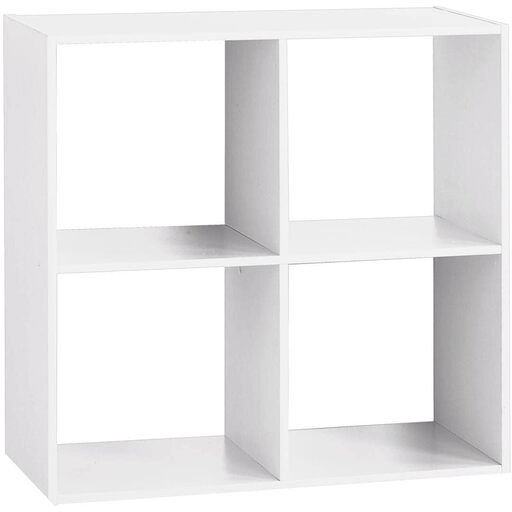
Why this product suits these needs: Its compact design, measuring 67.6 × 32 × 67.6 cm, makes it a good fit for living spaces, smaller utility rooms or straightforward storage where floor space is limited.
The clearly stated dimensions make it easier to plan your space. The unit is designed to be wall-mounted, so be sure to follow the instructions to prevent it from tipping over.
Four storage levels, a painted finish and self-assembly for home use.
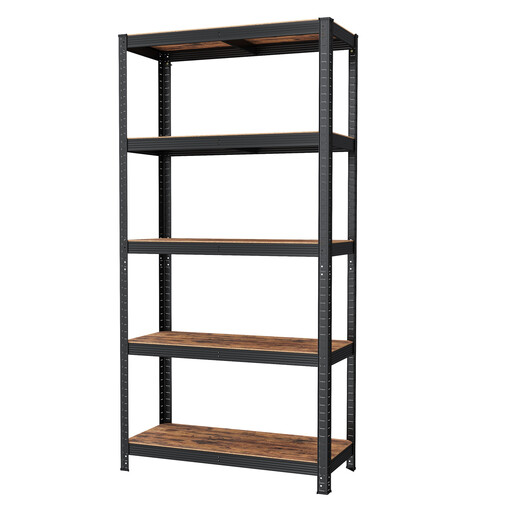
Why this product suits these needs: This heavy-duty shelving unit, measuring 90 × 40 × 180 cm, is designed for a garage, workshop or utility room. It has five levels and a stated total load capacity of 875 kg under static load conditions.
The specifications state both 175 kg per shelf and 875 kg in total. The anti-tip kit supplied helps improve stability, but it’s no substitute for correct wall mounting.
Powder-coated steel frame, adjustable shelves and the option to split the unit into two separate sections.
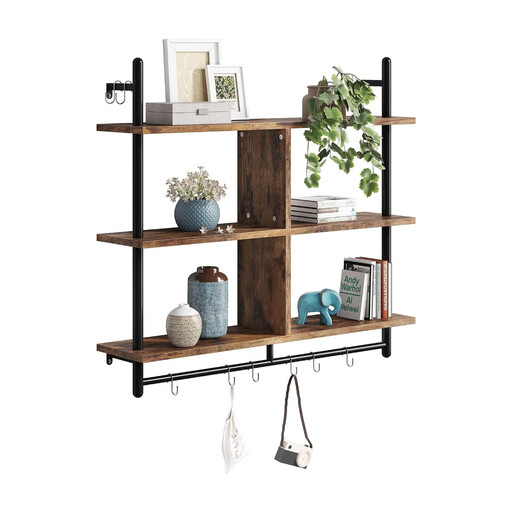
Why this product suits these needs: This three-tier wall-mounted shelving unit suits a living room, kitchen, balcony or smaller storage area where you want to keep the floor clear.
This unit is specifically designed for wall mounting. Its load capacity therefore depends largely on the wall type, wall plugs and correct installation.
Three storage surfaces, a metal tube frame, wooden shelves and a width of 105 cm for storage and display.
We’ve put together a complete, regularly updated list of products that meet these strict selection criteria and the safety regulations in force in the EU.
Place a cellar shelving unit or workshop shelving unit on a level, load-bearing surface. Put heavy items on the lower shelves wherever possible. This keeps the centre of gravity low and makes the unit safer to use.
When fixing the unit to a wall, take the wall material into account and use suitable wall plugs. Don’t rely solely on the fixings supplied if they aren’t suitable for your wall. After assembly, check the following:
Dust and light dirt can usually be wiped away with a dry or slightly damp cloth. If the unit gets wet, make sure the metal parts and engineered-wood shelves dry completely afterwards.
It depends on what you’ll use it for. A lower load capacity may be enough for decorations, books or lightweight household items. For tools, supplies or machinery, the load capacity per shelf is key. Always check whether the manufacturer’s rating applies to an evenly distributed static load.
Wall mounting is an important safety measure for tall, narrow or heavily loaded shelving units. If children or pets can access the area, use the anti-tip kit specified by the manufacturer and follow the instructions.
Check the manufacturer’s guidance on the conditions the unit is designed for. A metal frame may be suitable for dry indoor spaces, while MDF or other engineered-wood shelves may be more sensitive to prolonged damp. In damp rooms, good ventilation, a dry location and regular checks for changes to the materials are important.