
Lieferung heute & morgen

Qualitätsgarantie

Willkommens-Angebote freischalten: KOSTENLOSE Lieferung | Bis zu 80 % RABATT | Kostenlose 30-Tage-JoyPlus-Testphase
App herunterladen
A storage shelving unit should help you stay organised without becoming a space problem itself. In small flats, hallways, kitchens and cellars, the number of shelves is only one consideration. Dimensions, load capacity, assembly and intended use all affect how practical a shelving unit will be day to day.
Many purchasing decisions fall into three common traps:
Check these points before you buy and you’ll find it easier to choose a storage shelving unit that suits both your space and your belongings.
Measure the space you have in mind, including skirting boards, doors and areas you need to keep clear. Narrow models are often a good fit for hallways, while a shelving unit for a cellar or garage may need to be deeper and have a higher load capacity.
Don’t just check the overall dimensions. Also consider:
A shelving unit with several shelves makes better use of a room’s height. For low cupboards or worktops, a two-tier kitchen shelf may be enough.
For metal shelving units, the load capacity is often stated per shelf as well as for the unit as a whole. These figures generally apply to static loads – items resting undisturbed on the shelving unit. Actual stability may differ if you move it, load it unevenly or place it on an uneven floor.
For example, according to the product specifications, the JOYFURNOS steel shelving unit has a maximum static load capacity of 130 kg per shelf and 650 kg in total. The shelves are height-adjustable, and the unit can be divided into two separate sections. The included anti-tip kit is designed to help you use it safely.
Lighter organisers for household items, shoes or spices need a much lower load capacity. The two-tier 5five Blackwood kitchen shelf has a stated maximum total load capacity of 10 kg, or 5 kg per shelf. That’s suitable for spice jars, smaller storage containers or books, but not heavy toolboxes.
Choose a material that suits where you plan to use the shelving unit:
Also check whether you’ll need tools, whether the unit is designed to be secured to a wall and whether the assembly instructions are clear. If you have children or pets, always check that tall or narrow furniture is stable and secure it if needed.
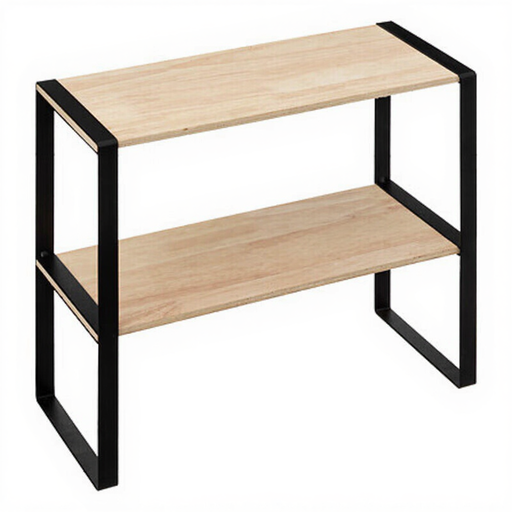
Why this product suits this profile: This compact two-tier kitchen shelf is ideal for smaller worktops, bedside tables or offices. It takes up relatively little space and can hold books, plants or kitchen utensils.
The stated dimensions and total load capacity of 10 kg help you work out whether it’s right for your needs before you buy.
Two shelves, a length of 40 cm and a wood-based material and metal construction; designed for self-assembly.
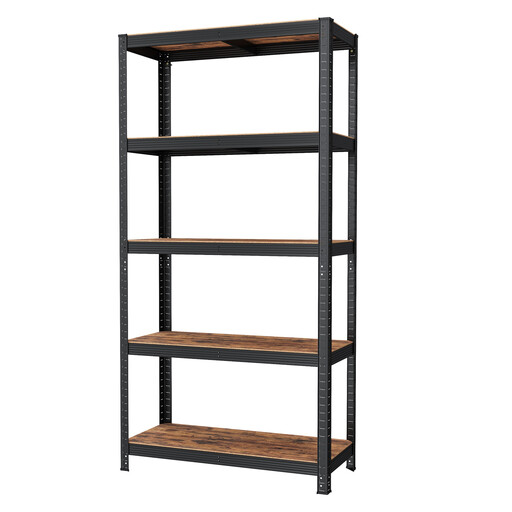
Why this product suits this profile: For cellars, garages, utility rooms or workshops, this metal shelving unit offers five adjustable shelves and a stated total load capacity of 650 kg.
Load capacity is stated both per shelf and for the unit as a whole. The included anti-tip kit also helps address the stability of a tall shelving unit.
Steel frame, height-adjustable shelves, tool-free assembly and the option to split it into two separate sections.
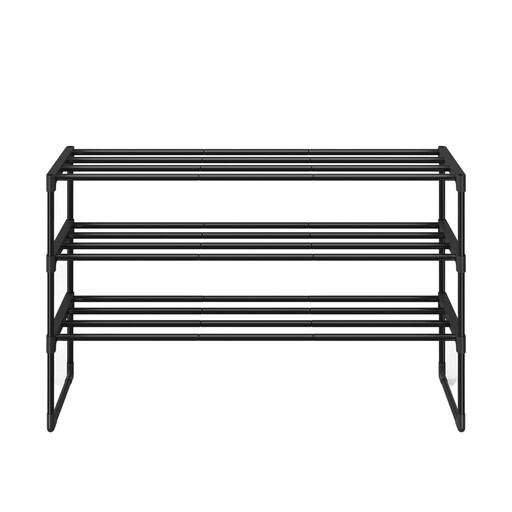
Why this product suits this profile: This slim shoe rack is designed for hallways, wardrobes or living spaces. It has three shelves and, according to the product details, can hold around 16 to 20 pairs of shoes.
Its compact depth of 30 cm and stated load capacity of 10 kg per shelf help you avoid buying the wrong size or overloading it.
Metal tubes, tool-free assembly and versatile use: you can position this model upright, upside down or stacked.
We’ve put together a complete, regularly updated list of products that meet these strict selection criteria and the safety regulations in force in the EU.
Assemble the shelving unit on a level, load-bearing surface and follow the instructions provided. Place heavy items on the lower shelves. For tall, narrow or stackable models, use the wall fixing provided for this purpose. Never use a shelving unit to climb on.
Its lifespan depends on the material, load, moisture and assembly. Protect a metal shelving unit in a cellar or garage from prolonged exposure to water. Wood-based materials can warp in damp conditions. Check the connections and fixings regularly, and don’t exceed the stated load capacity.
The price depends on factors such as the material, size, number of shelves, load capacity and accessories. A small kitchen shelf may be enough for lighter items, while a sturdy metal shelving unit for tools or supplies requires more materials and a more robust construction. So compare more than just the purchase price: consider the usable shelf space, assembly required and intended use too.