
Lieferung heute & morgen

Qualitätsgarantie

Willkommens-Angebote freischalten: KOSTENLOSE Lieferung | Bis zu 80 % RABATT | Kostenlose 30-Tage-JoyPlus-Testphase
App herunterladen
A storage bench combines a seat with a handy storage solution. It can hold blankets in the living room, serve as a bench at the end of the bed or provide extra storage in the hallway. With folding models in particular, it’s worth taking a closer look at the construction, dimensions and load limits. Attractive upholstery alone doesn’t tell you how well a bench will stand up to everyday use.
Figures such as 300 kg load capacity often refer to the maximum static load. This doesn’t automatically mean that the storage bench is suitable for standing on, jumping on or withstanding dynamic loads. How evenly the weight is distributed also matters.
With a folding bench, the lid should be fully in place before anyone sits down. Always follow the manufacturer’s instructions for use. A storage bench is generally intended for sitting, resting your feet or placing items on – not as a step ladder.
A storage bench around 110 cm wide may look spacious from the outside. Inside, the base, side panels and any divider can reduce the usable volume. If you plan to store bedding or blankets, check the internal dimensions and actual capacity.
Oversized items can also be a problem if they warp the lid or stop it from closing. A storage box with a seat may be enough for smaller everyday items, while a longer model with a divided interior is more practical for bulky textiles.
A foldable storage bench saves space when you’re not using it. However, it needs to be assembled correctly before its first use. Many models have a base panel that fits inside to stabilise the frame. The bench should only be used as intended once this is in place.
A folding design is useful in rented homes, guest rooms or for seasonal use. If you plan to use the bench every day, also check the stability of the lid support, the quality of the stitching and how firmly it stands.
The exterior dimensions need to fit your walkways and the gaps between your furniture. For example, a model measuring 38 × 110 × 38 cm could work as a bench at the foot of the bed, a hallway bench or a long upholstered bench in front of a window. Its 38 cm depth takes up relatively little space, but you’ll still need to make sure the lid can open fully.
In the hallway, make sure it won’t block doors, drawers or walkways. A smaller ottoman or a footstool with storage may be a better fit in a compact space.
Check the maximum static load, the frame material and how the lid is made. The JOYFURNOS models mentioned here use MDF panels for their load-bearing structure. Metal reinforcements at the lid corners can provide extra support.
The stated 300 kg should be understood as the manufacturer’s figure for the maximum static load. It doesn’t replace proper use, nor does it mean the bench has been load-tested for every possible situation.
An upholstered bench in the bedroom or living room will be touched and used regularly. A linen-look cover can complement a range of interior styles. If you have children or pets, it’s also worth considering how easy the cover is to clean and how delicate it is.
Velvet or corduroy covers, such as the one on the Beliani model, create a different look from linen-effect fabric and can make an attractive accent piece. Alongside the design, consider the seat height, padding thickness and the manufacturer’s care instructions.
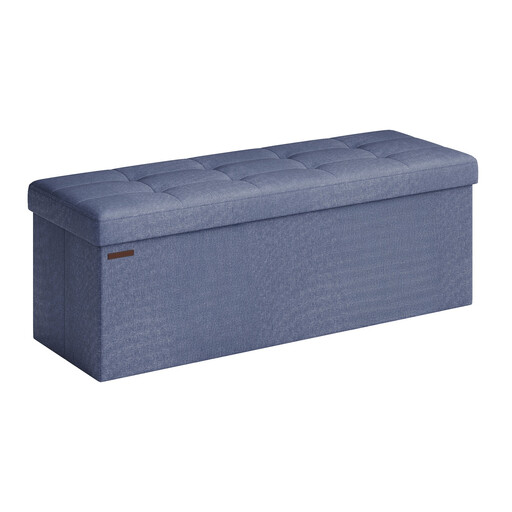
Why this product suits this profile: This bench offers a generous seating and storage surface in a foldable design. You can fold it away when needed, and use it in the living room, bedroom or hallway.
The product details list the external dimensions, material, maximum static load of 300 kg and foldable design. This makes it easier to assess how much space it will take up and how you can use it before buying.
38 × 110 × 38 cm, MDF construction, linen-look finish and removable divider, according to the product description.
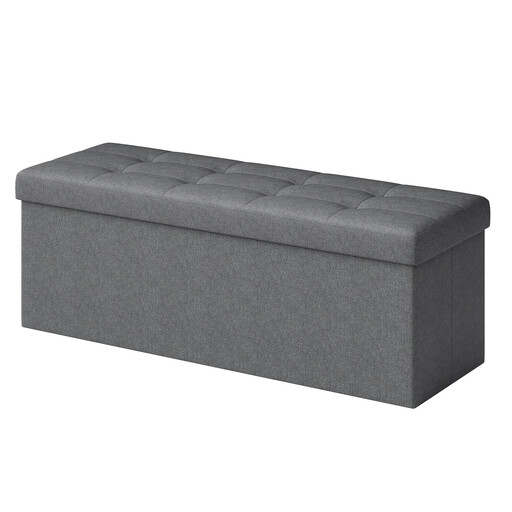
Why this product suits this profile: The linen-look finish, quilted design, MDF panels and metal reinforcements will appeal to buyers who pay close attention to materials and construction.
As well as the load capacity, the product details state its 131 l volume and combination of materials. This makes it easier to compare the bench with your storage needs objectively.
131 l of storage, a maximum static load of 300 kg and foldable construction, according to the product details.
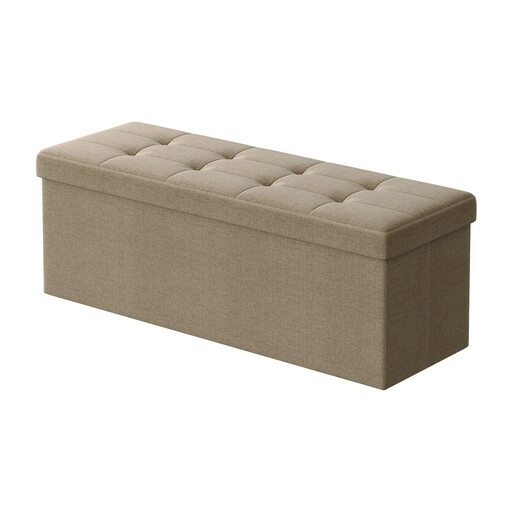
Why this product suits this profile: Use this model as a bench at the end of the bed, a footstool with storage or a handy surface in the hallway. Its foldable design is useful for households where space needs change.
The instructions explicitly state that the lid must be fully in place and warn against storing oversized items. This helps reduce the risk of incorrect use when the bench is used frequently.
Can be used as a bench, storage box or coffee table; maximum static load of 300 kg and weight of 8.8 kg, according to the product description.
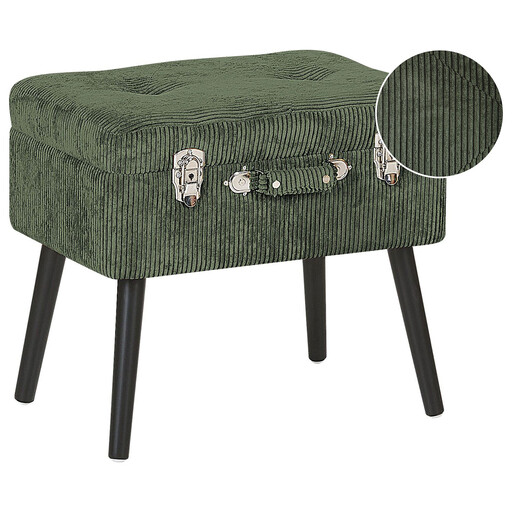
Why this product suits this profile: Its compact shape works as a storage ottoman, bedside table or footrest in smaller rooms. This model is designed to store smaller items.
The product details state the dimensions (52 × 36 × 46 cm), maximum load of 150 kg and that the legs need to be assembled. This makes the limits of its intended use clearer.
Corduroy cover, storage space, magnetic fastenings and maximum load of 150 kg, according to the supplier.
We’ve put together a comprehensive, regularly updated list of products that meet these strict selection criteria and fully comply with the safety regulations in force in the EU.
It depends on the size of the textiles and how they’re folded. A model with a stated volume of 131 l may be suitable for blankets, cushions or bedding. Also check the internal height and opening width, as not every large item of bedding will fit through the opening easily.
Foldable models are usually designed for quick assembly. You’ll often just need to unfold the frame and fit the base panel. Before using the bench for the first time, make sure all the parts are fitted correctly and the bench is fully assembled. Models with legs may require an additional assembly step.
There’s no one-size-fits-all answer. Lifespan depends on how often the bench is used, the load placed on it, the surface it stands on, exposure to moisture and how well it’s cared for. Choosing the right size, staying within the static load limit and using the bench as intended can help reduce wear on the frame and cover.