
Lieferung heute & morgen

Qualitätsgarantie

Willkommens-Angebote freischalten: KOSTENLOSE Lieferung | Bis zu 80 % RABATT | Kostenlose 30-Tage-JoyPlus-Testphase
App herunterladen
A storage shelf can create extra space, but it is only practical if its dimensions, load capacity and installation method suit the room. Particularly in small homes, inaccurate product details, a lack of anti-tip protection or unsuitable materials can quickly lead to the wrong purchase. Before buying, you should therefore consider not only the appearance and price, but also the actual requirements of how and where it will be used.
A shelf measuring 40 cm wide does not necessarily need only 40 cm of space. Skirting boards, door openings, sockets and the distance to the next piece of furniture can reduce the usable area. With a tall freestanding shelf, you should also check whether the ceiling height, skirting boards and sloping ceilings have been taken into account.
Compact models or a narrow shelf are suitable for slim alcoves. A wall shelf does not require any floor space, but it must be secured to a suitable wall. The available mounting surface and the right fixings are therefore crucial.
Descriptions such as “stable” or “suitable for lots of items” are no substitute for a specific weight limit. Books, storage jars and small electrical appliances are considerably heavier than decorations or lightweight baskets. It is important to check whether the maximum load applies per shelf or to the furniture as a whole.
When arranging the shelf, heavy items should be placed as low down as possible. The weight should be distributed evenly to prevent the shelves from bending and the unit from tipping forwards.
A freestanding shelf can be placed flexibly, but taller models often require anti-tip protection. A ladder shelf with a narrow footprint makes use of vertical space, but it should also stand securely on a level floor. Wall-mounted models, on the other hand, require proper fixing.
The surrounding environment also matters: wood-based materials and coated surfaces should not be exposed to high humidity or direct contact with water for prolonged periods. For a bathroom or kitchen, a dry location with adequate ventilation is advisable.
Measure the following before placing your order:
Larger shelf heights are useful for a living room shelf or a bookcase. A kitchen shelf, however, should accommodate storage containers, spice jars or kitchen utensils. A corner shelf can fill unused corners, but is often less flexible than a straight model.
Storage shelves are commonly made from metal, solid wood, MDF or coated wood-based materials. Metal frames can create a clean industrial look. MDF or chipboard with a decorative finish is usually easy to maintain, but should be protected from moisture. With an industrial shelf made from metal and wood, it is worth checking the connection points, coating and rear supports.
For many surfaces, a soft, dry or slightly damp cloth is all that is needed for cleaning. Abrasive cleaning products can damage coatings and decorative finishes.
Look for:
A tall shelf should always be secured against tipping, particularly in homes with children or pets. The manufacturer’s instructions are the definitive guide. Keep small assembly parts out of children’s reach.
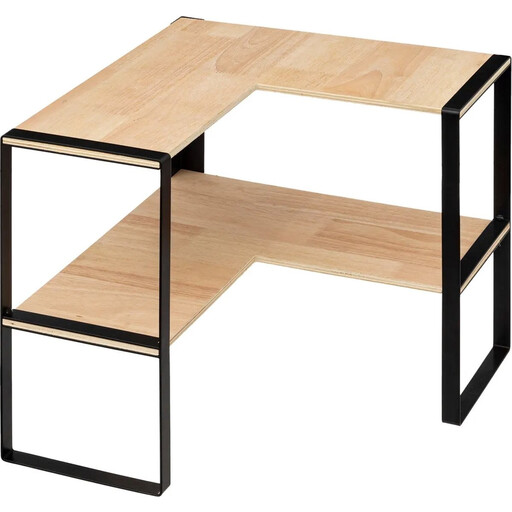
Why this product suits this profile: This compact corner unit measures 40 × 40 × 35 cm and is suitable for worktops, cupboards or the space beneath the sink. Two shelves provide room for spices, storage containers or frying pans.
The clearly stated external dimensions make it easier to plan for small spaces. The intended self-assembly allows the unit to be adapted to the specific location.
Steel and plywood construction, two shelves, and use as a corner organiser for the kitchen or cupboard.
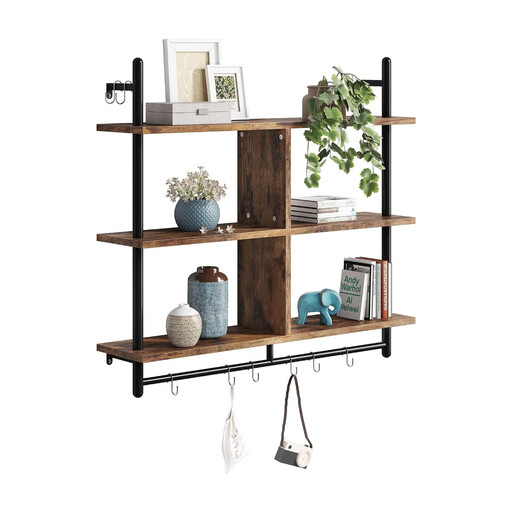
Why this product suits this profile: This wall-mounted shelf with three tiers measures 105 × 23.8 × 94 cm. Metal tubes and wooden shelves combine open display with vertical use of the wall space.
The required wall mounting makes the fixing requirements clear. When installed correctly, it can reduce the risk of tipping associated with a tall freestanding shelf.
Three shelves, a product weight of 11 kg, and a combination of metal frame and wooden shelves.
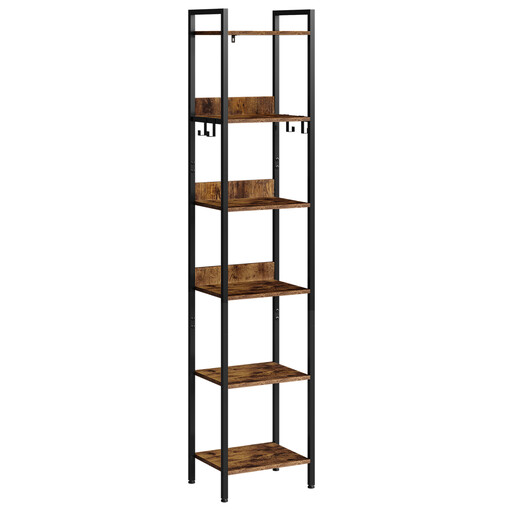
Why this product suits this profile: Measuring 40 × 30 × 187 cm, this tall ladder shelf makes use of narrow spaces. Six open shelves and four movable, removable hooks make it suitable for the kitchen, bathroom, bedroom or living room.
The stated load limit of 10 kg per shelf, adjustable feet and supplied anti-tip protection provide clear guidance instead of an vague claim about stability.
Six shelves, four hooks, rear supports, adjustable foot pads and a narrow footprint of 30 × 40 cm.
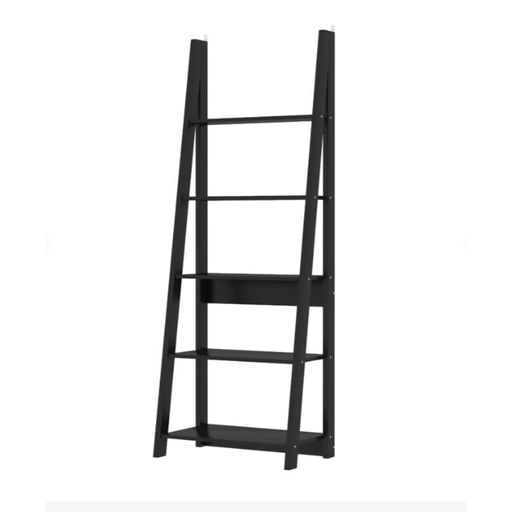
Why this product suits this profile: This open ladder shelf is 64.5 cm wide, 39 cm deep and 175.5 cm high. It can hold books, plants and decorative items in the living room, bedroom or home office.
The dimensions show before purchase that, although the model is narrow, it is relatively tall. Assembly requires two people and a screwdriver.
Multi-level open shelves, black oak-effect finish and a vertical design for living and working spaces.
We have put together a complete, regularly updated list of products that fully meet these strict selection criteria and the safety regulations applicable in the EU.
First place the shelf on a level, load-bearing floor and adjust it so that it is straight. Use the specified anti-tip device and choose wall plugs suitable for the wall material. With a wall shelf, all fixing points must be used in accordance with the assembly instructions.
Its lifespan depends on the material, installation, humidity and load. Evenly distributing the weight, cleaning with a dry cloth and observing the maximum load can help maintain its usability. Any visible deformation, loose connections or damaged surfaces should be inspected promptly.
The price depends, among other things, on the size, material, number of tiers, installation method and additional features such as hooks or anti-tip protection. Do not compare the purchase price alone; check what is included in the delivery as well. If fixings are missing or additional tools need to be purchased, extra costs may arise.