
Lieferung heute & morgen

Qualitätsgarantie

Willkommens-Angebote freischalten: KOSTENLOSE Lieferung | Bis zu 80 % RABATT | Kostenlose 30-Tage-JoyPlus-Testphase
App herunterladen
By Joybuy Product Recommendation Officer, July 28, 2026
For many, the aroma of freshly brewed coffee from a classic stovetop espresso maker is the epitome of the Italian way of life. The characteristic gurgle on the stove and the subsequent ritual of pouring have a special charm. However, when purchasing such a stovetop pot, often called a moka pot, there are several pitfalls that can quickly spoil your coffee enjoyment. Before you make a decision, you should know the most common mistakes to avoid a bad investment.
This guide will help you navigate these pitfalls and find the perfect stovetop espresso maker for your needs.
To select the right stovetop espresso maker, three technical parameters are of central importance. Understanding them will protect you from the disappointments mentioned above.
The choice of material is fundamental and has far-reaching consequences for use and care.
Before buying, be sure to check which cooktop types the espresso maker is designed for. While gas and electric stoves work with almost all models, induction cooktops require a special base.
An espresso maker for induction must have a ferromagnetic base. This is typically the case with stainless steel models or special bi-material constructions where the bottom is made of stainless steel and the top is made of aluminium. Look for the explicit label "suitable for all cooktop types" or "induction-compatible."
The size specification on stovetop espresso makers refers to the number of espresso cups that can be prepared, not standard coffee mugs. As a rule of thumb:
Consider how many people you typically serve coffee to or how big your morning coffee craving is. For a single person who prefers a small, strong coffee, a 2-cup model is often sufficient. Unlike the French press, which prepares larger quantities of brewed coffee, the moka pot specialises in concentrated, espresso-like coffee.
Based on the criteria mentioned, we have identified a few models that suit different needs and kitchen setups.
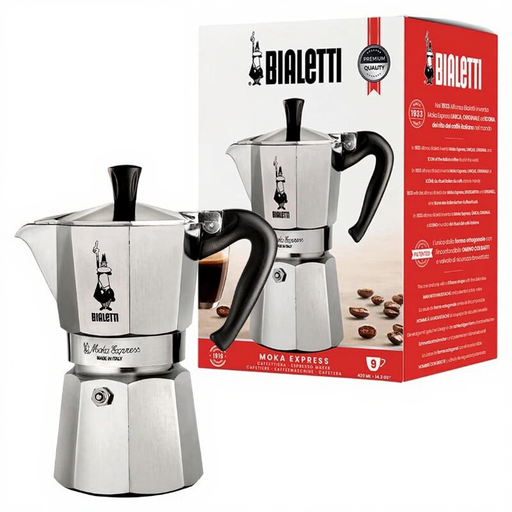
Why This Fits Their Persona: For coffee lovers who want to celebrate the authentic, unadulterated ritual of Italian coffee preparation on a gas or electric stove. The iconic design is a piece of coffee history.
This model is explicitly designed for classic stovetops, thus bypassing the induction trap. The clear size specification for 3 espresso cups (approx. 130 ml) prevents misunderstandings about capacity.
The food-grade aluminium construction ensures optimal heat distribution. The patented safety valve from Bialetti is a proven mark of quality.
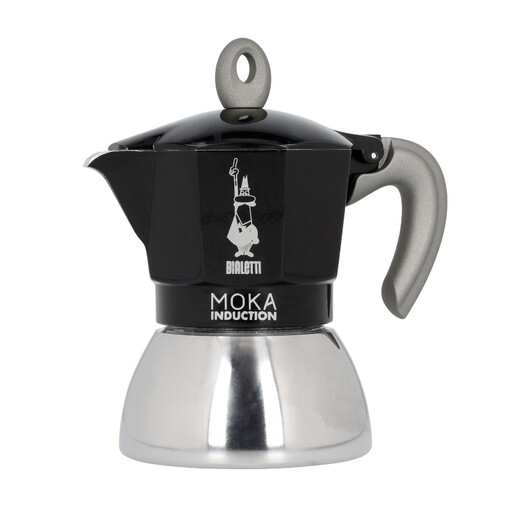
Why This Fits Their Persona: Ideal for users with modern kitchen equipment who don't want to miss out on the traditional moka experience. It combines classic design with modern functionality.
Directly solves the compatibility problem: The stainless steel boiler is suitable for all cooktops, including induction. The 4-cup size is a good compromise for couples or a larger coffee craving.
The bi-material construction combines the best of both worlds: an induction-ready base and an aluminium top that supports traditional flavour development.
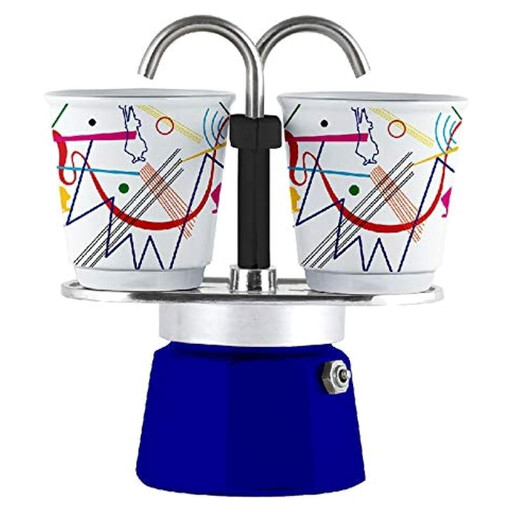
Why This Fits Their Persona: For those who see coffee making as an aesthetic experience and are looking for a functional design object for their kitchen. Perfect for a single serving or coffee for two.
The concept is straight to the point: the coffee flows directly into the included cups. The problem of incorrect portion size is elegantly solved here. It's a clear statement for a targeted, small indulgence.
Unique, artistic design that turns coffee preparation into a visual highlight. The direct dispensing into the cups ensures optimal temperature and crema distribution.
We have compiled a complete, up-to-date list of products that fully meet these strict selection criteria and German safety regulations.
Proper cleaning depends on the material. Aluminium models should never be cleaned with detergent or in a dishwasher. Simply rinse all parts with warm water after they have cooled down and dry them thoroughly. This preserves the patina that protects the flavour. A stainless steel coffee maker is often easier to care for and, depending on the manufacturer's instructions, can also go in the dishwasher.
An induction cooktop generates heat through a magnetic field. For cookware to work, its base must be magnetisable (ferromagnetic). Traditional aluminium espresso makers are not magnetic and therefore do not work. You need a model explicitly marked as an espresso maker for induction, typically with a stainless steel base.
There is no one-size-fits-all answer; it depends on your priorities.