
Lieferung heute & morgen

Qualitätsgarantie

Willkommens-Angebote freischalten: KOSTENLOSE Lieferung | Bis zu 80 % RABATT | Kostenlose 30-Tage-JoyPlus-Testphase
App herunterladen
Whether spread on bread, toast or rolls, or stirred into yoghurt, strawberry jam is part of breakfast in many households. When shopping, however, it quickly becomes clear that products can differ significantly in name, fruit content, sugar content, consistency and pack size. A low price per jar alone therefore says little about whether the choice suits your household’s actual consumption.
In everyday use, strawberry jam, strawberry conserve and strawberry fruit spread are often treated as the same thing. Under EU law, “jam” is generally a term for citrus products. Strawberry products are therefore often sold as extra jam, fruit spread or jam. What matters is not the front of the jar, but the ingredients list and the stated fruit content.
For example, a product labelled “Extra” may have a higher fruit content, but that does not automatically mean it is less sweet. Always compare the figures per 100 grams.
A reduced-sugar strawberry jam may contain less sugar than a traditional recipe, while still having a significant total sugar content. Schwartau Extra Less Sugar Strawberry Jam, for example, states that it contains 37.4 grams of sugar per 100 grams. The claim “30% less sugar” refers to a comparison with a conventional version from the same manufacturer, not to being sugar-free.
Alternative sweeteners or sugar substitutes can also change the recipe. If you want to avoid certain ingredients, read the full ingredients list.
A 600-gram jar can be practical for families or people who use a lot of jam. In a one-person household, however, a smaller jar may be more suitable if the spread is only used occasionally. Many products need to be refrigerated after opening and consumed within a reasonable period. A seemingly good-value multipack can therefore become impractical if the flavour and consistency deteriorate or the jar is not finished in time.
Fruit content is usually stated as grams of fruit per 100 grams of product or as a percentage. The choice ranges from finely puréed spreads to chunky varieties. Products without large pieces are ideal for smooth spreading. If you prefer strawberry pieces in your spread, look for terms such as “chunky” or check the product description.
With extra strawberry jam, it is worth looking at the exact recipe. The term describes a product category with defined requirements, but it does not replace comparing fruit content and sugar levels for yourself.
The nutrition table shows how much energy, carbohydrate and sugar are contained in 100 grams. Classic products in the selection, for example, contain around 53 to 68 grams of sugar per 100 grams. The figure depends, among other things, on the fruit content and the recipe.
Reduced-sugar varieties may be of interest to households with children or people who are monitoring their sugar intake. However, the term “reduced sugar” must always be understood in relation to the recipe used for comparison.
An organic strawberry fruit spread should display the relevant EU organic logo and the control body number. Alnatura Organic Strawberry Fruit Spread, for example, lists control body number AT-BIO-301. According to the product description, the listed ingredients come from organic farming.
Vegan and vegetarian are not the same: vegan products contain no ingredients of animal origin. For all products, it is advisable to check the information on the current packaging, particularly in the case of allergies or intolerances. A statement such as “may contain traces of nuts” may also be relevant.
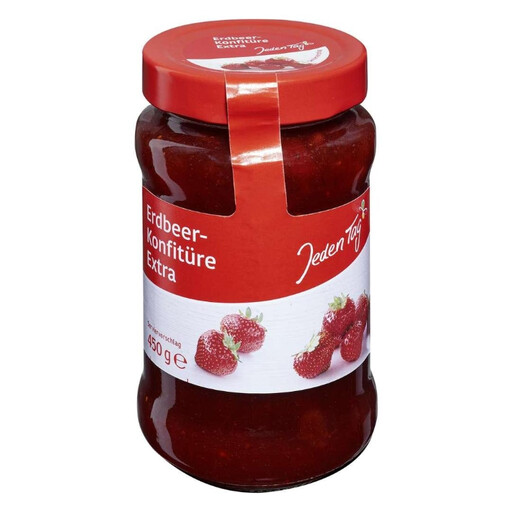
Why this product suits this profile: The 450-gram jar is suitable for households that regularly use strawberry spread on toast, bread or in yoghurt.
The fruit content is clearly stated as 62.5%. This makes it easy to compare the product objectively with other recipes before buying.
450 g contents, with fruit pieces according to the product description; suitable for bread, yoghurt and baking.
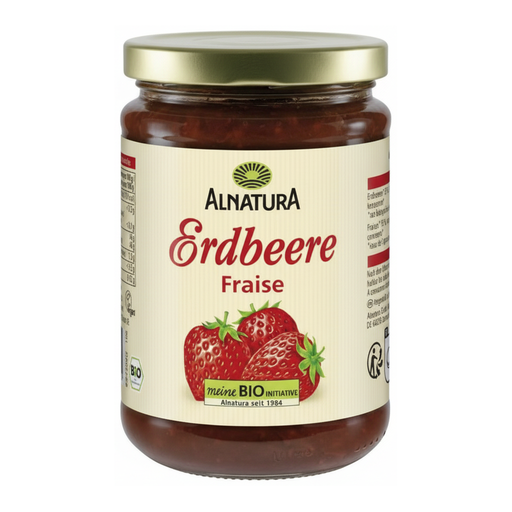
Why this product suits this profile: Suitable for shoppers who want to combine organic certification, a vegan diet and a stated fruit content.
The organic control body number and the 55% strawberry content are stated in the product information, making it easier to assess the product.
420 g contents, 55% strawberries; according to the product description, vegan, vegetarian and lactose-free.
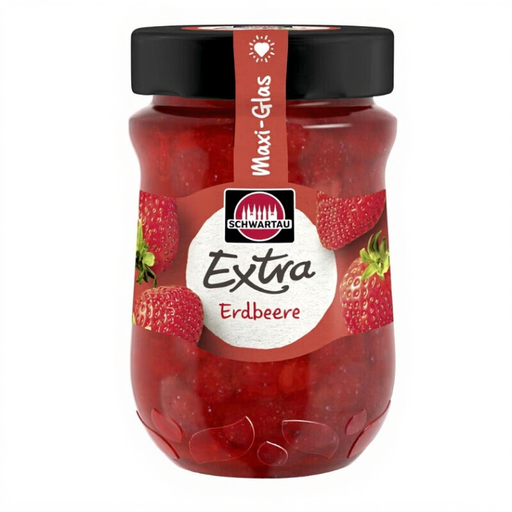
Why this product suits this profile: The large jar is aimed at families and households that use strawberry spread frequently for breakfast and baking.
The pack size is clearly stated. This allows high-volume users to match their supply more accurately to their actual consumption.
600 g contents; according to the product information, 54.1 g of carbohydrate and 53.4 g of sugar per 100 g.
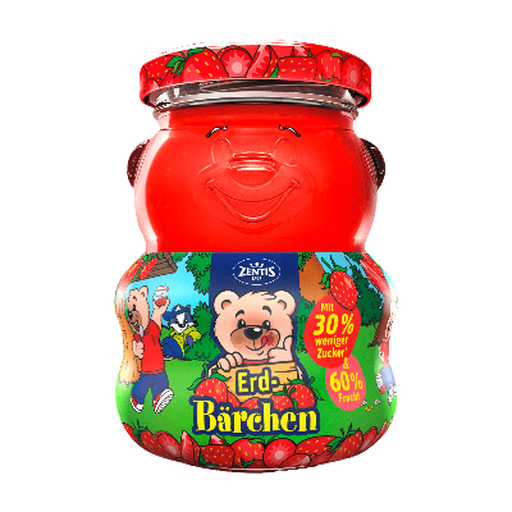
Why this product suits this profile: The finely puréed spread in a 250-gram jar is designed for a smooth consistency and smaller quantities.
The recipe contains 60% strawberries and, according to the product information, does not contain any declarable allergens. The packaging should nevertheless be checked before buying.
60% strawberries, finely puréed consistency and 155 kcal per 100 g according to the product description.
We have put together a complete, regularly updated list of products that fully meet these strict selection criteria and the safety regulations applicable in the EU.
Unopened jars should be stored in a cool, dry place away from direct sunlight, in accordance with the manufacturer’s instructions. Once opened, the jar should generally be kept in the fridge. Use a clean spoon and reseal the jar straight away. This helps prevent bread crumbs or moisture from getting into the spread.
Strawberry spread is suitable for more than just breakfast jam. It can be added to yoghurt, quark, porridge, pancakes, cheesecake or baked goods. For a smooth filling, a chunky spread can be warmed briefly if necessary and then allowed to cool.
Strawberry conserve follows specific legal requirements concerning its ingredients and fruit content. Strawberry fruit spread is a more general product term and can cover a range of recipes. The ingredients list, fruit content and nutritional values are the key points for comparison.
This depends on the product and how it is stored. Many manufacturers recommend refrigerating the jar after opening and using it within a short period. The information on the relevant label is what matters. Changes in smell, colour or surface should be taken as a reason not to use the product any further.
Finely puréed spreads such as Zentis Erd-Bärchen Strawberry Fruit Spread can be practical for children. However, special children’s labelling does not replace checking the ingredients and nutrition tables. In particular, the sugar content per 100 grams and the portion size should be taken into account when making your choice.