Who is a streaming amplifier for?

Blues fans who listen at low volume

You usually listen in one spot and want to balance bass, vocals and guitar to suit your taste at low volume, rather than relying on high wattage alone. Yamaha Corporation describes Loudness features for the R-N600A and R-N800A.

People with a digital blues collection

Your recordings are stored on a streaming service, NAS or computer. The key question is whether the specific model supports the playback method you want: the WiiM Help Center describes DLNA playback, while The BluOS Support Crew explains SMB shares for BluOS.

Owners of existing passive speakers

You want to keep using your speakers, so you should check that their requirements and connections match the amplifier. Yamaha Deutschland lists the R-N600A’s connections, while WiiM describes the Amp Pro as an amplifier for passive speakers.

What should you look for when buying?

First, check how your collection will reach the amplifier and whether your speakers are compatible. Then compare the sound controls you can actually use in your listening spot.

What matters What to check before buying Who is it important to?
Sound control at low volume Compare Loudness, YPAO Volume and EQ, and check whether the feature requires calibration. If I usually listen at low volume, I want to fine-tune bass, vocals and guitar where I sit. Around 33% of consumers would put sound control at low volume first.
Access to your own collection Check that your storage location, preferred services and file formats are supported by the playback method documented for the exact model. If my collection is on a NAS, computer or USB storage device, the amplifier needs to support that specific playback method. Around 27% of consumers would name access to their own collection as their main buying consideration.
Speaker compatibility Check the speaker type, impedance and connections against the specifications for both devices. If I want to keep using my existing speakers, the amplifier and speakers need to work together. Around 20% of consumers would put speaker compatibility first.
Private listening and ease of use Check for a headphone connection and your preferred playback method; AirPlay 2 availability depends on the model. If I want to listen at low volume without disturbing anyone, a suitable headphone connection or my preferred way of controlling the system is important. Around 20% of consumers would name private listening and ease of use as their main consideration.

Common buying mistakes

  • Treating wattage as proof of good sound at low volume

    A rated power figure applies under specific measurement conditions. On its own, it doesn’t tell you how your blues recordings will sound in your listening spot.

    Start by comparing speaker compatibility, playback options and the settings you can actually use for listening at low volume.

  • Confusing a USB DAC with a USB storage connection

    Yamaha lists a USB input for storage devices on the R-N600A. On the R-N800A, the USB-B connection is listed as a USB DAC.

    Check where your collection is stored and which input on the exact model can play it.

    Depending on where your files are stored, you may need to use a different computer or network playback method.

  • Assuming AirPlay support carries over from one WiiM amp model to another

    WiiM’s model-specific compatibility list includes AirPlay 2 for the WiiM Amp, but not the WiiM Amp Pro.

    If AirPlay is how you plan to play your music, check the full model name before buying.

    If you need AirPlay, you may have to use another compatible playback method or choose a different model.

  • Assuming “Dirac Live Ready” means room correction is fully included

    There are additional requirements for optional Dirac Live calibration on the Bluesound POWERNODE N331 and NAD C 700 V2.

    Check the features and accessory requirements for the exact version being offered.

    Dirac Live calibration may require an additional licence and a suitable calibration microphone.

Key brands at a glance

Yamaha

The R-N600A and R-N800A network receivers offer different documented options for playing your collection and listening at low volume.

  • Yamaha Corporation describes manual Loudness on the R-N600A and YPAO Volume on the R-N800A after calibration.
  • Yamaha Deutschland lists a USB storage input on the R-N600A.
  • USB is listed as a USB DAC on the R-N800A; the German specifications show “No” for HDMI ARC on both models.

WiiM

The Amp Pro combines streaming and amplification for passive speakers with app-based adjustments.

  • The WiiM Help Center describes DLNA playback through a configured media server.
  • According to WiiM’s model-specific compatibility list, the Amp Pro doesn’t support AirPlay 2; the WiiM Amp is listed as compatible.

Bluesound

The POWERNODE N331 combines BluOS streaming with a listed wired headphone connection.

  • The BluOS Support Crew describes access to music files through SMB network shares.
  • Bluesound says Dirac Live on the N331 requires an additional licence and a suitable microphone. Don’t assume this applies to every POWERNODE generation without checking.

NAD

The C 700 V2 combines BluOS streaming with an MM phono input and HDMI eARC.

  • NAD Electronics’ product specifications list these connections and support for the optional Dirac Live feature.
  • NAD Electronics says Dirac Live requires an additional licence and a calibration microphone. The manufacturer’s descriptions of sound quality don’t prove an independent benefit for listening at low volume.

Marantz

The STEREO 70s is an alternative if you want extra HDMI connections and HEOS as well as music playback.

  • Marantz Deutschland lists six HDMI inputs plus ARC.
  • This extra TV connectivity doesn’t prove an advantage for a blues collection played at low volume, so check whether you actually need it.

Joybuy products

A Joybuy product for Bluetooth playback and manual sound adjustment with home speakers.
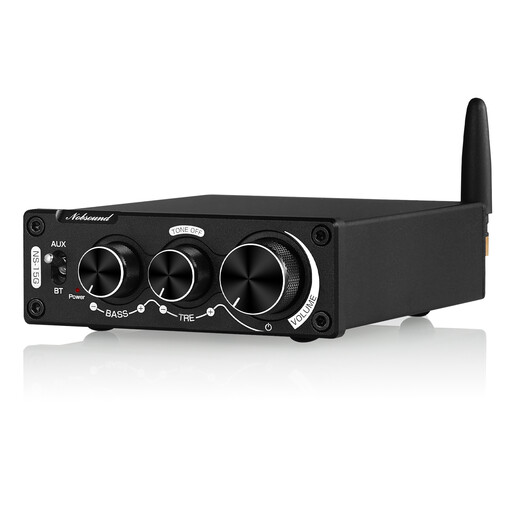
Nobsound 200 W Mini Bluetooth Digital Amplifier

Nobsound 200 W Mini Bluetooth Digital Amplifier

If your blues collection comes from a Bluetooth-enabled source and you’re looking for an amplifier for home speakers, this model could offer the right playback option.

Bluetooth 5.0, Bluetooth and RCA inputs are listed.

Bass and treble controls, each adjustable by ±10 dB, a volume control and Tone Bypass are described.

According to the product description, use only the compatible DC power supply. An incompatible power supply could cause overheating, a fire risk or damage.

Joybuy

Frequently asked questions

Can I play my blues files directly from a USB stick?

The Yamaha R-N600A has a listed USB input for storage devices; on the R-N800A, Yamaha describes the USB-B input as a USB DAC instead. Check that the file format and connection method used by your collection are compatible with the exact model.

How do I set up the Yamaha R-N600A for listening at low volume?

Yamaha’s instructions say to set your usual listening volume with LOUDNESS set to FLAT first, then adjust the Loudness feature moderately. Turn the volume down before activating Pure Direct: Yamaha says this bypasses Loudness, so playback may suddenly become louder.

Do I need an internet subscription to play files from a NAS?

For local collections, WiiM and BluOS describe network playback using a configured DLNA server or an SMB share. Check which method your specific model and NAS support; this doesn’t tell you what’s required for any music service you also use.

What extra costs and consumer rights should I bear in mind when buying?

Dirac Live on the Bluesound POWERNODE N331 or NAD C 700 V2 may require a licence and a calibration microphone. According to EU consumer information, when you buy from a trader in the EU, you generally have a minimum of two years’ statutory guarantee rights. For a typical online purchase of goods, you generally have 14 days from delivery to withdraw from the contract. A voluntary manufacturer’s warranty is separate; check for possible exceptions and return postage costs.

How do I dispose of an old amplifier in Germany?

The German Environment Agency explains that waste electrical equipment must be disposed of separately from household rubbish. Use an appropriate local collection point or a retailer’s take-back service, and check the requirements of the collection point you plan to use.