What should you look for when buying?
Start by checking your speakers and music service, then look at bass controls and ease of use. Extra connections matter most if you also want to use the lounge for TV sound or other sources.
| What matters |
What to check before buying |
Who is it important to? |
| Adjustable bass |
Check for EQ or bass controls and, if needed, a subwoofer output. Also take house rules and local requirements into account. |
If I want to listen to bass-heavy electronic music while being considerate of others, I’ll check the tone controls and rules for using the space together. Around 33% of consumers have adjustable bass and consideration for others as their main priorities. |
| Speaker compatibility |
Check whether the speakers are passive, then compare their connections and impedance with the amplifier’s specifications. Only compare wattage figures when the load and measurement basis are the same. |
If I want to keep using my passive speakers, I need compatible connections and matching load ratings. Around 27% of consumers prioritise speaker compatibility above all else. |
| Music service and controls |
Check that the exact model supports your preferred service and playback method. Don’t assume that multiroom systems from different brands are interchangeable. |
If several people will be choosing music in the lounge, it’s important to me that the service and controls work with the devices I already have. Around 20% of consumers prioritise shared music control above all else. |
| TV and other sources |
For TV sound, check the TV connection, ARC or eARC, and supported audio formats. For other rooms, check compatibility with your existing devices. |
If I also want to use the amplifier for TV sound or other sources, it needs the right connections and integration options. Around 20% of consumers prioritise additional sources or rooms above all else. |
Joybuy products
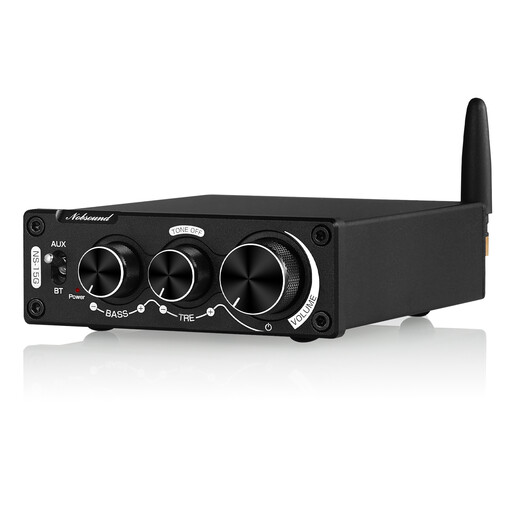
This selection includes a compact Bluetooth amplifier with bass controls. Check whether Bluetooth is suitable as a playback option for your lounge, and whether the speaker specifications are compatible with the specific device.
 No image available
Nobsound 200 W Mini Bluetooth digital amplifier
Could be a good option if you want to connect passive speakers via Bluetooth and adjust the bass.
The product name lists 200 W, along with bass and treble controls. Check the speaker specifications and connections against those of the specific device; the wattage figure alone doesn’t prove that they’re a suitable match.
View at Joybuy
Frequently asked questions
Can I connect active speakers directly to a streaming amplifier’s speaker terminals?
First, check whether your speakers are active or passive. The speaker terminals on the amplifiers covered here are designed for passive speakers. For active speakers, you’ll need a suitable line-level playback connection and compatible inputs and outputs.
What should I consider when setting up the amplifier for TV sound?
For HDMI ARC or eARC, you’ll need a compatible TV connection and an output format supported by the amplifier. For the Amp Pro, WiiM recommends stereo PCM or Dolby Digital over HDMI ARC and doesn’t list DTS or Dolby Atmos as supported formats. Yamaha doesn’t list HDMI ARC for the R-N600A.
Who should I contact in Germany if the product develops a fault after purchase?
If a product is faulty, the seller is generally your point of contact for your statutory warranty rights. Germany’s consumer advice centre states that the period is two years from delivery; any additional manufacturer’s guarantee is separate.
Is there a standard time after which loud music isn’t allowed in a lounge?
Check the rules for the specific location rather than assuming there’s one time that applies everywhere. For noise caused by people, Germany’s Federal Environment Agency points to state laws, local regulations and house rules. The operating hours it lists for certain outdoor equipment don’t automatically apply to music amplifiers.
What does a CE mark mean when buying an amplifier?
According to consumer information from the European Union, goods sold in the EU must comply with applicable product safety rules; CE marking requirements may apply to electrical and electronic equipment. The mark isn’t an independent assessment of sound quality. Check the information for the specific device.


