What to look for when buying
First, decide whether you need a specifically documented loudness function or are looking for EQ and room adjustment instead. Then compare speaker connections, streaming options and any additional inputs you plan to use.
If you’re choosing a streaming amplifier for quiet orchestral recordings, a few different priorities may influence your decision:
| Priority |
What to look for |
Who is it most important to? |
| Sound balance at low volumes |
Check the loudness function and how it interacts with Pure Direct or the model’s room calibration features. |
If you listen to orchestral music quietly, you may want to adjust the bass and treble to suit your preferences rather than focus on the wattage rating. Around 36% of consumers put sound balance first. |
| Speakers and placement |
Check whether your speakers are active or passive, and compare the connections and space available. |
If you want to keep using an existing pair of passive speakers, you’ll want to make sure the amplifier and speakers are a good match. Around 29% of consumers prioritise system compatibility. |
| Access to recordings |
Check your music service, preferred streaming protocol and the full model name. |
If you want to listen to specific orchestral recordings or your own files, make sure your preferred playback method works with the exact model. Around 21% of consumers put access to their recordings first. |
| Headphones and other sources |
Check the headphone connection and the exact type of TV input on both the amplifier and television. |
If you don’t want to listen through speakers in the evening, or you also want to use your TV’s audio, you’ll need the right connections. Around 14% of consumers prioritise headphone or TV use. |
The percentages refer to consumers with these buying priorities for the listening scenario described; they are not survey results.
Joybuy product option
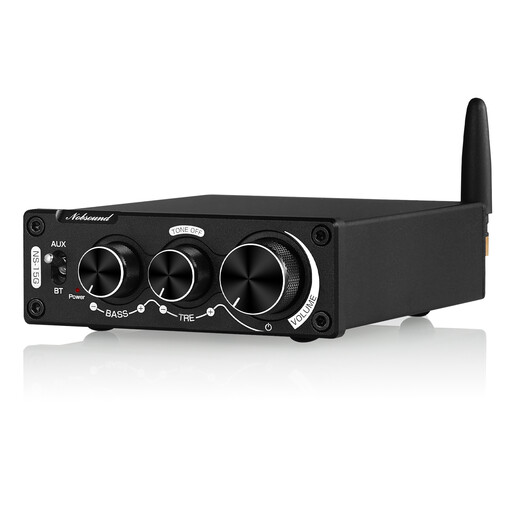
A Joybuy option for manual sound adjustment and Bluetooth playback through passive speakers.
 No image available
Nobsound 200 W Mini Bluetooth Digital Amplifier
An option if you want to use passive speakers with Bluetooth playback and adjust the sound balance manually. Check that the specific version suits your setup.
The product title lists 200 W and Bluetooth. Before buying, check that the connections and controls on the version on offer are suitable for your speakers and audio sources.
According to the product information, use only the compatible power supply provided. An incompatible power supply could cause overheating, a fire risk or damage to the device. Also check the labelling and accompanying information for the specific version on offer.
Joybuy
Frequently asked questions
Do I need a streaming amplifier for passive speakers?
If you want to use passive speakers without a suitable amplifier you already own, you’ll need a device with compatible speaker outputs. WiiM describes the Amp and Amp Pro specifically as amplifiers for passive speakers; check that the connections are compatible with your speaker pair.
How do I adjust Loudness on the Yamaha R-N800A?
In the manual, Yamaha recommends setting Loudness to FLAT first, using VOLUME to set your usual maximum listening level, then adjusting Loudness for lower-volume listening. Turn the volume down before enabling Pure Direct: Yamaha says this bypasses Loudness and the volume may rise suddenly. Manual Loudness adjustment is unavailable when YPAO Volume is enabled.
Can room correction replace a loudness function?
Not automatically. EQ, room correction and volume-dependent loudness adjustment serve different purposes. Check the specifications for the exact model to see which features it actually offers and whether they work with the other sound modes.
Does the WiiM Amp Pro support AirPlay 2?
WiiM lists AirPlay 2 for the Amp, but not for the Amp Pro. WiiM lists Spotify Connect and TIDAL Connect for both models; check the full model name and your preferred playback method.
What documentation should I check for a Bluetooth amplifier?
Check the labelling, the exact identity of the device version on offer and its accompanying information. The Federal Network Agency lists CE marking, product traceability and correct manufacturer details among the things checked during market surveillance. A declaration for one model does not automatically confirm the identity of a specific device sold by a retailer.


