
Lieferung heute & morgen

Qualitätsgarantie

Willkommens-Angebote freischalten: KOSTENLOSE Lieferung | Bis zu 80 % RABATT | Kostenlose 30-Tage-JoyPlus-Testphase
App herunterladen
Getting around in German cities presents daily challenges for commuters and residents alike. Between traffic jams and the search for parking, the so-called "last mile"—the journey from the public transport stop to work or home—often becomes a hurdle. A street-legal e-scooter offers a practical and legally compliant solution. However, the market can be confusing, and the legal framework is strict.
This article serves as a guide. It explains the most important criteria you should consider when buying and presents a selection of models suited for different needs. The goal is to provide you with an objective basis for your purchasing decision.
Before you buy an e-scooter, there are several technical and legal aspects to consider. These factors determine not only its everyday usability but also whether you can legally operate your vehicle in public spaces.
The most important criterion for legal use on German roads is the General Operating Permit (Allgemeine Betriebserlaubnis, or ABE), issued by the Federal Motor Transport Authority (Kraftfahrt-Bundesamt, or KBA). An e-scooter with an ABE meets the requirements of the Small Electric Vehicle Ordinance (eKFV). These include:
Without an ABE, operation on public roads, paths, and squares in Germany is prohibited. Therefore, always look for this certification in the product description.
Range is a key performance indicator. Consider the distances you will primarily be travelling. For short commutes of a few kilometres, a model with a range of 15–25 km is often sufficient. If you plan longer trips or want to charge the scooter less frequently, you should consider a long-range e-scooter that can cover 40 km or more. The battery capacity, specified in ampere-hours (Ah), is a good indicator for this. Note that manufacturer specifications for range are often determined under ideal conditions and can vary in practice due to rider weight, inclines, and temperature.
For many users, the e-scooter is part of a combined mobility chain involving buses and trains. A foldable e-scooter can be stored compactly and taken along with ease. Pay attention to the total weight. Models under 15 kg are significantly easier to carry. An intuitive and robust folding mechanism ensures that the scooter is quickly ready for use or stowed away, which is particularly advantageous in the hectic daily commute.
Here is a selection of e-scooters that cater to different user requirements. The assessment is based on objective product data from the manufacturers.
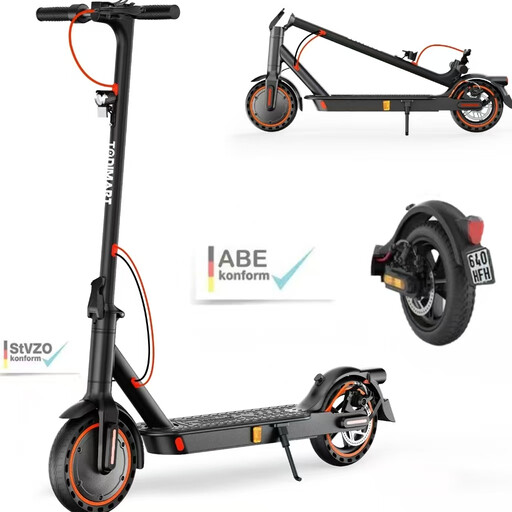
What makes it stand out This model is designed specifically for the German market and has the necessary ABE for road approval. It offers a balanced combination of performance and portability, making it a solid choice for the daily commute to work or university.
Product Details
Who it's for The TODIMART T3-ABE is ideal for adults and commuters looking for a reliable and legally compliant e-scooter for short to medium distances in the city. Its low weight and folding mechanism make it easy to take on public transport.
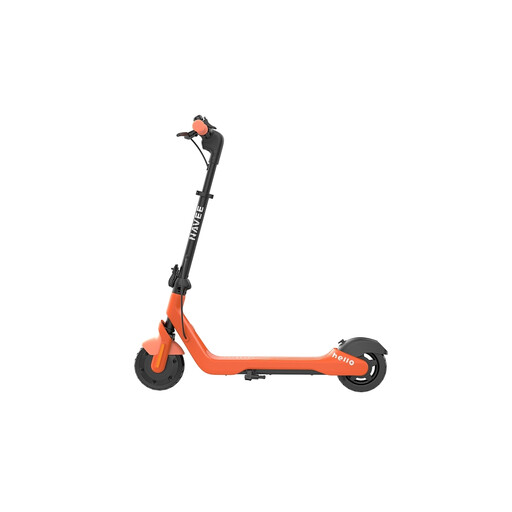
Important Note: This model is an e-scooter for children and does not have road approval (ABE). Its use is permitted exclusively on private property.
What makes it stand out The NAVEE K100 Pro was developed specifically for young riders. Safety features such as adjustable speed modes and a brake lever adapted for children's hands are at the forefront. The height-adjustable handlebar allows it to be used for several years.
Product Details
Who it's for This scooter is intended for parents looking for a safe entry-level electric scooter for their children (recommended for ages 6–14). It is designed exclusively for use on private grounds such as a yard or garden.
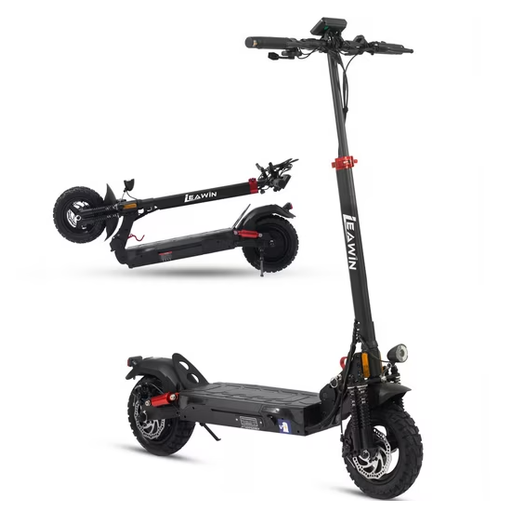
What makes it stand out This model distinguishes itself with its long range and powerful motor. The combination of road approval (ABE), large all-terrain tyres, and dual suspension makes it a robust companion for more demanding routes and longer distances.
Product Details
Who it's for This e-scooter is aimed at users who need a long range and do not want to compromise on performance, even on uneven paths or inclines. It is a great choice for long commutes or extended leisure rides.
A two-wheeled e-scooter is one of many ways to reinvent urban mobility. For users seeking a more stable alternative with greater seating comfort for everyday use, it's worth taking a look at our selection of foldable 4-wheel mobility scooters. Discover more options for your individual needs here.
1. Do I need a driver's license for a street-legal e-scooter? No, a driver's license is not required in Germany for e-scooters that comply with the eKFV (up to 20 km/h). The minimum age for use in public traffic is 14 years.
2. Is insurance mandatory for e-scooters in Germany? Yes, valid liability insurance is required by law. Proof is provided via an insurance sticker, which must be visibly attached to the rear of the scooter. Without this sticker, the e-scooter may not be operated on public roads.
3. Where am I allowed to ride an e-scooter with an ABE? Use is permitted on cycle paths, cycle lanes, and in bicycle streets. If these are not available, you must ride on the roadway. Riding on sidewalks, in pedestrian zones (unless explicitly permitted), and on motorways is strictly forbidden.