
Lieferung heute & morgen

Qualitätsgarantie

Willkommens-Angebote freischalten: KOSTENLOSE Lieferung | Bis zu 80 % RABATT | Kostenlose 30-Tage-JoyPlus-Testphase
App herunterladen
As your Joybuy Product Recommendation Officer, I'm here to help you navigate the world of urban mobility solutions. Choosing an e-scooter for use in German cities can be complex due to specific legal regulations. This article provides a factual guide to help you select a model that is both practical and approved for road use.
Covering the "last mile"—from the train station to the office or from the subway to your home—is a common challenge for many commuters. A street-legal e-scooter offers an efficient solution. However, not every model can be legally ridden on public roads and bike paths. We'll clarify the key criteria you need to know.
Your choice of model should be based on objective parameters that meet your daily needs and comply with legal requirements.
The most important criterion for legally operating an e-scooter in Germany is the General Operating Permit, or ABE ("Allgemeine Betriebserlaubnis"). This is issued by the Federal Motor Transport Authority (KBA) and confirms that the vehicle meets the requirements of the Electric Small Vehicle Ordinance (eKFV). An e-scooter with an ABE has a Vehicle Identification Number (VIN) and a data plate. Without this permit, use on public roads is prohibited and can result in fines. Therefore, always look for this certification in the product details.
For daily use, the most relevant factors are range, weight, and speed.
The eKFV mandates specific safety equipment. This includes two independent brakes, a lighting system (front and rear), reflectors, and a loud bell. A dual braking system, such as a combination of an electronic brake (E-ABS) and a mechanical drum or disc brake, offers additional safety. The type of tire also plays a role: pneumatic tires offer more cushioning, while solid rubber or honeycomb tires are maintenance-free and puncture-proof.
Based on the criteria above, we present a model designed for urban commuting in Germany.
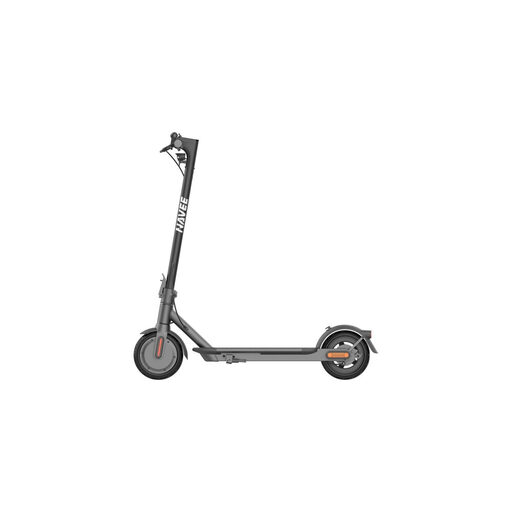
Why it stands out: The NAVEE E20 was developed specifically for the German market and has the required ABE for street-legal operation. It combines the most important features for commuters: a compliant top speed of 20 km/h, a solid range, and a thoughtful, portable design. With a weight of 14 kg and a quick-folding mechanism, it is easy to handle and transport.
Advantages:
Who is it for? This model is aimed at urban commuters, students, and anyone looking for a legal, reliable, and practical transport solution for the "last mile." Those who value compliance with German road regulations, portability, and modern features like app connectivity will find this a suitable option.
View the NAVEE E20 on Joybuy.de
Not every scooter is a street-legal e-scooter. To avoid making the wrong purchase, it's important to know the different categories. The following models serve other purposes and are not certified as electric small vehicles for road use.
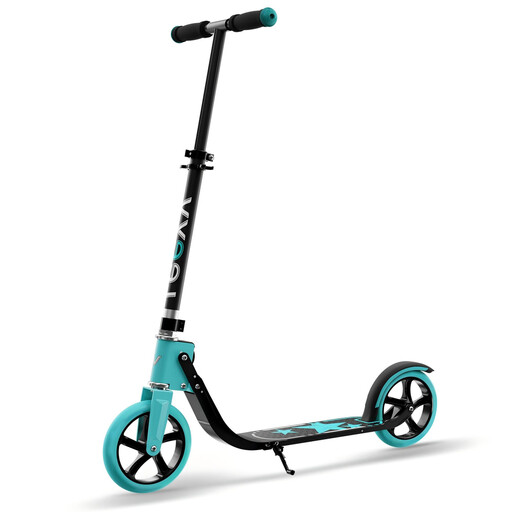
This classic kick scooter is powered solely by muscle power. Without a motor or battery, it is very lightweight and low-maintenance. With its large 205 mm wheels, it is suitable for teens and adults for recreational use or for short distances on private property or sidewalks where permitted. It does not fall under the eKFV and does not require insurance.
View the LEEYV Kick-Scooter on Joybuy.de
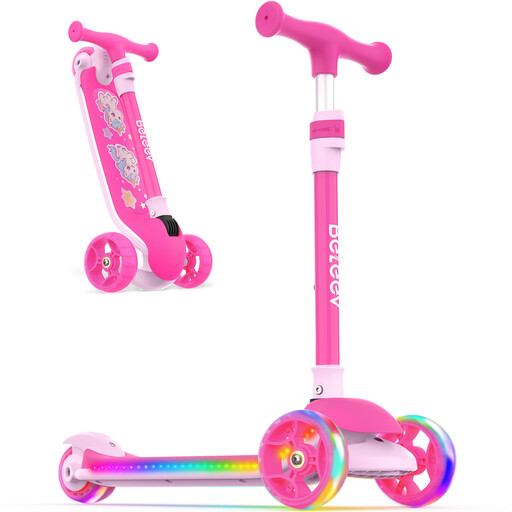
This model is designed as a toy for children. The three wheels provide high stability, and the "lean-to-steer" system helps young children develop balance and coordination. The light-up wheels add fun and visibility. This scooter is intended exclusively for use on private property or in play areas and must not be used in traffic.
View the BELEEV Kids Scooter on Joybuy.de
For many users, portability is the deciding factor. If you are specifically looking for models that are particularly lightweight and easy to transport, there is a wide selection available.
Discover more models in the lightest foldable scooter category here.
No, a driver's license is not required in Germany to ride an e-scooter that complies with the eKFV. The minimum age for use is 14 years.
Yes, valid liability insurance is required by law. Proof is provided via an insurance sticker that must be visibly affixed to the rear of the scooter. Without this sticker, the e-scooter may not be operated on public roads.