
Lieferung heute & morgen

Qualitätsgarantie

Willkommens-Angebote freischalten: KOSTENLOSE Lieferung | Bis zu 80 % RABATT | Kostenlose 30-Tage-JoyPlus-Testphase
App herunterladen
Navigating the city presents numerous challenges for commuters and residents alike: overcrowded public transport, traffic jams, and the endless search for parking. A street-legal e-scooter offers a flexible and efficient solution for the so-called "last mile." But which models are legal in Germany, and what should you consider before buying?
As your Joybuy Product Recommendation Officer, I have compiled the essential information for you. This article serves as a guide to help you understand the technical features and legal framework, enabling you to make an informed decision.
The selection of electric scooters is vast, but not every model is permitted on German roads. The following three points are crucial for compliant and practical use.
The most important criterion for using an e-scooter legally in Germany is the General Operating Permit (ABE), issued by the Federal Motor Transport Authority (KBA). An e-scooter with an ABE meets the requirements of the Small Electric Vehicle Ordinance (eKFV).
These include, among other things:
You can identify a model with an ABE by a type plate on the vehicle that displays the ABE number. Additionally, valid liability insurance is required, proven by an insurance sticker on the rear of the scooter.
Range is a key factor and should match your daily usage profile. Manufacturer specifications often refer to ideal conditions. The actual range of a long-range e-scooter is influenced by factors such as rider weight, outside temperature, inclines, and the selected riding mode.
Ride comfort largely depends on the tyres and any potential suspension.
If you plan to take the scooter on a bus or train, its weight and folding mechanism are crucial. A foldable e-scooter weighing under 15 kg is significantly easier to handle and transport.
Based on the criteria mentioned, we present a few models suitable for different user profiles.
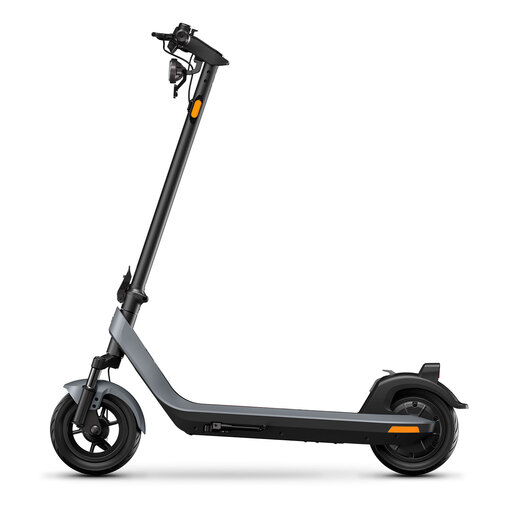
Why this model stands out: The NIU E-Scooter KQi 200P is designed for comfort and performance for demanding commuters. The combination of long range, dual-tube suspension, and smart features via an app makes it a versatile companion in urban environments.
Objective Features:
Who is this model for: This model is an excellent choice for commuters who travel longer distances daily and value a high level of ride comfort. Its long range reduces the need for daily charging.
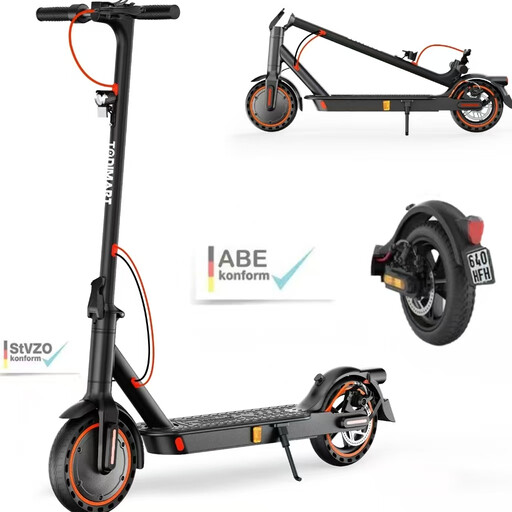
Why this model stands out: The TODIMART T3-ABE focuses on portability and ease of use. With its low weight and puncture-proof solid rubber tyres, it's a practical e-scooter for adults seeking a hassle-free solution for shorter journeys.
Objective Features:
Who is this model for: Ideal for users who frequently carry their e-scooter or use it in combination with public transport. The low weight and maintenance-free tyres make it a functional companion for the last mile.
Some e-scooters are designed for specific target groups or applications and do not meet the criteria for public road use in Germany.
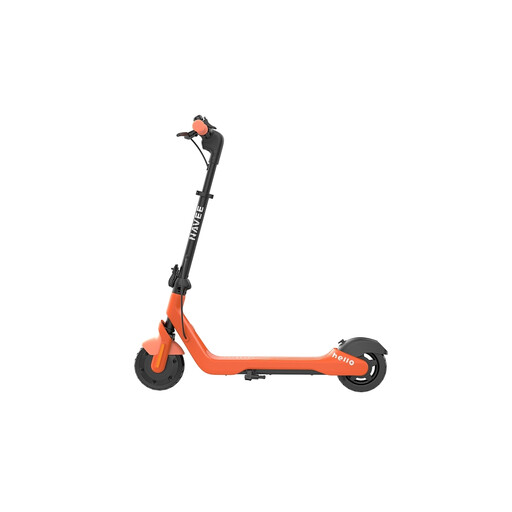
Important Context and Legal Notice: According to the manufacturer, this model is specifically designed for children and teenagers aged 6 to 14. With its design-limited top speed of 16 km/h and a maximum load capacity of 50 kg, it does not meet the requirements of the German eKFV for use on public roads. Its use is restricted to private property.
Objective Features:
Who is this model for: An option for parents looking for an entry-level model for their children to use on private property, such as in a yard or on closed-off paths.
Didn't find the right model for your needs here? In our light electric mobility scooter category, you'll find a wider selection of vehicles for urban mobility.
For legal use on German roads, an e-scooter requires a General Operating Permit (ABE). Other requirements include a maximum speed of 20 km/h, a functioning lighting system, two independent brakes, a bell, and a valid insurance sticker.
No, a driver's licence is not required to ride an e-scooter that complies with the eKFV. However, the legal minimum age for use is 14 years.
The range specified by manufacturers is determined under laboratory conditions (e.g., at 25°C, with a 75 kg rider, on a flat surface, and at a constant speed). In practice, the actual range is usually lower and depends heavily on factors such as rider weight, riding style, tyre pressure, outside temperature, and inclines.