For string quartet recordings in an open-plan home, start by asking whether you can sensibly position two speakers on either side of your preferred listening spot. As Genelec explains in its speaker placement guidance, the room and speaker positions affect the stereo image you hear. Passive speakers are a good fit if you already have a suitable amplifier or want to choose the speakers and electronics separately. An active pair doesn’t need a separate amplifier, while network speakers may suit you if your preferred playback method works over your network. Whichever type you choose, check how your recordings will actually reach the speakers.
Which system is right for you?
For quartet listeners with a regular listening spot
If you want to hear the instruments’ positions in space from your usual listening spot, you’ll need room to position two speakers apart from each other. Genelec notes that room reflections and speaker placement affect playback.
For listeners sharing an open-plan living space
If other people are elsewhere in your open-plan home or next door, choosing the right speaker position and a volume suited to the situation matters. For noise from neighbours’ activities, Germany’s Federal Ministry for the Environment, Nature Conservation, Nuclear Safety and Consumer Protection points to state and local rules, as well as any applicable building regulations.
For listeners with a digital music collection
If your recordings are stored on a playback device or available through a streaming service, check that your chosen playback method works with the system’s connections or network features. Sonos, Teufel and KEF list different playback and connection options in their product information.
What should you look for when buying?
First, check how the speakers will fit around your listening spot. Then confirm how you’ll play your music, and finally find out which components you need for a complete stereo system.
| What matters to you |
What to check before buying |
Who is this important to? |
| Spatial sound |
Room for two separately positioned speakers, and their placement in relation to your listening spot. |
If I want to hear the instruments to my left and right from my regular seat, I’ll need space for two speakers. Around 33% of consumers prioritise spatial imaging. |
| Placement and consideration for others |
Listening distance, available surfaces for the speakers and any local rules that apply. |
In an open-plan home, I want to enjoy my preferred listening area while remaining mindful of other living spaces. Around 27% of consumers focus first on speaker placement and consideration for others at home. |
| Compatible playback method |
Check your source against the system’s specific inputs and network features. |
If my recordings are on a particular device or streaming service, I want to play them without needing an unsuitable connection. Around 20% of consumers prioritise compatibility with their recordings. |
| Required components |
Check whether the offer includes one speaker or a pair, and whether you’ll need an amplifier or adapter. |
I want to know in advance what else I’ll need for a complete stereo system, and whether my existing electronics are suitable. Around 20% of consumers focus first on the components they’ll need. |
Avoid common buying mistakes
-
Confusing a single speaker with a stereo pair
One Sonos Era 100 isn’t the same as two speakers set up as a stereo pair. Sonos explains how to pair two speakers of the same model; other products may be sold explicitly as a pair.
Check the quantity and what’s included, and find out whether you’ll need a second compatible speaker for two-channel sound.
-
Assuming “active” means network streaming
Active speakers vary in the playback options they offer. Teufel lists Bluetooth, AUX and USB-C among the connections on the ULTIMA 25 AKTIV 2, while KEF also documents network features for the LSX II LT.
Trace the journey of one of your recordings from where it’s stored to the speaker, then check that against the connections and features of the specific model.
-
Assuming room size or power ratings tell you where speakers will fit
Room reflections and the position of both speakers in relation to your listening spot affect the stereo image you hear. A power rating won’t tell you whether you have two suitable places to put your speakers.
Plan where the speakers will go first. If possible, use familiar quartet recordings to position them for your usual listening spot.
-
Forgetting the amplifier for passive speakers
The ELAC Debut 3.0 DB63 is designed to connect to a suitable amplifier or receiver. According to the manufacturer, the active Teufel pair doesn’t need a separate amplifier.
Check whether your existing electronics will work with the passive speakers, or whether you’ll need to add an amplifier to your system.
Key brands at a glance
Sonos
The Era 100 is a network-connected single speaker that can be paired with a second Era 100 to create a stereo pair.
- The Sonos guide lists Wi-Fi and Bluetooth, and explains how to pair two speakers of the same model for stereo sound.
- A separate adapter, sold separately, is required for a wired line-in source.
KEF
The LSX II LT is a compact active stereo system with network streaming and a range of inputs.
- KEF lists AirPlay 2, Google Cast, Bluetooth, USB-C and HDMI ARC among its features.
- The two speakers need a connecting cable. The manufacturer’s sound-quality claims aren’t an independent comparison for an open-plan home.
Teufel
The ULTIMA 25 AKTIV 2 is sold as an active pair of bookshelf speakers for direct playback without a separate amplifier.
- Teufel lists Bluetooth, AUX, USB-C and HDMI; the product is explicitly described as a pair.
- The fact that a speaker is active doesn’t in itself mean it supports network streaming.
ELAC
The Debut 3.0 DB63 is a passive bookshelf speaker option for a system with a suitable external amplifier.
- ELAC describes connecting the speakers to an amplifier or receiver.
- If you don’t already have suitable electronics, you’ll need to check that they’ll work with your chosen setup.
Denon
The Home 150 is a network-connected option if you plan to use two compatible units as a stereo pair.
- The Denon guide explains how a compatible pair of grouped speakers can serve as the left and right channels.
- The guide confirms stereo pairing, but doesn’t provide an independent sound comparison with other models.
Joybuy products to explore
The following Joybuy products include Bluetooth stereo speakers, a compact CD system, passive bookshelf speakers and a soundbar. For each model, check that its design and actual playback method suit your listening spot.
 No image available
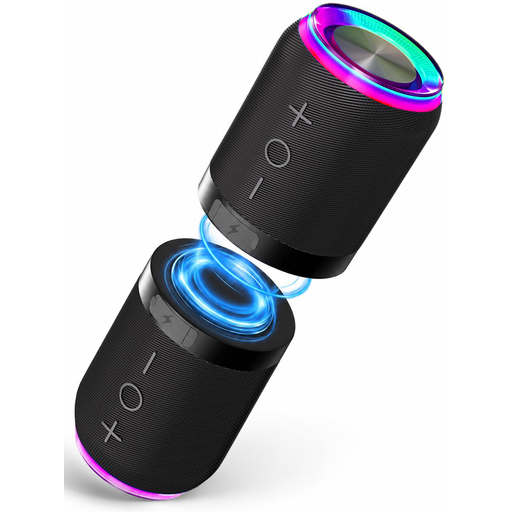
2-in-1 Bluetooth speakers with magnetic connection, set of 2
These two detachable units may suit you if you want separately positioned speakers and plan to use one of the listed playback options.
2 units; Bluetooth; TF card; AUX; IPX6.
View at Joybuy
 No image available
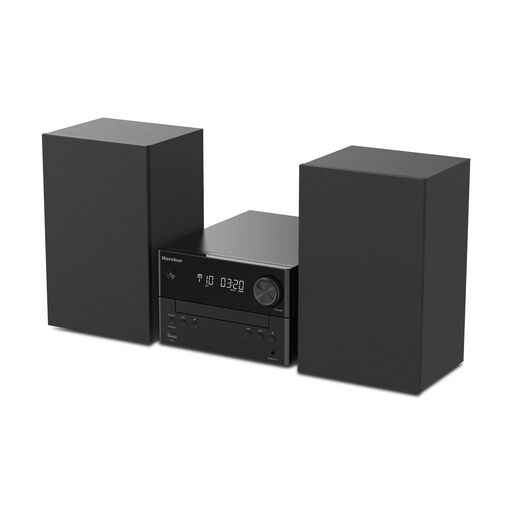
Karcher MC 6475D compact stereo system with CD player
This compact system may suit you if you want CD playback and several built-in playback options in one device.
CD; DAB+; Bluetooth; USB; FM radio; MP3; AUX; 20 W.
View at Joybuy
 No image available
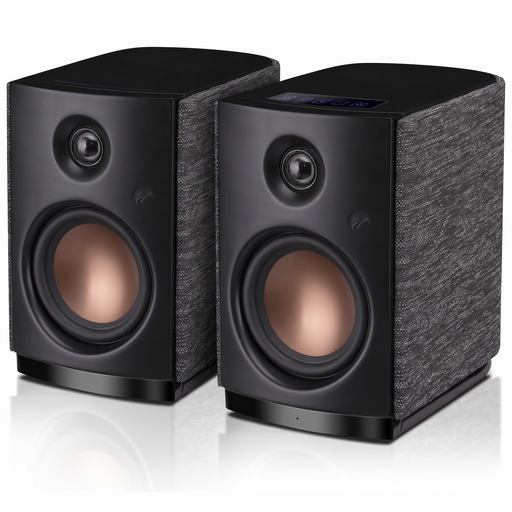
HiVi-Swans OS-10 active stereo speakers
These active stereo speakers may suit you if you want to play music via Bluetooth or AUX.
Bluetooth 5.0; AUX; 4-inch woofer; 62 W RMS.
View at Joybuy
 No image available
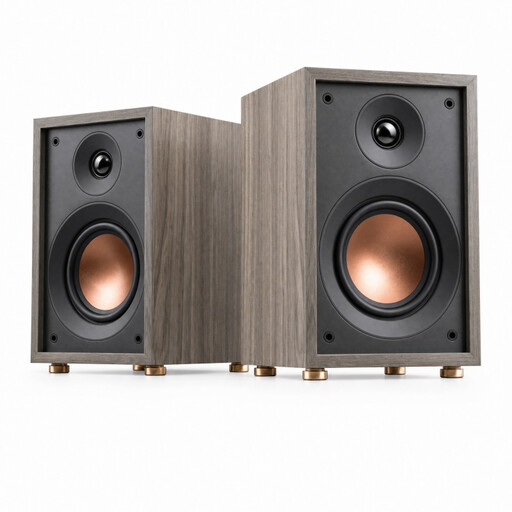
HiVi-Swans Oasis passive 2-way bookshelf speaker
This passive bookshelf speaker may suit you if you plan to use it with a compatible amplifier.
4-inch woofer; 20 mm dome tweeter; 60 Hz–20 kHz; 4 Ω; 10–50 W.
View at Joybuy
 No image available
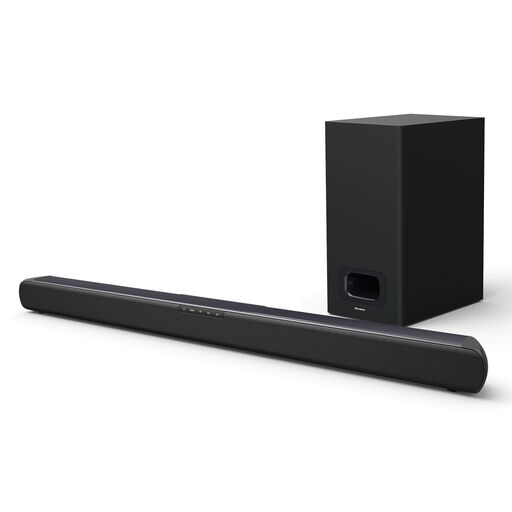
Karcher SB 800S 2.1 soundbar with external subwoofer
This design may suit you if a soundbar with a subwoofer works better for your needs than two separately positioned bookshelf speakers.
Bluetooth; HDMI ARC; optical input; USB; AUX; 80 cm; remote control; wall bracket.
View at Joybuy
Frequently asked questions
Do I need two speakers for string quartet recordings?
A stereo pair that can be positioned separately is a good starting point if you want distinct left-to-right imaging from your preferred listening spot. How well it works in your open-plan home also depends on placement and reflections. One Era 100 isn’t the same as two speakers paired for stereo.
How should I position a pair of speakers in an open-plan space?
Start by pointing both speakers towards your usual listening spot, and aim for similar heights and distances from nearby surfaces where possible. Genelec’s guidance comes from a studio context and explains the effect of symmetry and reflections; it isn’t a fixed layout plan for every home.
Can I connect a CD player directly to the Sonos Era 100?
For a wired line-in source, Sonos specifies a Line-In or Combo Adapter, sold separately. Also check that the output and cable on your particular CD player are compatible.
What else do I need for a complete stereo system?
It depends on the type of speakers. Passive models need a suitable amplifier, while active models have amplification built in. For network-connected single speakers, you may need a second compatible unit for stereo. Also check whether you’ll need adapters or connecting cables.
Is there a single legal volume limit for playing music at home in Germany?
No. For noise from neighbours’ activities, Germany’s Federal Ministry for the Environment, Nature Conservation, Nuclear Safety and Consumer Protection says there is no single set of rules that applies throughout the country. Check the rules in your state and local area, as well as any building regulations. Guidelines for other types of noise don’t automatically apply as a general limit for your speakers.


