
Lieferung heute & morgen

Qualitätsgarantie

Willkommens-Angebote freischalten: KOSTENLOSE Lieferung | Bis zu 80 % RABATT | Kostenlose 30-Tage-JoyPlus-Testphase
App herunterladen
The stroller market is overwhelming, and marketing promises are endless. Many parents invest in a model that seems perfect online, only to discover its flaws in daily use. Before you decide to buy a stroller, it's crucial to look behind the polished advertising messages. Two common pitfalls often lead to frustration: models advertised as "ultra-lightweight" that lose stability after just a few months, and the "one-hand fold" that, in practice, often requires two hands and a lot of patience.
This guide focuses on the objective criteria that will help you make an informed decision and find a model that truly fits your family's daily life.
To avoid a bad purchase, you should focus on three core areas: mobility, comfort, and longevity. These can be evaluated using specific technical parameters.
The terms lightweight stroller and compact folding stroller are key search criteria for many parents. However, these features must be evaluated in the context of your lifestyle.
The quality of the wheels and suspension directly impacts the ride comfort and the stroller's range of use.
A stroller should be able to adapt to your child's growing needs to ensure the longest possible lifespan.
Based on these objective criteria, we have identified some models that offer a suitable solution for specific requirement profiles.
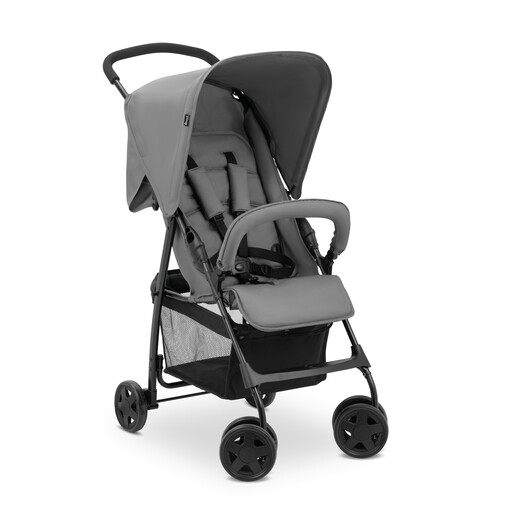
Why it's a great fit: Ideal for daily city life, trips on public transport, and quick errands. Its low weight and simple handling make it a hassle-free companion.
This model focuses on core functions. The lightweight frame (5.9 kg) is sufficiently robust for daily urban use, and the folding mechanism is straightforward, without any exaggerated claims.
A continuously adjustable backrest and a large shopping basket offer practical utility at an accessible price point.
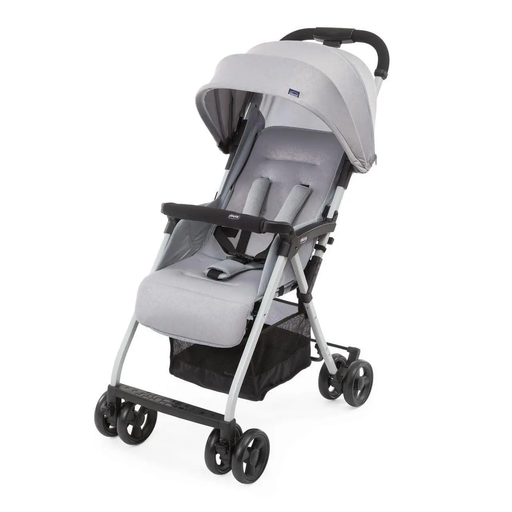
Why it's a great fit: Its extremely low weight and ultra-compact fold make it an ideal candidate for travel, especially by plane or train, where every gram and centimetre counts.
It delivers on its "ultra-lightweight" promise at just 4.2 kg while providing a functional structure for travel. The one-hand folding mechanism is designed for quick transitions at airports or train stations.
Extremely light and compact, self-standing when folded, and features a fully reclining backrest.
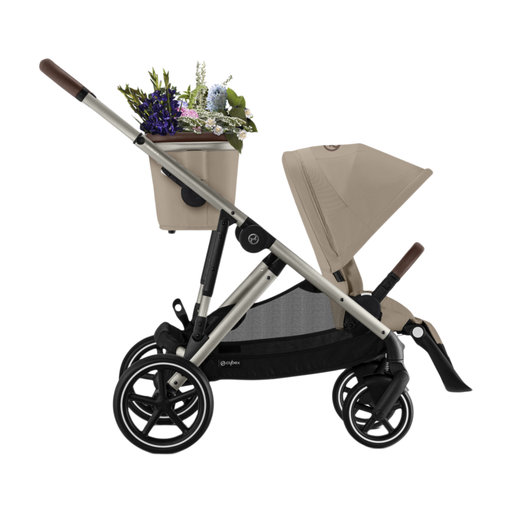
Why it's a great fit: This is a long-term investment that adapts from a single to a double stroller. With over 20 configurations and a huge load capacity of 23 kg, it's prepared for any eventuality.
Instead of being just a simple stroller, this is a modular system. The higher weight is justified by its versatility and its ability to replace two separate strollers. Its value lies in its adaptability.
Over 20 configuration options, two large shopping baskets, and a one-pull harness for fast securing.
We have compiled a complete, up-to-date list of products that fully meet these strict selection criteria and German safety regulations.
A stroller is generally suitable for children who can already sit up independently, typically from around six months of age. However, models with a fully flat recline function can be used as a stroller from birth. It is important to check the manufacturer's specifications carefully and ensure the lie-flat position is ergonomically suitable for newborns.
Most modern strollers, like models from Hauck or Cybex, have removable covers that can often be machine-washed at 30°C according to the manufacturer's instructions. The frame and wheels should be cleaned regularly with a damp cloth to remove dirt and sand that could impair the mechanisms.
A travel stroller is characterized by its extremely low weight and very compact fold, often small enough to be taken on a plane as a carry-on stroller. An all-terrain stroller, on the other hand, focuses on robustness and off-road capability. It typically has larger wheels, better suspension, and a sturdier frame, which makes it ideal for walks on uneven paths or in the park.