
Lieferung heute & morgen

Qualitätsgarantie

Willkommens-Angebote freischalten: KOSTENLOSE Lieferung | Bis zu 80 % RABATT | Kostenlose 30-Tage-JoyPlus-Testphase
App herunterladen
Choosing the right children's vehicle can quickly feel overwhelming. The market is filled with models that promise a multitude of features, but not every innovation truly makes daily family life easier. As your Joybuy Product Recommendation Officer, I'll help you identify the crucial features and avoid common purchasing pitfalls, so you can make an informed decision.
Before we dive into the details, let's look at three common problems that often only become apparent after the purchase, leading to frustration.
To avoid these pitfalls, focus on the following objective criteria that determine the practical value of a children's vehicle.
Weight is a critical factor for daily handling. A lightweight buggy weighing around 7 kg can be effortlessly lifted into the car boot or carried up the stairs. Models over 12 kg are often more robust but are significantly more cumbersome for mobile use. Pay attention to the folded dimensions (L x W x H) and check whether the folded vehicle fits into your car boot or the intended storage space at home. A buggy that is foldable and self-standing offers a clear advantage here.
Consider which life stage you need the vehicle for. A stroller suitable from birth requires a flat recline position or a separate carrycot. For babies under six months, a fully flat buggy with a lie-flat function is essential to protect their spine. For growing families, a modular convertible stroller can be a sensible investment, as it can be converted from a single to a double. For older children from around two years, other vehicle types like a stroller wagon for kids for outings or a ride-on car to promote motor skills become more relevant.
The wheels determine the ride comfort. Large, puncture-proof rubber wheels and good suspension are an excellent choice for mixed terrain, from city streets to nature trails. Swivelling front wheels increase manoeuvrability in tight aisles but should be lockable for uneven ground. Four-wheel suspension effectively absorbs shocks and ensures a smooth ride.
Here are some models tailored to specific user profiles that take the above criteria into account.

Why it's a great fit: Ideal for families who are often on the go. Its low weight and carrying strap make transport at the train station or airport straightforward. The lie-flat function and large canopy with UV protection provide comfort on long journeys.
This model is a specialised travel buggy and doesn't try to be a heavy travel system. It is designed from the ground up for lightness and a compact fold.
Weight: 7.2 kg. Folding Mechanism: One-handed operation, self-standing. Suspension: 4-wheel suspension for ride comfort.
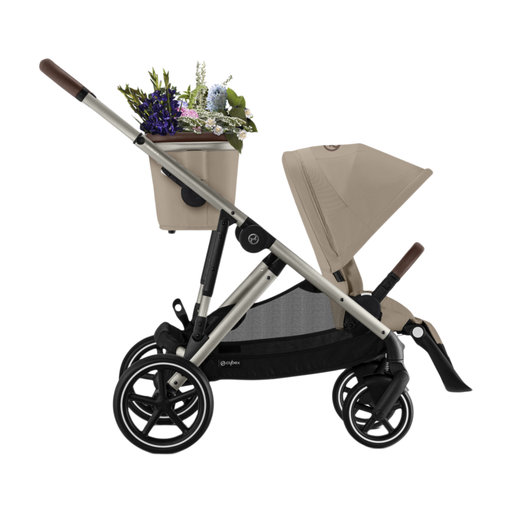
Why it's a great fit: Perfect for parents who plan ahead. It converts from a single to a tandem stroller and offers a total capacity of 23 kg with two large shopping baskets – ideal for the weekly shop without a car.
Instead of having to buy a second stroller later, this system grows with the family. The modularity here is not a compromise, but its core function.
Flexibility: Over 20 possible combinations. Load Capacity: Up to 2 x 22 kg in double mode. Storage: Two baskets with a 23 kg total capacity.
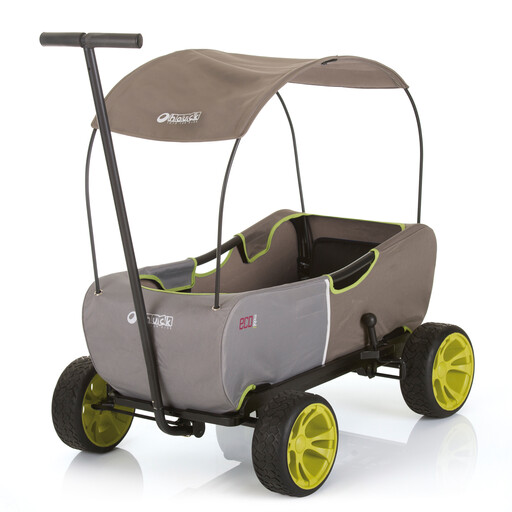
Why it's a great fit: This stroller wagon for kids is designed for trips to the park, zoo, or beach. It offers space for two children and luggage, while the sun canopy provides protection. It is a purely recreational vehicle, not an everyday stroller.
This vehicle is clearly positioned and doesn't try to be a buggy. It solves a specific problem: the comfortable transport of two children and gear during leisure activities.
Capacity: Space for 2 children, up to 50 kg load. Safety: Handbrake for both rear wheels. Comfort: Includes seat cushions and a removable sun canopy.
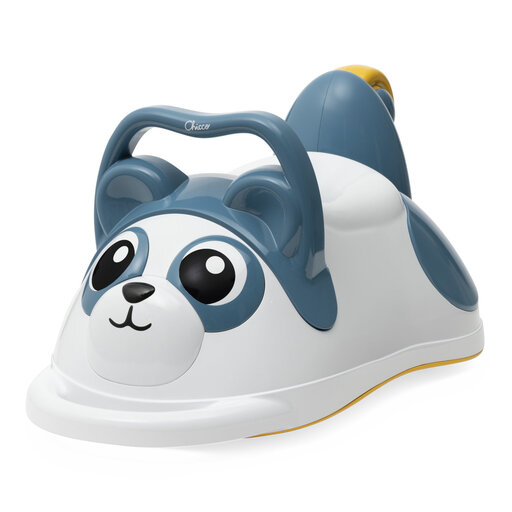
Why it's a great fit: This is not a mode of transport, but a developmental toy. As a ride-on car, shape sorter, and walker, it playfully supports the motor development of toddlers from 12 months onwards.
This product has a clear focus on playful development at home and avoids the compromise of trying to be an outdoor transport vehicle at the same time.
3-in-1 Function: Grows with the child from a ride-on to a walker. Educational Approach: Storage compartment for shape-sorting games based on Montessori principles. Material: BPA and Phthalate-free.
We have compiled a complete, up-to-date list of products that fully meet these strict selection criteria and safety regulations.
1. When does it make sense to use a buggy instead of a full-sized stroller? A switch is advisable as soon as your child can sit up independently and stably, which is usually between 6 and 9 months of age. A buggy is typically lighter and more manoeuvrable than a travel system and is better suited for short trips and travel. Make sure the buggy has an adjustable backrest for naps on the go.
2. What is the difference between a travel system and a buggy? A travel system is a modular system that typically consists of a frame, a carrycot for newborns, and a later seat unit. It is designed for use from birth but is often heavier and larger. A buggy (or lightweight stroller) is a lighter, often more compactly folding model for children who can already sit up. However, some buggies also offer a flat recline function and are therefore also usable from birth.
3. How important is a lie-flat function on a buggy? A buggy with a lie-flat function is very important, especially for babies and toddlers who still sleep on the go. A flat or near-flat position is necessary for children under 6 months for orthopaedic reasons. But even for older children, an adjustable backrest significantly increases comfort on longer outings.