
Lieferung heute & morgen

Qualitätsgarantie

Willkommens-Angebote freischalten: KOSTENLOSE Lieferung | Bis zu 80 % RABATT | Kostenlose 30-Tage-JoyPlus-Testphase
App herunterladen
Choosing a stroller can quickly feel overwhelming. The market offers a vast array of models, features, and designs. But not every advertised feature will be relevant to your daily life. Certain oversights during the selection process often lead to frustration and unnecessary expense. As your Joybuy Product Recommendation Officer, I'm here to help you identify the crucial criteria and avoid common traps.
Many parents only realise after the purchase that their chosen model doesn't fit their lifestyle. Pay close attention to these three points to avoid a bad buy:
Instead of being swayed by marketing buzzwords, you should focus on verifiable technical features. These three parameters are crucial for the functionality and longevity of your stroller.
The wheels are a key determinant of the stroller's ride comfort and its intended use.
Good suspension on all four wheels is essential to absorb shocks and ensure a smooth ride for your child, regardless of the wheel type.
Choosing the right system depends on how long and how flexibly you want to use the stroller.
To make your decision easier, we have identified models that meet specific requirements and purposefully avoid the pitfalls mentioned earlier.
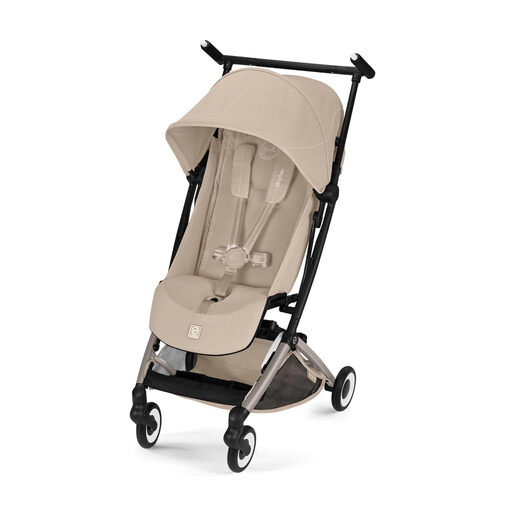
Why it's a great fit: Ideal for families who live in the city and are always on the go. Its extremely low weight and compact folded size make it the perfect companion for public transport and travel.
Avoids the "Trunk Crisis" and the "All-Terrain Trap". Weighing only 6 kg and with a folded size that the manufacturer claims is carry-on compliant, it is optimised for the urban environment, not a bulky burden.
Ultra-lightweight: At 6 kg, it's one of the lightest buggies on the market. Compact Fold: Folds down into a handy package in seconds.

Why it's a great fit: The solution for forward-thinking parents. This model grows with the family and can be converted from a single to a sibling or twin stroller.
Avoids the "Single-Child Dead End". With over 20 possible combinations of seat units, bassinets, or infant car seats, you won't need to buy a completely new stroller when your family grows.
Highly Modular: Over 20 configurations for one or two children. Ample Storage: A detachable shopping basket (10 kg) and an under-seat basket (13 kg) offer a total capacity of 23 kg.

Why it's a great fit: A complete set for parents seeking a durable, all-round solution. The air-filled tires make it suitable for both city and off-road use without compromising on comfort.
Avoids the "All-Terrain Trap" through a balanced combination. The large air tires and suspension provide genuine off-road comfort, while the frame remains manageable for everyday use. As a complete set, it's also a cost-effective initial setup.
All-Terrain Air Tires: Provide a high level of ride comfort on various surfaces. Complete 2-in-1 Set: Includes bassinet, toddler seat, footmuff, and drink holder for use from birth to approx. 4 years.
We've compiled a complete, up-to-date list of products that fully meet these strict selection criteria and German safety regulations.
A baby should only switch to the toddler seat (or buggy) once they can sit up independently and steadily for an extended period. This is typically between the sixth and ninth month. Before then, their back and neck muscles are not yet strong enough, which is why a flat-lying position in the bassinet is necessary.
The main difference lies in the child's age and the range of functions. A stroller (often a modular stroller) is used with a bassinet from birth. A buggy is a lighter, more compact stroller with a seat unit for toddlers who can already sit up. Many modular strollers can later be converted into a buggy.
Weight is a very important factor. A lightweight buggy or stroller is easier to lift, carry, and manoeuvre. Consider everyday situations: lifting it over curbs, carrying it into an apartment without a lift, or loading it into a car. A difference of just a few kilograms can make a significant impact on daily handling.