
Lieferung heute & morgen

Qualitätsgarantie

Willkommens-Angebote freischalten: KOSTENLOSE Lieferung | Bis zu 80 % RABATT | Kostenlose 30-Tage-JoyPlus-Testphase
App herunterladen
Buying a stroller is one of the first major investments for expectant parents. The market offers an overwhelming variety of models, and marketing promises don't make the decision any easier. As a Joybuy Product Recommendation Officer, I analyse product data and customer feedback daily. I consistently see the same costly pitfalls that are easy to avoid with the right knowledge. This guide will help you cut through the noise and find a model that truly fits your family's daily life.
Many purchasing decisions are based on design or seemingly great deals, without considering the practical, day-to-day consequences. Pay close attention to these three points to avoid a bad buy:
To make an informed decision, focus on objective, measurable criteria rather than marketing slogans. The following three aspects are crucial for everyday usability.
These are the fundamental metrics for handling and convenience.
A flexible system adapts as your child and your family grow.
The wheels are a key factor in determining ride comfort on different surfaces.
Based on these objective criteria, we have identified a few models that are particularly well-suited for specific life situations.
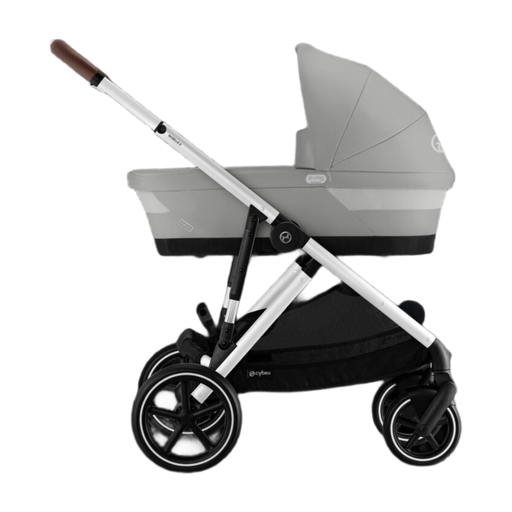
Why This Fits Their Persona: Ideal for parents who plan ahead. This model seamlessly converts from a single stroller for the first child into a double or twin stroller as the family grows.
It solves the problem of lacking future-proofness. Instead of having to buy a second stroller, the existing system is simply expanded. According to the manufacturer, over 20 configurations are possible.
High modularity (from single to double stroller); two large shopping baskets with a total capacity of 23 kg.
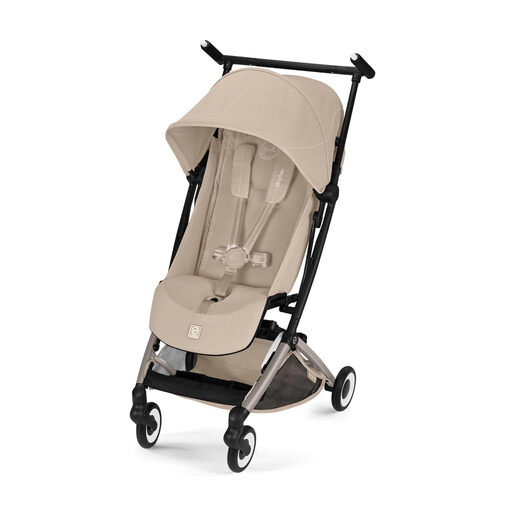
Why This Fits Their Persona: Perfect for city life and for families who travel frequently. Its key advantages are its extremely low weight and compact fold, which make it easy to transport on public transit or in an airplane.
This travel stroller is the direct answer to oversized and heavy strollers. Weighing just 6 kg and featuring carry-on compliant dimensions, it bypasses the typical problems of storage and transport.
Ultra-lightweight (6 kg); folds into a compact package in seconds; one-hand harness system for fast buckling.
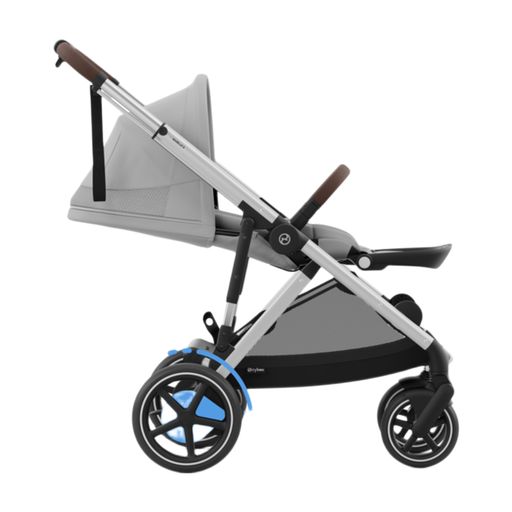
Why This Fits Their Persona: For parents who live in hilly areas or seek maximum comfort. The integrated electric motor provides assistance when pushing uphill and brakes when going downhill, significantly reducing physical effort.
This model addresses the weight problem in an innovative way. Although it's not a lightweight, the electric drive compensates for the effort, allowing the stroller to be moved effortlessly even when fully loaded.
Electric stroller with power-assisted pushing and braking; automatic rocking function to gently soothe the child to sleep; also modular for use as a double stroller.
We have compiled a complete, up-to-date list of products that fully meet these strict selection criteria and German safety regulations.
1. When can a baby sit in a buggy? A child should only sit upright in a buggy once they can sit up independently and stably. This is typically the case from around six months of age. For newborns, a completely flat, lie-flat position—as offered by a bassinet or a from-birth stroller with a lie-flat feature—is essential to avoid straining their spine and compromising their breathing.
2. What is the difference between a modular stroller and a buggy? A modular stroller is a system used from birth to the toddler years (approx. 4 years). It consists of a frame onto which you can mount a bassinet, an infant car seat, or a toddler seat. A buggy is typically lighter, more compact, and intended for children who can already sit up. It is often a second purchase for travel or quick urban use.
3. Which stroller accessories are actually useful? The selection of stroller accessories is vast, but not everything is necessary. Some of the most practical additions include: