
Lieferung heute & morgen

Qualitätsgarantie

Willkommens-Angebote freischalten: KOSTENLOSE Lieferung | Bis zu 80 % RABATT | Kostenlose 30-Tage-JoyPlus-Testphase
App herunterladen
When the sun is shining, parents want to enjoy the outdoors with their little ones. Reliable sun protection for the stroller is essential. However, the market is flooded with products whose real-world performance often only becomes apparent after purchase. Many models turn out to be unstable, offer inadequate protection, or are simply impractical to use. This guide will help you avoid common purchasing mistakes and make an informed decision.
Choosing the right accessory can quickly become overwhelming. Pay special attention to three common flaws that can severely limit a parasol's usefulness:
To avoid these problems, you should check three technical features before buying. These define the quality and everyday usability of a parasol for a stroller or buggy.
The most important parameter is the Ultraviolet Protection Factor (UPF). Unlike the Sun Protection Factor (SPF) known from sunscreens, which only indicates protection against UVB rays, UPF measures a textile's protection against both UVA and UVB radiation. For sun protection on a stroller, a rating of UPF 50+ is the recommended standard. By definition, fabrics with this label block more than 98% of UV rays, thus providing a high level of protection. Look for this specification explicitly in the product description.
A sunshade for the stroller should be universally compatible. Look for a mounting system that is explicitly suitable for both round and square frame tubes. Systems with a rubberised inner surface and a robust screw mechanism generally offer the best grip without scratching the frame. The stability of the arm is also crucial. Materials like aluminium are often more resistant to wind than simple plastic arms.
A flexible parasol is a tiltable parasol. Ideally, the model should have at least two joints: one directly above the mount and another below the canopy. This "Flex Technology" allows you to tilt the parasol in any desired direction and precisely align the shade without having to change the position of the base mount on the stroller frame. This saves time and ensures continuous protection during your walk.
Based on the criteria above, we have identified a few products that are well-suited for different user profiles.
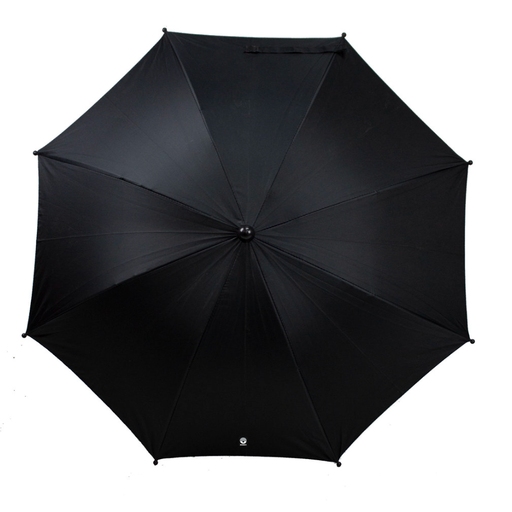
Why This Fits Their Persona: This model focuses on the essentials: high functionality and universal compatibility. The simple black design matches any stroller and puts the protective function first. Ideal for parents looking for a reliable, straightforward solution.
The "Easyfix System" is designed for both round and square tubes, thus avoiding compatibility issues. The "Flex Technology" with two pivot points solves the problem of rigid, impractical parasols.
Certified UPF 50+ protection; sturdy aluminium arm for good wind resistance; large 76 cm diameter for a wide area of shade.
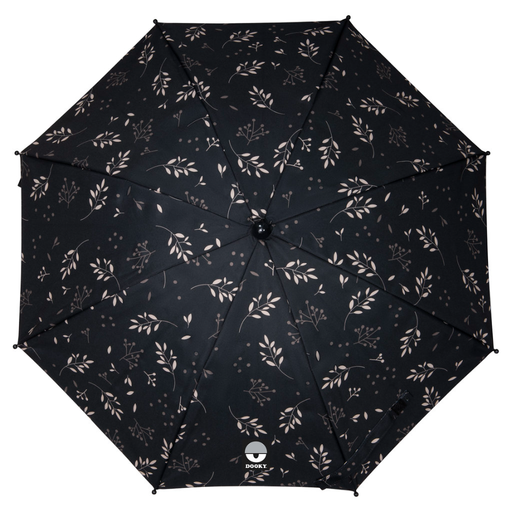
Why This Fits Their Persona: For parents who value aesthetics and see the stroller as part of their personal style. This model offers the same high technical performance as the standard version but with an appealing design.
This model proves that design doesn't require compromising on safety. It offers the same certified UPF 50+ protection and the same flexible, universal mount as purely functional models.
Combines UPF 50+ protection with a stylish pattern; uses the same proven "Flex Technology" and universal mount for easy handling.
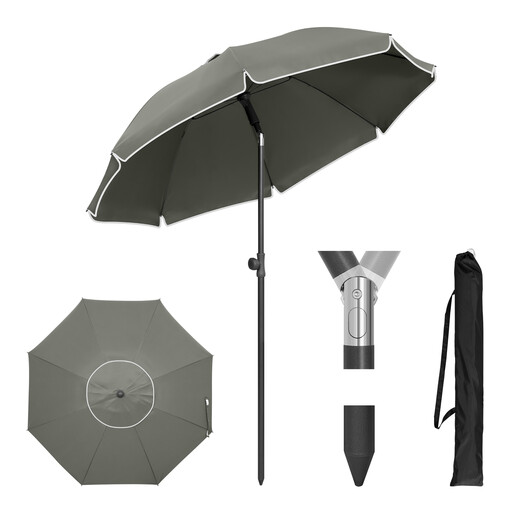
Why This Fits Their Persona: This product is not intended for mounting on a stroller. It is suitable for parents who want to create a large, stable island of shade for a play mat or play area at their destination—be it the park, the beach, or the garden.
By not being designed for mobile use on a stroller, this parasol bypasses the typical problems associated with small, unstable mounts. It solves a different problem: creating a large, stationary shaded area.
Very large diameter (155 cm) for generous shade; also certified with UPF 50+; includes a carrying bag for easy transport to your destination.
We have compiled a complete, up-to-date list of products that fully meet these strict selection criteria and safety regulations.
1. How do I attach a parasol to a stroller if the frame is square? Look for products with a universal mount. Models that are explicitly advertised for both round and square tubes often use a flexible clamp with a rubberised inner surface and a robust screw mechanism. These adapt to different frame shapes and provide a secure hold.
2. Is a parasol better than a sun canopy for a stroller? Both systems have pros and cons. A parasol is more flexible for adjusting to low or side-angled sun and allows for better air circulation. A sun canopy offers a larger coverage area but can hinder air circulation if attached incorrectly and is less precise for adjusting to the sun's position. The choice depends on your typical routes and priorities.
3. How high should the UV protection be for a stroller parasol? The recommended standard is UPF 50+. This rating guarantees that the material blocks more than 98% of harmful UVA and UVB rays. This is a crucial feature for protecting the sensitive skin of infants and toddlers. A lower rating or the absence of a UPF rating does not offer reliable protection.