
Lieferung heute & morgen

Qualitätsgarantie

Willkommens-Angebote freischalten: KOSTENLOSE Lieferung | Bis zu 80 % RABATT | Kostenlose 30-Tage-JoyPlus-Testphase
App herunterladen
Unpredictable weather is a part of everyday life in many regions. A sudden downpour can interrupt any walk, and a rain cover for the stroller seems like the obvious solution. However, many parents discover after their purchase that their chosen model creates more problems than it solves. Certain design flaws and exaggerated marketing promises often lead to frustration and an unprotected child.
Three common problems that can lead to a bad purchase are:
This guide will show you the crucial features to look for to find a practical and durable rain cover that will reliably keep your child dry.
To avoid making a poor choice, you should examine three core aspects: material, fit, and functional details. These determine the safety, durability, and everyday usability of the cover.
Most rain covers are made of plastic film, but there are significant differences. A commonly used material is PEVA (polyethylene vinyl acetate). It is considered a good alternative to PVC because it does not require plasticisers (phthalates). When making your selection, look for products explicitly labelled as phthalate-free or PVC-free. This is important, as your child breathes the air directly underneath the cover.
You can recognise a high-quality material by its ability to remain flexible even in cooler temperatures without immediately wrinkling or breaking. The seams should be cleanly welded or securely stitched to ensure long-lasting waterproofness.
The right fit is crucial for complete, gap-free protection. You generally have two options here:
For special requirements, there is also a matching rain cover for the infant car seat, which makes transporting your baby from the car to your home in the rain much easier.
Good air circulation is a key safety feature. A good rain cover with a window or special ventilation holes ensures a constant supply of fresh air and prevents the windows from fogging up from the inside.
Other useful features include:
Instead of making a one-size-fits-all recommendation, we have identified models that are tailored to the specific needs of parents.
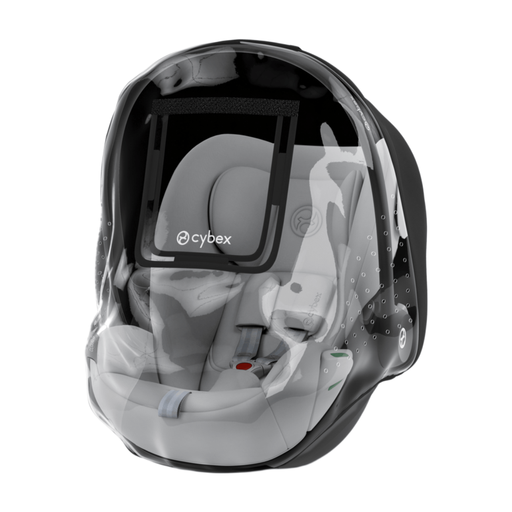
Why it's a great fit: Perfect for short trips from the car to the front door or into a shop. It protects the baby in the car seat without getting in the way during transfers and is quick to attach.
As a model-specific accessory, it completely sidesteps the "universal fit" trap, offering a precise, gap-free fit for compatible CYBEX infant car seats.
Precise fit for CYBEX Aton and Cloud series; breathable window for ventilation; transparent, PVC-free material.
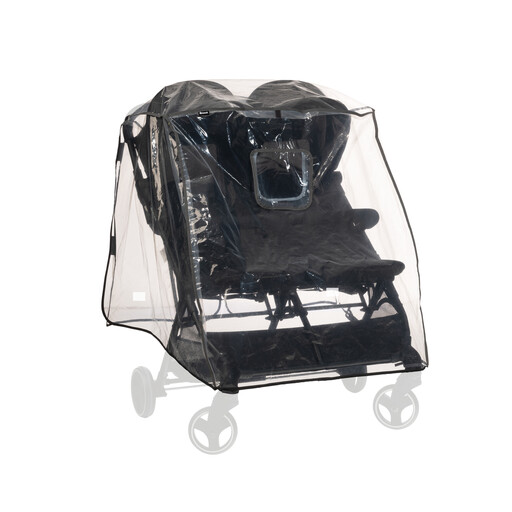
Why it's a great fit: Specifically designed for the wider frame of side-by-side sibling strollers, where standard covers won't fit.
Solves the fit problem for a specific, hard-to-equip stroller type, ensuring both children are fully protected.
Extra-large design; strategically placed ventilation holes for continuous fresh air; easy to attach with an elastic band and Velcro fasteners.
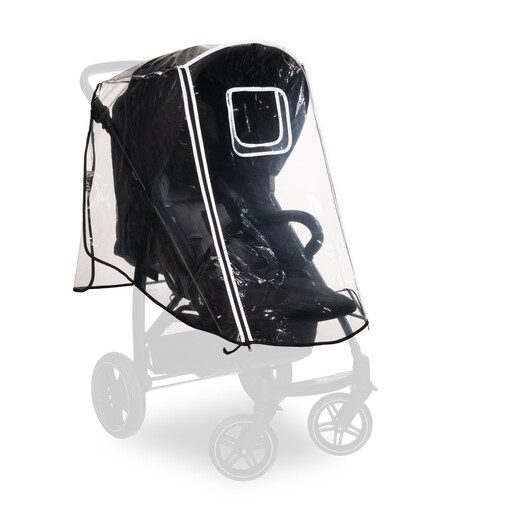
Why it's a great fit: The front zipper is a huge convenience for daily errands where the child frequently gets in and out.
Addresses the inconvenience of constantly having to completely remove and reattach the cover, a common annoyance with many basic models.
Large front opening with a zipper for easy access; reflective strips for added safety; made from health-safe PEVA film.
We've compiled a comprehensive, up-to-date list of products that meet these strict selection criteria.
Wipe the cover with a dry cloth after each use. For a more thorough cleaning, a damp cloth is sufficient, with mild soap if needed. It is crucial to let the cover air dry completely before folding and storing it. This effectively prevents the formation of mold and mildew spots.
Even in summer, a rain cover can be useful during sudden showers. However, it should never be used in direct sunlight or in warm, unventilated spaces, as heat can quickly build up underneath. For the summer, a mosquito net for the stroller or a sunshade is often a more appropriate accessory.
PVC (polyvinyl chloride) often requires plasticisers (phthalates) to be flexible, which are considered potentially harmful to health. PEVA (polyethylene vinyl acetate) is naturally more flexible and does not require these additives. It is therefore often preferred for baby products and advertised as a non-toxic alternative.