What should you look for when buying a dehumidifier?
Measure, heat and air the room
Suitable if: The cause of the damp is still unclear, or the humidity can be controlled by heating and airing the room appropriately.
Consider: This may help you avoid buying an appliance too soon, but it won’t necessarily solve persistent damp or a building defect. The German Environment Agency and the consumer advice centre recommend taking heating and airing into account.
Electric compressor dehumidifier
Suitable if: The air remains too damp despite heating and airing the room, and the room size and conditions of use suit the specific appliance.
Consider: The appliance uses electricity and makes noise while running. Water is collected in a tank or drained through a suitable outlet. Litres-per-day figures are only meaningfully comparable when you take their respective test conditions into account.
Desiccant dehumidifier
Suitable if: The room is so cool that it falls outside the operating temperature range of a compressor model you’re considering. Check the conditions for the specific desiccant model.
Consider: Without comparable information on power consumption and noise, you can’t assume this will be a quieter or cheaper option for an occupied room.
Moisture absorber or granules
Suitable if: A small-scale solution is enough and the amount of water actually absorbed meets your needs.
Consider: The way it works alone doesn’t prove that it can control persistent damp throughout a room. Remember to factor in consumables and disposal, too.
The German Environment Agency recommends aiming for 40 to 60 per cent relative humidity. The priorities below reflect what consumers want to address first in their student room.
| Priority |
What to check when buying |
Who is it most relevant to? |
| Persistent damp |
Compare repeated hygrometer readings with the German Environment Agency’s recommended range; check the room size and operating conditions for the specific model. |
If I repeatedly record high readings despite heating and airing the room appropriately, I want to find out what’s causing them rather than run an appliance unnecessarily. Around 33% of consumers are likely to prioritise persistent damp when buying. |
| Peaceful sleep |
Check the noise rating and the operating mode it applies to for the specific model; don’t assume that a night mode means silent operation. |
If the appliance is next to my bed, I care about how its noise affects me in the bedroom. Around 27% of consumers are likely to put peaceful sleep first. |
| Moisture from washing |
Look for a laundry mode and check the tank capacity and available drainage options. |
If I dry washing in my room, I need a way to manage the extra moisture and the collected water. Around 20% of consumers are likely to prioritise moisture from washing. |
| Running costs |
Compare power consumption and estimated operating hours on the same basis; factor in any accessories needed for the version you choose. |
If my budget also needs to cover regular use, I want to check the actual electricity consumption as well as the purchase price. Around 20% of consumers are likely to put running costs first. |
Joybuy products for damp student rooms
This selection includes electric dehumidifiers for student rooms that are repeatedly damp, including models with stated room sizes and features for sleeping or drying washing.
 No image available
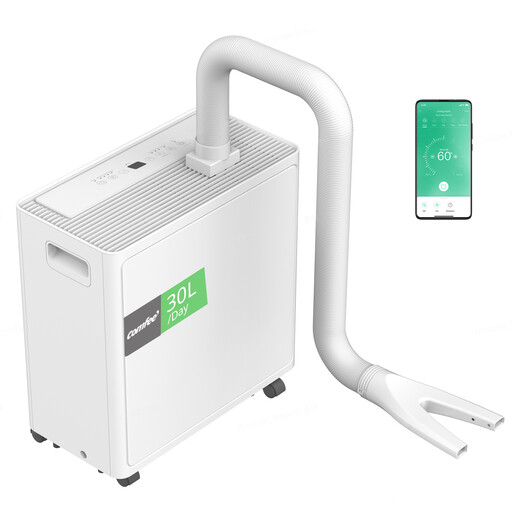
Comfee’ MDDA-30DEN7-SD, 30 L/day
For a room where you also dry washing; check the stated room size against your own room.
Up to 30 L/day; room size stated as approx. 130 m³ (73 m²); 3.2-L water tank; laundry drying mode; continuous drainage; app control; 4 modes and 24-hour timer; R290 refrigerant.
View at Joybuy
 No image available
Comfee’ MDDO-10DEN7, 10 L/day
For a smaller room, provided its size matches the appliance’s stated capacity. If you plan to use it in a bedroom, check the stated noise level too.
Up to 10 L/day; room size stated as approx. 40 m³ (16 m²); 2.5-L water tank; sleep mode at 36 dB; laundry drying mode; 3 modes and 24-hour timer.
View at Joybuy
 No image available
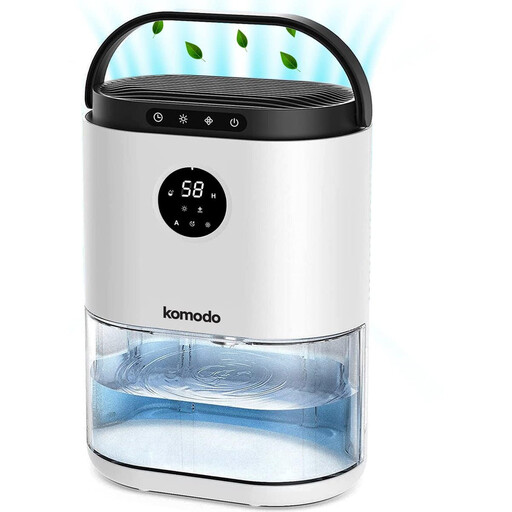
Komodo Small, 800 ml
If a compact appliance could suit your needs, check its stated room size and daily dehumidifying capacity before choosing it.
800-ml water tank; compact design; white finish.
View at Joybuy
 No image available
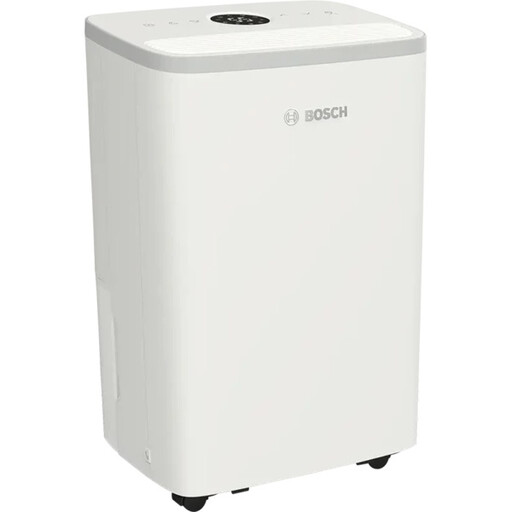
Bosch Dry 2000, 12 L/day
For a room that fits the stated room-size guidance; when choosing, consider how you’ll use it for sleeping or drying washing, too.
Up to 12 L/day; stated room size up to 55 m³; 2.5-L water tank; 38 dB; night and laundry modes. A drain hose is required for continuous drainage and, according to the product information, isn’t included.
View at Joybuy
 No image available
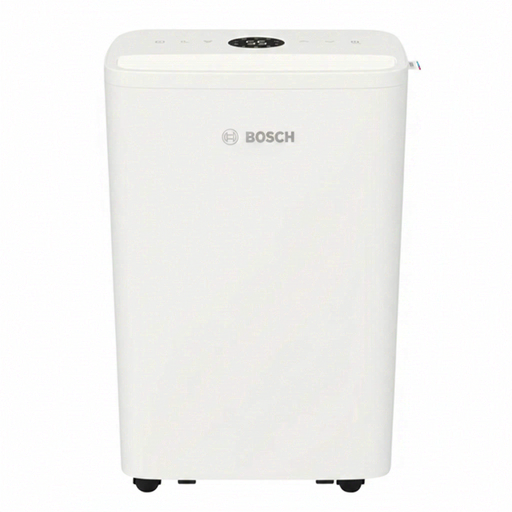
Bosch dehumidifier, 10 L/day
If you plan to put the appliance in a bedroom or laundry room, check that its stated operating modes and room size suit the way you’ll use it.
Up to 10 L/day; stated room size up to 17 m²; 2.5-L water tank; 36 dB on the highest setting; night and laundry modes.
View at Joybuy
Frequently asked questions about dehumidifiers in student rooms
What humidity level should I aim for in my student room?
The German Environment Agency recommends a relative room humidity of 40 to 60 per cent as a guide to reducing the risk of mould. Monitor the levels with a hygrometer. This is a guide, not a legal limit, and it doesn’t replace checking damp patches on walls.
Can I just air the room differently instead of using a dehumidifier?
Regular, thorough airing, combined with appropriate heating, is a sensible first step. If the damp persists, find out what’s causing it: an appliance can’t replace fresh air or fix a potential building defect.
How can I tell if an appliance is right for my room?
Compare your room’s size and conditions with the information for the specific model. Litres-per-day figures need to be considered alongside their test conditions; the figure alone doesn’t tell you how much water the appliance will collect in your room.
How do I work out the monthly electricity costs?
You’ll need the actual running time and your electricity price. Multiply the power consumption in kilowatts by the operating hours, then multiply the kilowatt-hours used by your price per kilowatt-hour. For example, De’Longhi lists an input power of 250 W for the DEX210SF, but doesn’t state its monthly consumption.
Do I have to report mould in a rented room?
If a defect in the rented property arises during the tenancy, § 536c Abs. 1 BGB requires you to notify the landlord without delay. Whether a particular damp patch is due to such a defect needs to be established on a case-by-case basis; a dehumidifier doesn’t replace investigating the cause.


