Which solution is right for you?

Students with damp clothes in the wardrobe

If clothes are getting damp mainly in one storage area, a compact fan-free solution placed directly in the wardrobe could be worth considering. Make sure the collection container is stable and that liquid can’t come into contact with your clothes.

Residents of cool, damp student rooms

If the whole room is affected by damp, room temperature and the operating temperature specified for the particular appliance are important factors to consider. Manufacturers such as Trotec and Wood’s offer desiccant models for cool rooms.

Students who sleep in the same room

If you’ll be running the appliance in the room where you sleep and study, weigh up fan noise, heat output and possible operating times against how much dehumidifying you need. With electric models, power consumption and water disposal can also affect your day-to-day routine.

What should you look for when buying?

Non-electric wardrobe absorber

A good fit if: The damp mainly affects a small, poorly ventilated storage area and you don’t want a plug socket or fan noise there.

Worth considering: A granule absorber works without electricity, but you’ll need to check and empty it, and refill it depending on the model. UHU warns that spilled liquid may cause stains.

Electric desiccant dehumidifier

A good fit if: Measurements suggest the whole room is persistently damp and on the cool side, and the specific model’s operating temperature range and footprint suit your space.

Worth considering: It uses electricity and gives off heat. Fan noise, operating settings and tank maintenance are especially important if you sleep in the same room.

Compressor dehumidifier

A good fit if: The whole room is damp but regularly heated. Compare a specific model at the temperatures your room actually reaches.

Worth considering: The type of appliance alone doesn’t tell you which will be cheaper to run or quieter overall.

Ventilate and find the source of the damp

A good fit if: There’s no sign of persistently high room humidity, or visible damage, a damp wall or mould could be the cause.

Worth considering: Regular ventilation can help remove moisture, but it won’t fix structural damage. A dehumidifier won’t identify or resolve the source either.

Your concern What to check before buying Who is this important to?
Wardrobe or whole room? Measure the room’s humidity and check the wardrobe and the wall behind it for damp patches. If my clothes are only damp in one storage area, I don’t want to choose an unnecessarily large room solution. Around 31% of consumers put localised wardrobe damp first.
Damp throughout a cool room Compare the room temperature with the specific model’s operating temperature, and allow space for it to run freestanding. If the whole room is affected and it gets cool at times, I need an appliance suited to those conditions. Around 31% of consumers prioritise damp in a cool room.
Peaceful sleep and heat Check the noise level at the setting you’ll actually use, as well as heat output and shut-off options. If I sleep in the same room, I want to weigh operating noise and extra heat against how much I need to use the appliance. Around 19% of consumers prioritise a peaceful night’s sleep.
Running costs and maintenance Compare power consumption and realistic operating hours, as well as tank emptying or refill requirements. If the appliance will run regularly, I want to factor in electricity use or refill materials, along with the maintenance involved. Around 19% of consumers focus primarily on running costs.

Avoiding buying pitfalls

  • Expecting a wardrobe absorber to dehumidify a whole room

    A passive absorber gradually takes in moisture where it’s placed. An electric appliance treats the room’s air, so the two solutions are designed for different scales of problem.

    Measure the humidity and check whether it’s your clothes, wardrobe or the whole room that’s affected before choosing an appliance.

    With a passive absorber, refilling and emptying it are part of regular maintenance.

  • Choosing solely by the highest litres-per-day figure

    A manufacturer’s claim such as “up to 9 l/24 h” for the Trotec TTR 57 E isn’t a reading for your student room; actual results may vary.

    Check the temperature range, room size, operating setting and your actual level of damp for the exact model.

    Choosing a model that’s too large could mean unnecessary upfront and ongoing electricity costs.

  • Confusing quiet operation with no maintenance

    A non-electric absorber doesn’t need a fan, but the container and granules still need attention. UHU warns that spilled liquid may cause stains.

    Place the container somewhere stable and ensure any liquid can’t reach clothes or other delicate materials.

    Depending on the product, you’ll need to refill the granules and empty the collected liquid.

  • Trying to tackle mould or damp walls with an appliance alone

    A dehumidifier won’t remove the cause of excess moisture. The German Environment Agency recommends identifying and addressing the source.

    Investigate any visible damage and find out what’s causing it, rather than simply choosing a more powerful appliance.

    If the source of the damp remains, further damage may develop.

Brands to consider

Meaco

Meaco offers several electric desiccant models that are worth comparing for a cool, damp room.

  • The manufacturer says DD8L models can be used from 0 °C; app compatibility is listed for the Pro.
  • Meaco’s Zambezi manual gives power consumption of 300 W on low and 600 W on medium or high fan settings. These figures don’t automatically apply to the Junior or Pro.

Trotec

The TTR 57 E is a desiccant appliance that could be considered as a specific model for a cool room.

  • Trotec lists a 5-l tank and operation from 1 °C for this model.
  • Its advertised dehumidifying capacity of up to 9 l/24 h isn’t a measurement for a specific student room.

Wood’s

The WDD80 and WDD90 are electric desiccant appliances that could be considered as alternatives for cool rooms.

  • Wood’s lists a 2-l tank and a hose connection for the WDD80.
  • Consider heat output and placement if you’ll be using the room as both a living space and a bedroom.

UHU

The refillable, non-electric Original Moisture Absorber is a different type of product, designed for small, poorly ventilated storage areas.

  • UHU states that 450 g can absorb around 0.5 l of water; the amount depends on the room and climate.
  • You’ll still need to refill it and empty it safely. Spilled liquid may cause stains.

Pro Breeze

The Osmo absorber described is a non-electric, refillable option for localised damp.

  • The version described comes with a 700-g tablet and a 1.3-l container.
  • These details relate to a UK product variant and don’t confirm that a German version exists or is available to buy.

Related products at Joybuy

This selection includes non-electric granule absorbers for localised wardrobe damp, as well as electric dehumidifiers for room humidity and laundry. For electric models, check the stated operating details and make sure the appliance is suitable for your room.

Comfee MDDO-10DEN7 dehumidifier

Comfee MDDO-10DEN7

For a room where you’d also like to consider a laundry-drying function and sleep mode.

10 l/day; 2.5-l water tank; 3 modes; 24-hour timer; automatic defrost; R290 refrigerant; sleep mode at 36 dB; specified for approximately 40 m³ (16 m²).

View at Joybuy
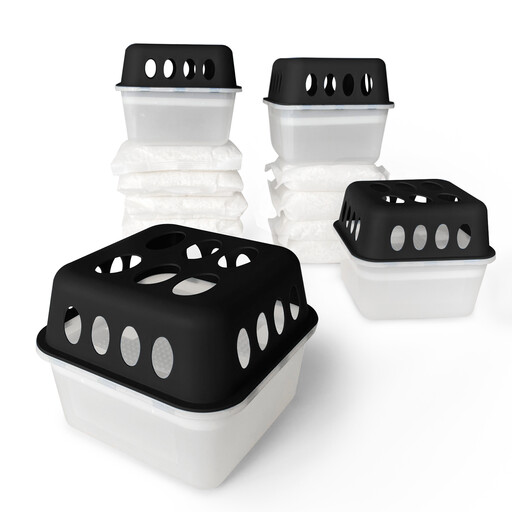
Floordirekt Hava set with 4 moisture absorbers and 8 refill bags

Floordirekt Hava set

For localised damp in the wardrobe when you’re looking for a solution without electricity or cables.

4 moisture absorbers and 8 refill bags; black. The refill bags need replacing when the granules are used up.

View at Joybuy
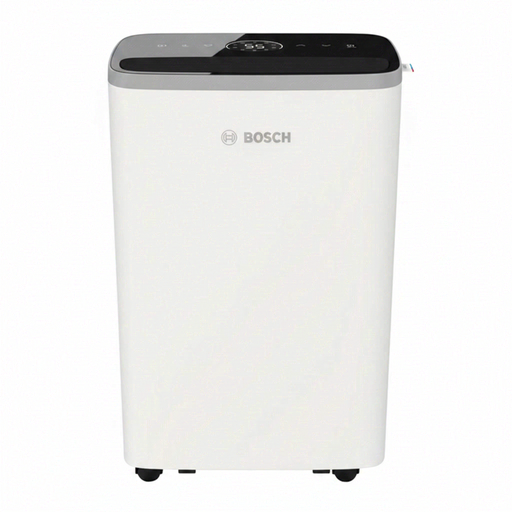
Bosch Dry 4000 dehumidifier

Bosch Dry 4000

For a room where you’d like to compare a laundry mode with a night mode.

16 l/day; up to 75 m³; 2.5-l water tank; 40 dB; 2 fan speeds; Auto, Night and Laundry modes; LED display. The product description states that a hose for continuous drainage isn’t included.

View at Joybuy
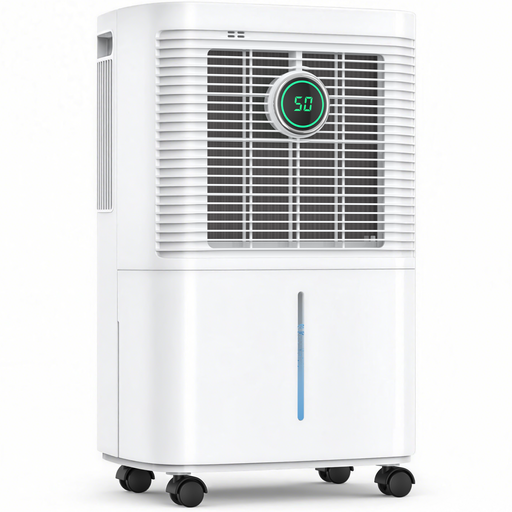
Ateroll dehumidifier with automatic humidity control

Ateroll dehumidifier

For a room where you’d like to consider automatic humidity control and a laundry mode.

Up to 16 l/day; sleep mode at 36 dB; automatic humidity control; laundry mode; automatic defrost.

View at Joybuy
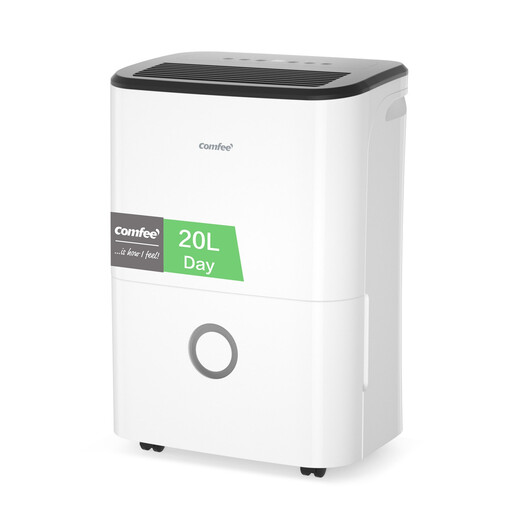
Comfee MDDF-20DEN7 dehumidifier

Comfee MDDF-20DEN7

For a room where you’d like to compare a clothes-drying mode with continuous drainage.

Up to 20 l/24 h; removable 3-l water tank; continuous drainage; 3 modes; 24-hour timer; R290 refrigerant; automatic defrost; specified for approximately 100 m³ (40 m²). Continuous drainage requires a hose, which the product description states isn’t included.

View at Joybuy

Frequently asked questions

When should I check the room humidity instead of using a wardrobe absorber?

If more than just individual items of clothing feel damp, or if you notice condensation or stains, measure the room’s humidity and investigate possible causes. To reduce the risk of mould, the German Environment Agency recommends keeping relative humidity indoors between 40 and 60 %. However, a single reading won’t explain a localised damp problem.

Can I place an electric desiccant dehumidifier between clothes?

Don’t simply run it in a packed wardrobe. Use a stable, level surface and follow the instructions for the specific model on clearance, electrical connections and water. Meaco’s manual, for example, warns against damaged power cables and standing water.

What will I need to empty or replace regularly?

With an electric model, you’ll need to empty the condensate tank or use a drain as specified by the manufacturer. With a passive UHU absorber, you’ll need to empty the liquid and refill the granules. UHU warns that spilled liquid may cause stains.

How do I compare running costs and what happens if a product develops a fault?

For an electric appliance, multiply the power consumption of the mode you use in kW by the actual number of hours it runs and your electricity price per kWh. For an absorber, factor in suitable refills. For consumer purchases in the EU, you have at least a two-year legal guarantee from the seller covering faulty goods; an additional manufacturer’s warranty doesn’t replace it.

When does an electric dehumidifier need a CE marking?

A CE marking is required if the product falls under harmonised EU rules that require one. According to the European Union, the manufacturer uses it to declare that the product complies with the applicable rules; it isn’t a general, independent quality mark. This requirement doesn’t apply in the same way to a purely non-electric granule container.

Is a dehumidifier enough if there’s already mould on the wall or clothes?

No. The German Environment Agency stresses that the cause of excess moisture must be identified and dealt with. For more extensive mould growth, the consumer advice centre recommends seeking professional help. An appliance won’t identify or resolve the cause.