When the heating makes the air feel dry
If the air in your room feels dry, start by checking whether you really need to add moisture. The Federal Environment Agency recommends using a hygrometer to keep an eye on relative humidity.


First, measure the relative humidity in the room you use. If it is already within the 40–60% range recommended by the Federal Environment Agency, a dry feeling in the room alone is not a reason to add moisture. If readings are repeatedly low, a correctly sized evaporative humidifier with adjustable controls may be an option. An ultrasonic model could also work if you can reliably keep the tank clean and use suitable water, while a warm-mist humidifier has different requirements for its position and care.
If the air in your room feels dry, start by checking whether you really need to add moisture. The Federal Environment Agency recommends using a hygrometer to keep an eye on relative humidity.
If you sleep and study in the same room, noise, lights and a suitable night mode all matter. Check the figures for the specific model and setting. The manufacturer’s claims won’t necessarily tell you how disruptive it will feel in your room.
If it’s hard to fit regular maintenance into your routine, check how easy the tank is to access and clean, and whether filters need replacing. The US Environmental Protection Agency provides care advice for portable humidifiers; you should also follow the instructions for your specific model.
First, measure the humidity in the room you use. Then choose the technology, controls and maintenance requirements that suit your sleep and study routine.
| Priority | What to check when buying | Who it matters most to |
|---|---|---|
| Controlling humidity | Check for a hygrometer or clear humidity display, adjustable target humidity and a suitable room-size rating. Also monitor humidity away from the appliance. | If I want to check whether dry air from the heating really is an issue and avoid excess humidity, I look for measurement and control features. Around 33% of consumers prioritise this level of control. |
| Sleep and study | Compare noise figures for each setting, whether the lights can be switched off and the space needed for the appliance. A manufacturer’s figures are no substitute for trying it in your own room. | If the appliance is next to my bed or desk, I want its lights and noise to be as unobtrusive as possible in everyday use. Around 27% of consumers prioritise quiet when sleeping or studying. |
| Looking after the tank and appliance | Check whether the tank and water-carrying parts are easy to reach, and what type of water the instructions specify. With ultrasonic models, also consider water quality. | If I have little time for maintenance, I want to know whether the tank is easy to empty and clean. Around 20% of consumers prioritise ease of care. |
| Weighing up ongoing costs and effort | Check the specific model for any filters or other consumables it needs, replacement intervals and power consumption. | If I want to keep ongoing costs and effort down, I compare consumables and maintenance as well as the purchase price. Around 20% of consumers focus above all on the total outlay. |
The Federal Environment Agency recommends a relative indoor humidity of 40–60% and warns of potential moisture problems on cold surfaces. If a room already has enough humidity, a dry feeling alone is no reason to add more.
Start by measuring with a hygrometer, paying particular attention to corners, external walls and areas behind furniture.
According to the US Environmental Protection Agency, ultrasonic humidifiers can release minerals and microorganisms from the tank into the air. A large tank doesn’t remove the need for regular maintenance.
Check whether you can clean the tank and appliance as instructed and use the recommended water. For portable humidifiers, the US Environmental Protection Agency recommends emptying, drying and refilling them daily, as well as cleaning them regularly.
Changing the water and cleaning the appliance take regular time, even if you don’t need to refill it as often.
Models vary. Stadler Form offers humidifier filters for the Oskar range, while Venta describes the LW25 Comfort Plus as a filter-free cold-evaporation model.
Compare the exact model, the consumables it needs and its care instructions rather than choosing based on the technology alone.
Stadler Form recommends replacing the filters for the Oskar/Karl/Noah every 2–3 months, so filter replacement is an ongoing task.
The Beurer LB 55 heats water and, according to the manufacturer, doesn’t have an adjustable target humidity. Don’t assume it will regulate humidity for you.
Check the specific model’s power consumption and descaling requirements, and make sure you have a safe place to put it. If needed, monitor the humidity separately.
Descaling and electricity use are part of running the appliance. You can’t work out a specific cost without knowing how long it will run and your electricity tariff.
The Oskar little is an evaporative humidifier for smaller rooms. Stadler Form gives its room-size rating as up to 30 m².
The LB 300 Plus uses cold evaporation and, according to the manufacturer, has automatic and night modes. The LB 55 is a warm-mist alternative.
The adjustable HU5710/03 evaporative humidifier is part of the 5000 Series. The manufacturer gives this model a room-size rating of up to 56 m² and an output of 400 ml/h.
According to the manufacturer, the LW25 Comfort Plus is a filter-free cold-evaporation model with a digital humidistat.
The Classic 300S is an ultrasonic humidifier. Levoit’s German website lists a 6-l tank.
The models below use evaporative or ultrasonic technology and may suit rooms where measurements show low humidity. Before buying, check that the room-size rating, controls and maintenance requirements are right for your room.
 No image available
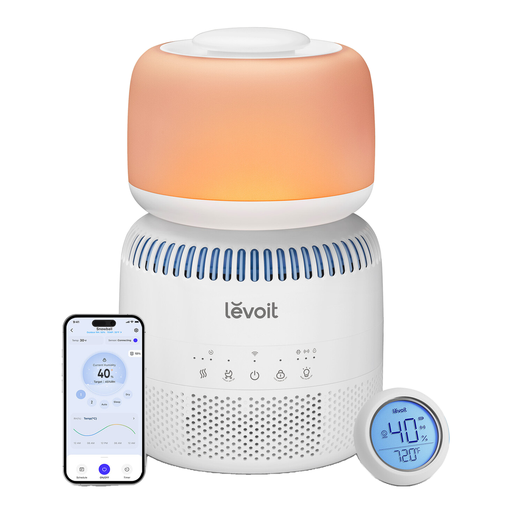
Could suit a room where you’re looking for evaporative technology and adjustable humidity control.
The product description lists a 3.8-l tank, a separate humidity sensor, adjustable humidity targets and app control. It also mentions a dual-filter system, automatic filter drying and a night light without blue light. Check the product details to see whether its room-size rating suits your room.
 No image available
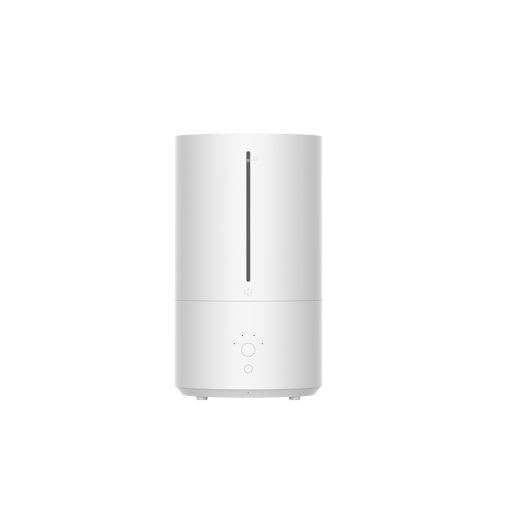
Worth considering if you’re looking for ultrasonic technology with automatic humidity control and app control, and can keep up with regular tank maintenance.
The product description lists top filling, an automatic mode, an output of up to 350 ml/h and a noise level of 32 dB. For ultrasonic humidifiers, the US Environmental Protection Agency recommends changing the water regularly and cleaning the tank. It also warns that minerals and microorganisms from the tank can enter the air.
 No image available
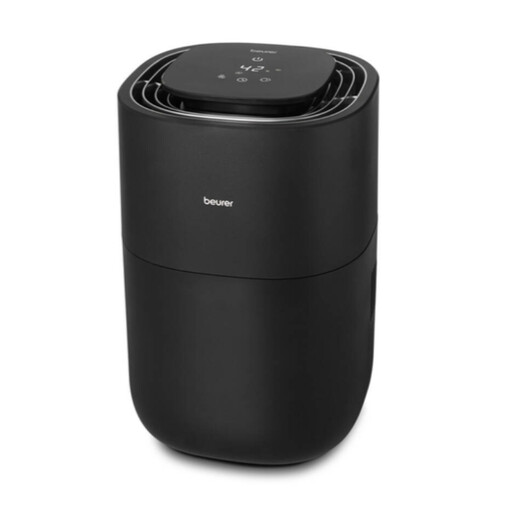
Could be a good fit if you’re looking for a cold-evaporation humidifier with adjustable humidity targets and a night mode.
The product description lists three humidity settings: 40%, 50% and 60%, an automatic mode and a room-size rating of around 30 m². It also describes a night mode with a dimmed display and filter replacement about every six months.
 No image available
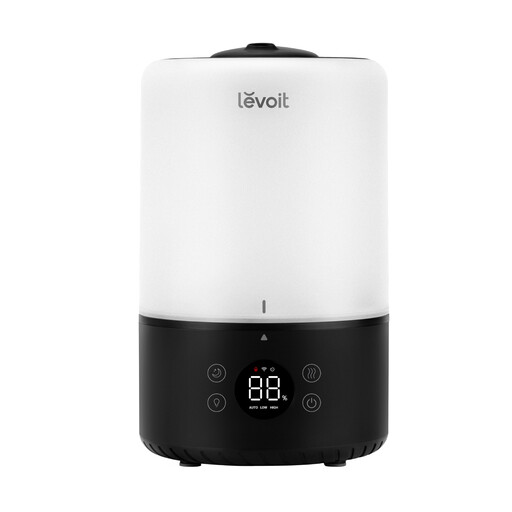
Could be worth a look if you want a top-fill model with automatic humidity control and app-based schedules.
The product description lists a 3-l tank, cool mist and a noise level of no more than 28 dB. It says the water-filter sponge should be cleaned or replaced every one to two weeks, and also recommends purified or distilled water and regular tank cleaning.
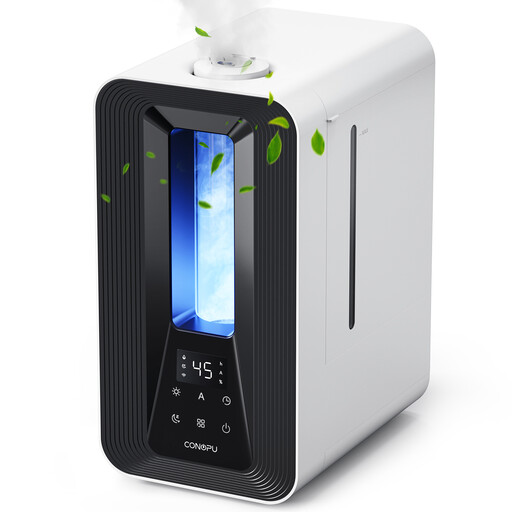 No image available
Could be an option if you want ultrasonic technology and a sleep mode, and can fit water changes and cleaning into your routine.
The product description lists a 5-l tank, automatic humidity control, a sleep mode, a timer and top filling. Its stated control range goes up to 80%, while the Federal Environment Agency recommends a relative indoor humidity of 40–60%. Regular tank maintenance is also important for ultrasonic humidifiers.
Go by measurements in the room you use, rather than relying on how the air feels. The Federal Environment Agency recommends a relative indoor humidity of 40–60% and suggests using a basic hygrometer to check it. Also look out for cold walls and possible condensation.
Choose a safe, stable spot and follow the instructions for your specific model. While it’s running, check nearby surfaces for moisture too. The recommended clearances depend on the appliance and the manufacturer’s guidance.
For portable humidifiers, the US Environmental Protection Agency recommends emptying, drying and refilling them daily, and cleaning them every third day. Also follow the instructions for your specific model. These are care recommendations, not German legally mandated intervals.
Check whether your model needs filters or other consumables, and how often the manufacturer recommends replacing them. In Germany, the statutory guarantee against the seller is distinct from a voluntary warranty. Check the specific warranty terms separately.
For electrical equipment covered by relevant harmonised EU legislation, the CE marking is the manufacturer’s declaration of conformity, not an independent quality mark. The Low Voltage Directive applies within its specified voltage ranges; the rules that apply to a particular model depend on its design. Product identification, manufacturer details and safety information in German are important things to check.