What should you look for when buying?
First, check whether ventilation and wiping away water reduce humidity after a shower. Only if the room repeatedly stays damp is it worth comparing electric appliances by room size, noise and upkeep.
Ventilate, wipe down and measure
A good fit if: humidity mainly occurs straight after a shower and then falls again.
Bear in mind: you need a practical way to ventilate and should keep an eye on humidity levels.
Refrigerant dehumidifier
A good fit if: the room repeatedly stays damp despite suitable ventilation, and the temperature and room size are within the specific model’s stated limits.
Bear in mind: the appliance needs electricity and floor space; the tank and filter may need maintenance. A manufacturer’s stated daily extraction rate is no guarantee of performance in your room.
Desiccant dehumidifier
A good fit if: the temperature where you plan to put it is too low for a specific refrigerant model you have checked.
Bear in mind: this type also needs electricity. A lower minimum operating temperature alone tells you nothing about energy use or suitability for a normally heated bedroom.
| What you need |
What to look for when buying |
Who will find this most important? |
| Clear moisture from showering |
Monitor humidity with a hygrometer; consider ventilation options in the bathroom and how damp air might travel into your room. |
If humidity mainly occurs straight after a shower, I want to ventilate, wipe water off surfaces and monitor what happens before buying an appliance. Around 36 % of consumers prioritise clearing moisture without buying an appliance unnecessarily. |
| Recurring damp |
Compare the room volume and operating conditions with the information for the exact model; assess daily extraction rates only in light of the stated test conditions. |
If my room repeatedly stays damp even after ventilation, I need an appliance whose specifications match the room and operating conditions. Around 27 % of consumers focus primarily on effective dehumidification when indoor humidity keeps returning. |
| Quiet operation and floor space |
Check the noise rating, operating modes, appliance dimensions and possible locations in your living and sleeping space. |
If I sleep or study in the same room, the planned use must fit with my need for quiet and the space available. Around 19 % of consumers put a peaceful environment for sleeping and studying first. |
| Electricity and emptying the tank |
Check the power consumption, expected running time, your electricity tariff, tank capacity and, if needed, drainage and any accessories. |
If I use it regularly, I want to estimate how long it will run and how often I will need to empty the tank. Around 18 % of consumers focus mainly on electricity use and the effort of emptying the tank. |
Joybuy products for rooms that repeatedly stay damp
This selection features electric dehumidifiers for rooms where humidity repeatedly stays high despite suitable ventilation. Compare the room specifications, noise and ease of use with your living and sleeping space.
 No image available
Comfee MDDO-10DEN7 dehumidifier
An option to compare if you need an appliance for recurring damp in a smaller room and would like a sleep mode.
The product information states up to 10 l/day, for rooms up to around 40 m³ (16 m²), a 2,5-l tank and three modes. It also specifies 36 dB on the highest setting. The tank needs to be emptied unless a drain hose is connected.
View at Joybuy
 No image available
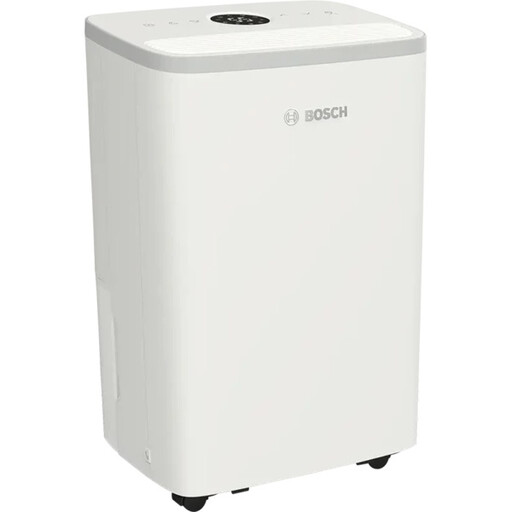
Bosch Dry 2000 dehumidifier
This model is worth considering for a room that repeatedly stays damp, provided its stated room size matches your room.
The product information states up to 12 l/day, up to 55 m³ and a 2,5-l tank. It lists Auto, Night and Laundry Drying modes. According to the product information, a drain hose for continuous drainage is not included.
View at Joybuy
 No image available
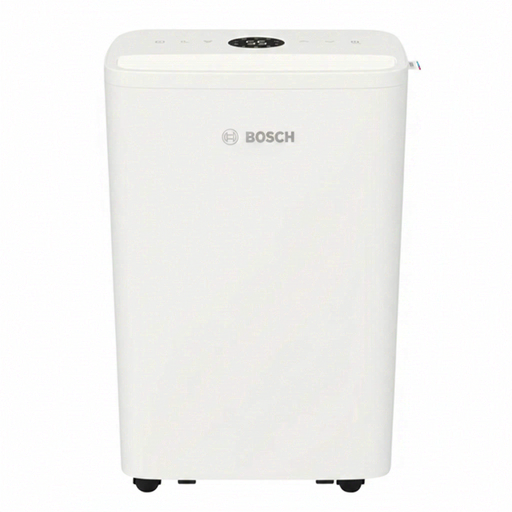
Bosch dehumidifier, 10 l/day
An option for smaller rooms, provided the stated floor area matches your room.
The product information states up to 10 l/day, a room size of up to 17 m² and a 2,5-l tank. The stated room size does not cover larger spaces.
View at Joybuy
 No image available
Bosch Dry 4000 dehumidifier
This model is worth comparing if its stated room size matches the room that repeatedly stays damp.
The product information states up to 16 l/day, up to 75 m³ and a 2,5-l tank. It lists Auto, Night and Laundry Drying modes. According to the product information, a drain hose for continuous drainage is not included.
View at Joybuy
 No image available
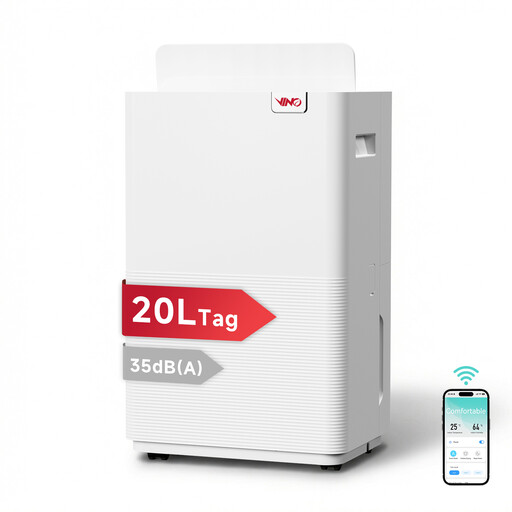
VINO 20L Smart Dehumidifier
An option to compare if app control and scheduled operation would be useful in your day-to-day routine.
The product information states up to 20 l/day, for rooms up to 40 m², Wi-Fi control, a 2,5-l tank and Auto, Dry and Sleep modes. The tank needs to be emptied unless continuous drainage is set up.
View at Joybuy
Frequently asked questions
Do I need to run a dehumidifier after a shower?
Not necessarily. The German Environment Agency recommends clearing excess moisture immediately by opening the windows wide, and wiping water off bathroom surfaces if needed. Check whether humidity in your living space falls afterwards. If your bathroom is separate, keeping the door closed helps stop damp air from entering your room.
How can I tell if my room stays too damp for too long?
Measure the room’s humidity regularly with a thermo-hygrometer rather than judging it by condensation alone. Consumer advice centres suggest 40–60 % relative humidity as a guide for living spaces, and note that humidity can be higher near cold wall surfaces than in the middle of a room.
How can I estimate a dehumidifier’s running costs?
Check the power consumption of the specific model and calculate costs using your expected running time and electricity price. De’Longhi states 250 W for the DEX210SF. This is a specification for that model and, on its own, does not predict your monthly electricity costs.
What should I check about placement and maintenance?
Follow the instructions for your chosen model when positioning and maintaining it, and check that you can empty the tank easily or have a suitable drain available. Bosch lists a tank, overflow protection and the option of continuous drainage for the Dry 4000. Check before buying whether any required accessories are included.
Can an old dehumidifier go in the general waste bin?
No. The German Environment Agency explains that discarded electrical appliances must be disposed of separately from household waste, in accordance with the Electrical and Electronic Equipment Act (ElektroG).


