Who are the different designs suited to?

Critical archive listeners

You compare restored versions and want to assess sonic detail, rather than simply enjoy listening to music. The IASA describes quality control as an important part of audiovisual preservation; choosing headphones doesn’t replace this step.

Listeners in a shared home office

You check recordings despite conversations or other background noise, so you’re more likely to need isolation than an open-back design.

Listeners with long sessions

You wear your headphones for extended periods of checking and pay particular attention to fit, replaceable earpads and a suitable connection to your audio source.

What should you look for when buying?

Open-back studio headphones

A good fit if: You want to assess spatial placement and sound in a quiet room.

Bear in mind: Background noise isn’t blocked out as it is with a closed-back model, and other people are more likely to hear what you’re listening to.

Closed-back studio headphones

A good fit if: Conversations or other workplace noise disrupt your listening, or you want to limit sound leaking out.

Bear in mind: The level of isolation, clamping force and sound tuning vary by model.

Priority What to check when buying Who is it important to?
Assessing sound Design and the tuning of the specific model; compare critical passages with familiar audio material. If I want to compare restored versions critically, the sound of the specific model matters more to me than a studio label alone. Around 33% of consumers have this as their top priority.
Isolation Check the noise levels in your workplace and how the earpads fit. If conversations or other noise mask quiet passages, I’m more likely to need isolation than an open-back design. Around 27% of consumers have this as their main priority.
Comfort during long sessions Try the fit for yourself and check whether the earpads can be replaced on the exact model. If I check recordings for extended periods, I want a comfortable fit and, if possible, replaceable earpads. Around 20% of consumers say this matters most to them.
Connectivity and usability Check the output on your audio source, connector, cable length, adapters and replacement part information. If I want to use my headphones with my existing audio source and keep them for longer, I look at the connection and replaceable parts. Around 20% of consumers put this first.

Common buying mistakes

  • Assuming a studio label means automatically neutral sound

    The label alone doesn’t tell you how a particular model is tuned. HIFI.DE describes the Audio-Technica ATH-M50x as having a pronounced bass boost.

    Take the tuning of the specific model into account, especially when assessing changes in the low frequencies.

  • Choosing open-back headphones for every home office

    An open-back design won’t solve problems with distracting background noise or stop others in the room from hearing what you’re listening to.

    Decide whether open-back or closed-back headphones are better suited to your work based on your room and noise levels.

  • Confusing similarly named models and versions

    The DT 770 PRO is available in different impedance versions. HD 490 PRO and HD 490 PRO Plus are different model names.

    Before buying, check the full model name, version, connections and what’s actually included in the box.

    A different cable, an adapter or a different package contents may mean you need to buy extra accessories.

Key brands at a glance

beyerdynamic

The closed-back DT 770 PRO and open-back DT 900 PRO X are designed for different listening situations.

  • beyerdynamic lists replaceable earpads for the 80-ohm version of the DT 770 PRO. The cable on the 48-ohm DT 900 PRO X is detachable.
  • These details don’t prove that the models have the same tuning or that either is suitable for every audio output. Check the exact version and the connection on your source.

Sennheiser

The closed-back HD 280 PRO and open-back HD 490 PRO illustrate different monitoring options.

  • Sennheiser lists replaceable earpads and up to 32 dB of ambient noise attenuation for the HD 280 PRO. The manufacturer lists two pairs of earpads for the HD 490 PRO.
  • The attenuation figure is a manufacturer’s claim, not a guarantee that everyone will experience the same effect. The HD 490 PRO and HD 490 PRO Plus have different model designations and may come with different contents.

Audio-Technica

The closed-back ATH-M50x is an option if detachable cables are useful for different locations.

  • Audio-Technica describes passive isolation and three cables in the EU package.
  • HIFI.DE criticises the ATH-M50x for its pronounced bass boost. So don’t assume the tuning is neutral just because of the product category.

AKG

The closed-back, foldable K371 is a monitoring option if you’re interested in a compact design and detachable cables.

  • AKG lists a nominal impedance of 32 ohms and three cables for the K371.
  • This information comes from the US product page and doesn’t confirm what’s included with the German version.

Sony

Sony lists the MDR-7506 as headphones for broadcast and studio environments.

  • Sony lists a 3-m cable and a weight of 230 g for the MDR-7506.
  • These manufacturer’s claims alone don’t establish whether the headphones are suitable for a particular restoration decision or whether replacement parts are available.

Joybuy products for less distracting listening

The following over-ear headphones are described as having noise cancelling and may be worth considering for a home office with distracting background noise. For critical restoration assessments, check the specific sound tuning and whether they can be connected by cable; the listed features don’t prove that they offer neutral reference playback.
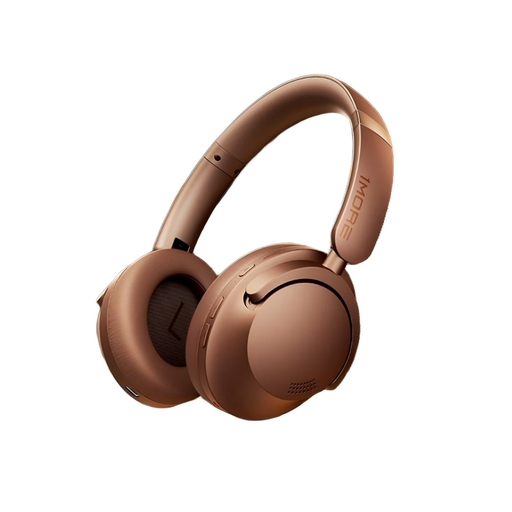
1MORE SonoFlow Pro, Global, Mocha Brown

1MORE SonoFlow Pro, Global, Mocha Brown

The active noise cancelling described may be useful in a home office with distracting background noise.

40 mm drivers; Bluetooth; active noise cancelling.

View at Joybuy
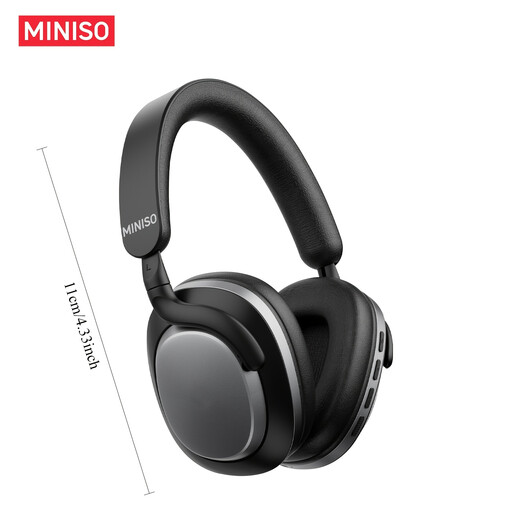
MINISO MG210 Wireless Noise-Cancelling Over-Ear Headphones, Black

MINISO MG210 Wireless Noise-Cancelling Over-Ear Headphones, Black

The over-ear design and noise cancelling mentioned in the title make these a potential option if you want to reduce background noise.

Bluetooth; noise cancelling; over-ear design.

View at Joybuy
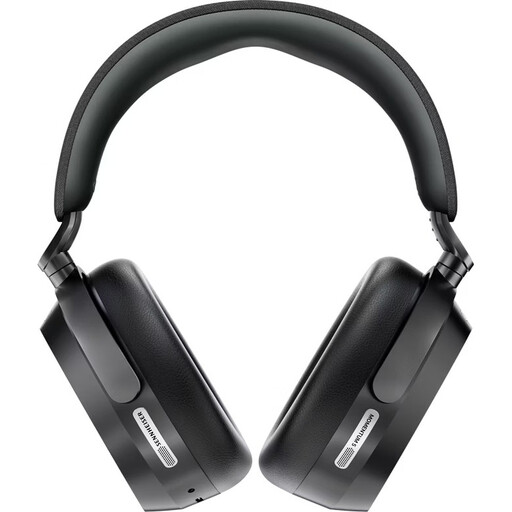
Sennheiser MOMENTUM 5 Wireless, Black

Sennheiser MOMENTUM 5 Wireless, Black

The closed-back design and active noise cancelling are useful for a home office with distracting background noise.

Bluetooth 5.4; 42 mm drivers; supplied 3.5 mm audio cable; closed-back design.

View at Joybuy
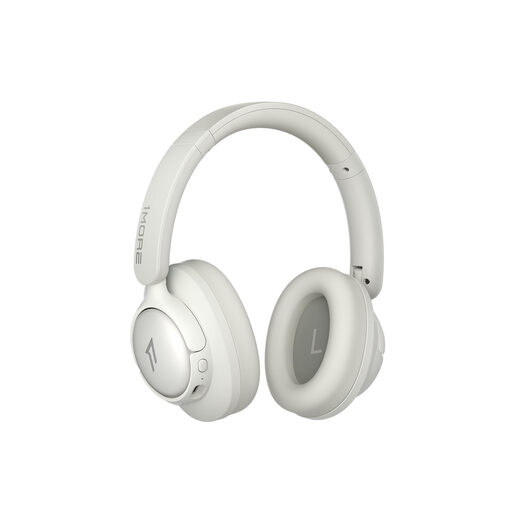
1MORE HQ31 SonoFlow SE Over-Ear Headphones, Oat White

1MORE HQ31 SonoFlow SE Over-Ear Headphones, Oat White

The noise cancelling described may be useful when listening in a noisy environment.

40 mm drivers; LDAC support; active noise cancelling; up to 90 hours of playback according to the product description.

View at Joybuy

JBL LIVE 770NC Wireless Over-Ear Headphones, White

JBL LIVE 770NC Wireless Over-Ear Headphones, White

The adaptive noise cancelling described may be useful in a home office where background noise can be distracting.

Bluetooth 5.3; multipoint; detachable audio cable.

View at Joybuy

Frequently asked questions

Is the widest possible stated frequency range enough to assess restoration flaws reliably?

No. The range given in a product specification doesn’t, by itself, tell you whether the tuning is neutral. Compare the design and assessments of the specific model; check critical passages using familiar material and a repeatable workflow.

What should I check when connecting to a computer or audio interface?

Check that the headphone output matches the connector, adapter and cable supplied with the exact model. For the DT 900 PRO X, beyerdynamic lists a 3.5 mm plug with a 6.35 mm adapter and a detachable mini-XLR cable. The nominal impedance alone doesn’t tell you for certain how loud your specific source will be.

What should I consider for long listening sessions and replacing earpads?

Check the fit and only use replacement earpads designed for your exact model. Keep the volume moderate and take listening breaks: the World Health Organization notes that both volume and listening time affect the risk of hearing damage.

What are your rights if headphones bought from a business are faulty?

For a consumer purchase in the EU, you generally have a statutory legal guarantee of at least two years from the date you receive the goods, against the seller. A voluntary manufacturer’s warranty is separate; the EU rules cited don’t apply in the same way to private sales.

Can you put worn-out headphones in general waste in Germany?

No. According to the German Federal Ministry for the Environment, old electrical and electronic equipment must not go in household waste. Take it to an authorised collection point or a retailer required to accept it under the relevant conditions.