If noise at work is distracting, or sound from your headphones could leak into a microphone, a well-fitting, closed-back wired pair is a good place to start. In a quiet listening space, open-back headphones may also be worth considering for longer critical comparisons. Compare familiar dialogue passages before and after processing, and check the fit, connection, cable routing and volume using your own headphone output.
Who are the different designs suited to?
Dialogue editors working in shared spaces
If you’re checking quiet speech while there’s other noise around you, isolation and reduced sound leakage are important things to consider. Focusrite Support describes closed-back headphones as helpful for limiting sound leakage near a microphone.
Editors with a quiet listening space
If you’re repeatedly comparing processed dialogue passages and sound leakage won’t disturb anyone, open-back headphones may also be an option. iZotope recommends comparing the processed passage with the original to spot excessive noise reduction and any resulting artefacts.
Frequent users of a standing desk
If you listen for long periods and switch between sitting and standing, consider the fit, cable routing and connection to your output device together. Focusrite Support notes that the volume you can achieve depends on the specific combination of equipment.
What should you look for when buying?
| Consideration |
What to check when buying |
Who is this important for? |
| Assessing artefacts |
Listen to the same dialogue passage before and after processing at a comparable volume; listen for changes to the speech and background. |
If I want to judge whether processing has changed the speech or background, I need to be able to repeat the comparison using the same passage. Around 33% of consumers put checking for residual noise and processing artefacts first. |
| Isolation |
Check the design and fit in the actual conditions at your workspace, and listen for sound leakage too. |
If conversations or other noises interfere with my listening checks, suitable isolation matters more to me than an open-back design. Around 25% of consumers prioritise limiting background noise or sound leakage. |
| Fit during longer sessions |
Where possible, assess the fit and warmth over a realistic period of wear; check that replacement pads and parts are available for the specific version. |
If I repeatedly check longer dialogue passages, my headphones need to be comfortable and mustn’t distract me with pressure. Around 25% of consumers focus on fit during longer listening sessions. |
| Connection and cable routing |
Check that the plug and any adapters match your headphone output; route the cable while standing and sitting, and test the volume on your own device. |
If I switch between standing and sitting, I want to move freely and have a connection that suits my output device. Around 17% of consumers prioritise the connection and cable routing. |
Which buying mistakes should you avoid?
-
Assuming a wide frequency range guarantees you’ll spot artefacts
A figure on a spec sheet doesn’t prove that you’ll pick up every trace of noise or processing flaw in your workspace.
Compare familiar dialogue passages before and after processing instead of choosing on the basis of the stated frequency range alone.
-
Choosing open-back headphones without considering the room
An open-back design won’t limit noise at your listening position in the same way as a closed-back pair. It may also be unsuitable if sound from your headphones could reach a nearby microphone.
First decide whether your listening space is quiet and sound leakage is acceptable. If not, consider a closed-back option.
-
Focusing only on impedance
The volume you can achieve also depends on the headphone output and the sensitivity of the specific model. At an adjustable-height desk, the cable also needs to work in both positions.
Test the headphones and output device together, and check the cable routing while standing and sitting. Match replacement parts against the full model name.
Which brands offer suitable models to consider?
beyerdynamic
The DT 770 PRO X is a closed-back, wired option for a potentially noisy workspace.
- beyerdynamic lists a 48-ohm impedance, velour ear pads and a detachable mini-XLR cable for the DT 770 PRO X.
- The manufacturer’s claims about comfort or sound aren’t an independent assessment of how they’ll perform at your standing desk.
Audio-Technica
The ATH-M50x is a closed-back, wired monitoring headphone with passive isolation.
- Audio-Technica lists a detachable cable and passive isolation.
- Check for yourself how well they block noise in your workspace and whether their sound suits your dialogue comparisons.
Sennheiser
The HD 400 PRO is an open-back option for a quiet listening space and longer critical listening comparisons.
- Sennheiser lists replaceable ear pads, a detachable 3-m coiled cable with adapter, and 120 ohms.
- The open-back design won’t block distracting background noise. The comfort and sound claims on the product page come from the manufacturer.
Sony
The MDR-7506 is a wired model from Sony’s studio and broadcast range.
- For this specific model, Sony lists 24 ohms at 1 kHz, plus a mini-jack plug and an included adapter.
- Try them on for yourself rather than assuming that individual manufacturer specifications mean they’ll be comfortable during long listening sessions.
Joybuy headphones for checking dialogue
This Joybuy selection features headphones that may be suitable for working at a standing desk. Check that the design and signal path suit your listening space and output device.
 No product image available
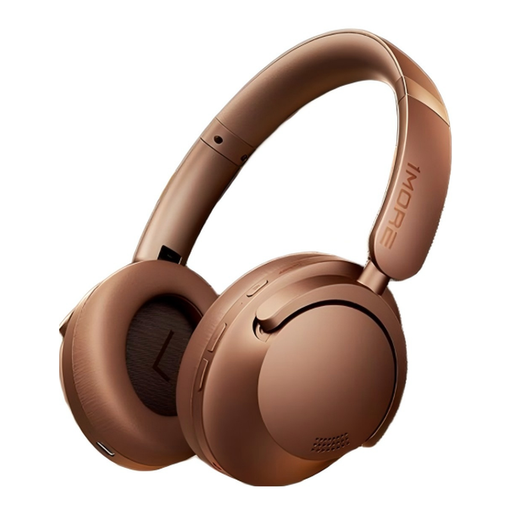
1MORE HQ51 SonoFlowPro Global, Mocha Brown
Listed as over-ear headphones with ANC. Compare the same dialogue passage using your intended signal path rather than relying on noise reduction alone.
View at Joybuy
 No product image available
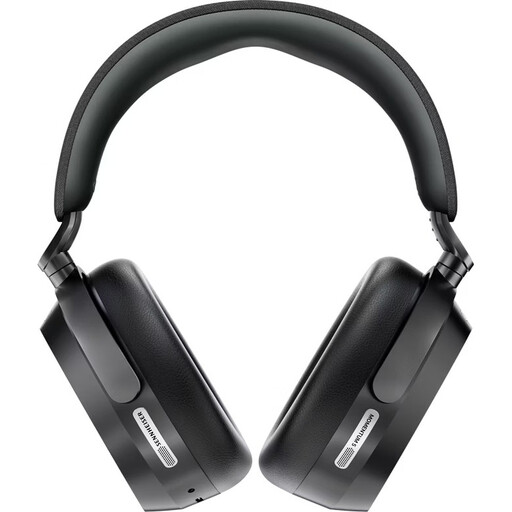
Sennheiser MOMENTUM 5 Wireless, Closed-Back, Black
The closed-back, over-ear design is worth considering for a workspace where there may be distracting noise. If you want to compare using a wired connection, check that the listed 3.5-mm connection is compatible with your headphone output.
View at Joybuy
Frequently asked questions
How can I check whether dialogue clean-up has introduced new artefacts?
Listen to the same passage before and after processing through the same signal path, at a comparable volume. Don’t just check whether the unwanted noise is quieter; listen for unnatural changes to the speech or background too.
Do I need a special audio interface for open-back headphones?
Not simply because they’re open-back. What matters is having a compatible plug and a usable volume with your specific headphone output and model; impedance alone isn’t enough to judge this.
What should I check before buying headphones for a standing desk?
Check the cable routing while standing and sitting, and make sure the plug matches your output device. What’s included and which connections are available vary by model and version.
Do additional manufacturer repair rights automatically apply to studio headphones?
You can’t assume that a blanket right applies to every pair of studio headphones. Verbraucherzentrale describes provisions for certain product groups, so check whether the specific product group is covered. These rights are also separate from your statutory rights against the seller if the product is faulty.


