Mixing folk at a quiet desk
If you mainly mix vocals and acoustic instruments, and sound leakage won’t disturb anyone, open-back headphones may suit you. Even so, check your mix on another playback system.


For mixing folk at a quiet desk, open-back studio headphones are a sensible starting point, as long as sound leakage won’t disturb anyone and you’re not recording at the same time. If you’re recording vocals in the same space or need to avoid disturbing others while working from home, a well-fitting pair of closed-back headphones is the better choice. Musikhaus Korn notes that as little playback as possible should reach the microphone track during vocal recording. iZotope explains that headphones and speakers present the stereo image differently.
If you mainly mix vocals and acoustic instruments, and sound leakage won’t disturb anyone, open-back headphones may suit you. Even so, check your mix on another playback system.
If you also record with a microphone while working from home, it’s important to keep click and playback sounds out of the recording as much as possible. Musikhaus Korn highlights this point for vocal recording.
If conversations or other sounds in your listening space are a concern, closed-back headphones may better suit your need for isolation. Check the fit and actual sound leakage in your own workspace.
A good fit if: Your home office is quiet while you’re mixing and you’re not recording there at the same time.
The trade-off: Ambient and headphone sound can leak out; this design doesn’t guarantee a neutral sound.
A good fit if: You’re recording in the same space or want to keep sound leakage to a minimum in a shared room.
The trade-off: Isolation doesn’t prove that the sound tuning is suitable for making mix decisions; fit and comfort vary by model.
A good fit if: You’re considering a compromise and don’t need complete isolation while recording.
The trade-off: The label doesn’t guarantee enough protection against sound bleeding into the microphone; check for leakage in your recording setup.
| Buying priority | What to look for | Who will find this especially important? |
|---|---|---|
| Assessing tonal balance | Compare familiar folk recordings at a similar, moderate volume, then check your mix on another playback system. | I want to assess vocals, acoustic instruments and room ambience in the mix. Around 33% of consumers choosing headphones for this folk mix prioritise tonal balance. |
| Keeping playback out of the microphone | Test the fit and sound leakage with your own microphone and usual monitoring volume. | If I’m recording vocals or instruments at the same desk, I want as little playback as possible to reach the microphone track. Around 27% of consumers put recording isolation first. |
| Isolation in a shared room | If needed, try a closed-back model on your own head and check the fit and practical level of isolation. | In a shared home office, I want to take ambient noise into account without disturbing others with sound. Around 20% of consumers prioritise isolation. |
| Comfort and connections | Check the fit, headphone socket, plug, adapter and cable length you need. | For longer mixing sessions, I need a comfortable fit and a connection that works with my setup. Around 20% of consumers put wearing comfort and everyday connectivity first. |
Open earcups let sound through. During vocal recording, clicks or playback can therefore end up on the microphone track.
If you also record at your mixing desk, first consider a well-fitting closed-back model and test for sound leakage with your microphone and usual monitoring volume.
The open-back DT 900 PRO X is worth considering for quiet mixing spaces, while the manufacturer describes the closed-back DT 700 PRO X as suitable for recording, monitoring and mixing.
Audio-Technica says the closed-back ATH-M40x is designed for tracking, monitoring and mixing, making it worth considering for both recording and listening in the same space.
AKG says the open-back K702 is designed for critical listening and mixing in a quiet space.
The open-back HD 490 PRO is aimed at production and mixing, according to the manufacturer, when isolation isn’t the main requirement.
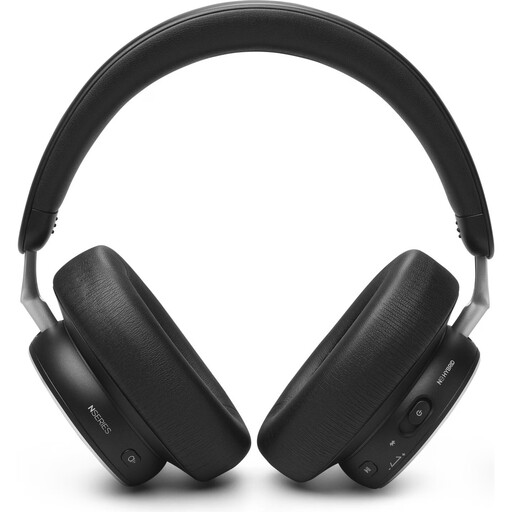
The product card features a pair of headphones with a 3.5 mm cable option. To decide whether they’re suitable for precise mix decisions, check them against your setup and listen to your mix on another playback system too.
 No image available
The listed 3.5 mm cable option may be useful for wired listening. Before using them, check that the connection and sound tuning suit your mix decisions.
Bluetooth 5.3 with Multipoint; Active Noise Cancellation; 55-hour battery life; 40 mm neodymium drivers; Virtual Surround; 3.5 mm cable option; foldable design.
You can work this way, but check important decisions about bass, vocals and stereo on another playback system. iZotope notes that headphones and speakers present the stereo image differently, so a mix may sound different on other systems.
Check the headphone socket against the plug and adapter supplied with the specific model, as well as the cable length you need. beyerdynamic lists a 3.5 mm plug and 6.35 mm adapter for the DT 900 PRO X. You’ll need to check that the output level and fit work for you with your own setup.
Listen at a moderate volume and take breaks rather than turning the sound up to drown out background noise. The WHO gives an average of 80 dB as an example of a level that can be listened to for up to 40 hours a week, with much shorter times at higher levels. The position of the volume control doesn’t measure the actual sound pressure at your ear.
Check whether compatible replacement earpads and cables are available separately; Audio-Technica says ATH-M40x replacement earpads are sold individually. For a distance purchase made by a consumer, there is generally a statutory 14-day right to cancel. For goods, ordinary statutory claims for defects generally expire two years after delivery. This information is based on guidance from the German Federal Ministry of Justice and the Federal Office of Justice, Gesetze im Internet. Statutory rights are separate from a voluntary manufacturer’s guarantee.