If you’re editing at a shared desk, need to limit background noise or want to monitor audio while recording, a well-fitting closed-back model is a sensible place to start. In a quiet space of your own, open-back headphones could be an option for assessing sound, but they let audio escape. Check the connection and output level on your device, as well as the fit and availability of replacement parts. iZotope points out that headphones and speakers reproduce the stereo field differently.
Which design is right for you?
Editing at a shared desk
If you’re editing rehearsal recordings while other people are in the room, or background noise is interfering with your monitoring, pay attention to the fit and how much sound escapes. Closed-back headphones could suit this situation, although the level of isolation also depends on how they fit. (beyerdynamic; iZotope)
Checking sound in a quiet space
If you’re assessing the balance and spatial quality as well as editing, open-back headphones could be an alternative in a quiet space. Open-back designs let sound through, so they’re not automatically a good choice for shared spaces or for monitoring near a microphone. (Sennheiser; iZotope)
Long editing sessions
If you’re listening to sections repeatedly, a comfortable fit and a sensible listening volume matter. The WHO points out that both volume and listening time are relevant to the risk of hearing damage.
What to look for when buying
When editing rehearsal recordings at home, your priorities will depend mainly on your surroundings, sound-checking needs, how long you’ll wear the headphones and the connection you need.
| Consideration |
What to check |
Who it matters to |
| Isolation and sound leakage |
Check the design and fit at your own workstation; open-back ear cups let sound through. |
If I’m editing at a shared desk, I want to limit distracting noise while listening and avoid disturbing others. That’s why around 36 % of consumers put isolation and sound leakage first. |
| Assessing sound |
Check the sound with material you know well, and cross-check important decisions on another playback system. |
If I want to assess the balance and sound of a rehearsal recording, I need headphones whose sound signature I can judge on the specific model. Around 29 % of consumers prioritise sound checks. |
| Comfort during repeated listening |
Check the clamping force and room for your ears over a realistic session length; keep the volume low. |
For long editing sessions, I want a fit that I can comfortably wear for the full time I’m working. Around 21 % of consumers put long-term comfort first. |
| Connectivity and repairability |
Check the plug, adapters and exact model variant; test the output level with your own computer or interface. |
If I want to use my existing playback device and replace worn parts with the right ones, I check the connection and model differences. Around 14 % of consumers prioritise connectivity and repairability. |
Common misconceptions
-
‘Studio headphones’ automatically mean neutral sound
The label alone doesn’t tell you how a particular model is tuned. In its review of the Audio-Technica ATH-M50x, HIFI.DE found a noticeable bass emphasis; this finding applies to the model tested.
Listen to familiar material on the specific model, and cross-check important editing and balance decisions on another playback system.
-
Every DT 770 PRO has a detachable cable
The detachable Mini-XLR cable is a feature of the DT 770 PRO X, not a standard feature of the classic DT 770 PRO. On the classic model, a damaged fixed cable may need a different repair from simply replacing a detachable cable.
Compare the full model name and check which replacement parts are intended for that exact variant.
-
Open-back headphones suit every room
Open-back ear cups let sound through. This could disturb others in a shared home office or be unsuitable when listening near a microphone.
First consider whether you can work without distractions at your editing desk and whether sound leakage will be a problem. If it will, look for a well-fitting closed-back model.
Brands to consider
beyerdynamic
The differences between the DT 770 PRO and DT 770 PRO X are important when it comes to connectivity and repairs.
- beyerdynamic lists replaceable ear pads and a 3.5-mm connection with a 6.35-mm adapter for the 80-ohm DT 770 PRO.
- The detachable Mini-XLR cable is for the DT 770 PRO X. For the 80-ohm model, also check whether your output can deliver the level you want.
Sennheiser
The open-back HD 490 PRO is one option to consider for checking sound in a quiet space.
- Sennheiser lists two sets of ear pads and a detachable cable for the HD 490 PRO.
- The open-back design lets sound through. The manufacturer’s claims about sound accuracy are not independent test results.
Audio-Technica
The closed-back ATH-M50x is a wired option with a detachable cable.
- Audio-Technica lists passive isolation and a detachable cable for this model.
- In its review of the ATH-M50x, HIFI.DE noted a noticeable bass emphasis, a high clamping force and ear cups that felt too small for some people. These observations relate to the model tested.
AKG
The closed-back, foldable K371 is another wired design for monitoring and music production.
- AKG lists a nominal impedance of 32 ohms and several cables included with the K371.
- The manufacturer’s claims about neutral sound and comfort are no substitute for checking the sound and fit at your own editing desk.
Sony
Sony lists the MDR-7506 as a model for studio and broadcast environments.
- Sony lists a mini-jack plug and an adapter as included accessories.
- Check the connection on your own device rather than assuming the output level you’ll get from the model name alone.
Joybuy products to consider
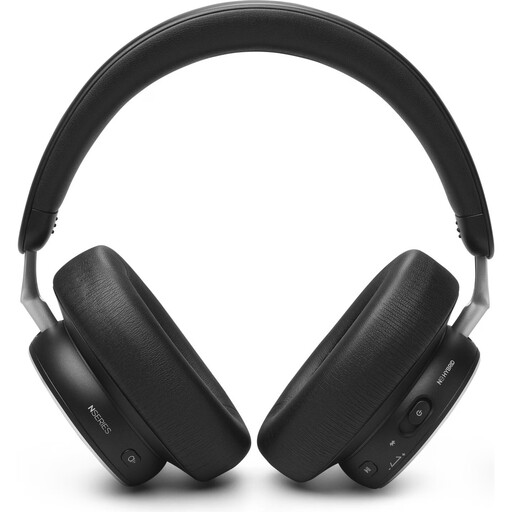
This Joybuy selection includes an over-ear pair of headphones with ANC and a wired 3.5-mm option. It could be useful if you want to choose between wireless use and a wired connection at your editing desk.
 No image available
AKG N9 Hybrid over-ear headphones
The wired 3.5-mm option is useful if you want to use the headphones with a compatible output; ANC could also be a factor to consider in noisy surroundings.
- Active noise cancelling (ANC)
- Bluetooth 5.3 with multipoint
- 55-hour battery life
- 40-mm neodymium drivers and Virtual Surround
- 3.5-mm cable option and foldable design
Joybuy
Frequently asked questions
Do I need extra software or a headphone amplifier to connect them?
You don’t need special headphone software for analogue playback via a jack; whether you need an amplifier depends on your device’s output and the level you want. According to beyerdynamic, the 80-ohm DT 770 PRO has a 3.5-mm plug and a 6.35-mm adapter. Test playback with your specific computer or interface.
How do I check an edited rehearsal recording before sharing it?
Listen to any problem sections and check the overall balance, then review the result on another playback system you know well. iZotope points out that the stereo field sounds different through headphones than it does through speakers.
What should I know about care and longer listening sessions?
Check whether the ear pads or cable are replaceable on your exact model: beyerdynamic lists replacement pads for the DT 770 PRO and a detachable cable for the DT 770 PRO X. Keep the volume low and take listening breaks; the WHO says both sound level and listening time matter.
What are the rules on returns and disposal in Germany?
For an online purchase from a business seller, you generally have 14 days from delivery to withdraw from the contract. The European Union’s Your Europe website notes that exceptions and return costs may apply in specific cases. Your statutory rights if a product is faulty are separate from any voluntary manufacturer’s guarantee. As the German Environment Agency explains, old headphones should be taken to a separate collection point for electrical waste, not put in household rubbish.


