Which listening options suit different needs?

Singers doing housework

If you move between tasks while singing along to a backing track, a secure fit and a wireless connection may be important. Bitkom e. V. recorded headphone use during housework and gardening; the survey did not specifically cover singing practice.

Singers who want live monitoring

If you want to hear your microphone feed straight away while practising, you’ll need to consider the connection, audio source and, where necessary, audio interface as well as the headphones. Focusrite describes direct monitoring as a feature of a suitable interface, not a property of the headphones.

Singers in a noisy home

If you can hear household appliances, fit and isolation are important. However, closed-back headphones can also make other sounds less noticeable. The WHO notes that sound level, listening duration and how often you’re exposed to loud sound all contribute to hearing strain.

What should you consider when choosing?

Bluetooth for the backing track

A good fit if: you want to move around and mainly listen to a backing track.

Keep in mind: Audio-Technica says Bluetooth latency is practically unavoidable; a claim of studio sound does not show that headphones are suitable for live monitoring.

Wireless with a dedicated monitoring connection

A good fit if: you want to move freely and are looking for a wireless connection specifically designed for low-latency monitoring.

Keep in mind: the transmitter and connection must be compatible with your audio source; this alone does not determine the latency of the complete recording chain.

Wired headphones

A good fit if: you practise in one place or can route the cable safely, and want to monitor your microphone feed through an interface.

Keep in mind: the cable limits how far you can move; direct monitoring depends on the interface’s features.

What matters What to check before buying Who is this especially important to?
Freedom of movement and fit Fit while moving; Bluetooth and dedicated monitoring wireless systems use different connection methods. When I’m moving between housework tasks while singing, I want a secure fit without an awkward cable. Around 29% of consumers are likely to consider freedom of movement and a secure fit their main concerns.
Delay in hearing your own voice Direct monitoring on the interface or a compatible transmitter; AIAIAI’s under-10 ms figure applies to W+ Link, not the complete recording chain. When I want to hear my microphone feed directly as I sing, the signal chain from microphone to headphones needs to work. Around 23% of consumers are likely to prioritise live monitoring.
Household noise and isolation Check the closed-back design and how the headphones fit your head; the WHO identifies sound level, duration and frequency as factors in hearing strain. When appliances are running at home, I want to hear the backing track without automatically turning up the volume. Around 18% of consumers are likely to prioritise isolation at a moderate volume.
Comfort during practice Consider the ear pads and clamping pressure of the specific model; a snug fit can become uncomfortable during longer listening sessions. When I practise for longer, I want my headphones to feel comfortable and stay in place as I move. Around 12% of consumers are likely to make wearing comfort their top priority.
Backing track and your own voice Consider whether you want to hear your voice in the room or through a microphone, and whether your audio source’s monitor mix suits your needs. When I want to assess my vocal parts during practice, getting the right balance between the backing track and my own voice matters more than freedom of movement. Around 18% of consumers are likely to prioritise assessing their vocal parts.

Common buying misconceptions

  • ‘Wireless’ doesn’t automatically mean low-latency monitoring

    Bluetooth and AIAIAI’s W+ Link are different connection methods. The advertised latency for W+ Link does not automatically apply to Bluetooth, or to the complete chain of microphone, computer, software and headphones.

    Before you buy, decide whether you want to hear only the backing track or your microphone feed as well. Check the connections and the entire monitoring chain you’ll need.

    When using W+ Link, you’ll need to factor in a compatible transmitter and a suitable connection to your audio source.

  • A replacement cable won’t necessarily fit every model from the same brand

    Cable and socket compatibility depends on the full model name. Audio-Technica lists a replacement cable specifically for the ATH-M50xBT2 and ATH-M50xBT.

    Before ordering, check the exact model name and the replacement part’s stated compatibility.

  • Don’t simply turn up the volume to drown out household noise

    The WHO identifies sound level, listening duration and how often you’re exposed to loud sound as factors that together contribute to hearing strain.

    Check the fit and isolation, and keep an eye on both the volume and how long you use your headphones while practising.

Key brands to consider

AIAIAI

According to the manufacturer, the TMA-2 Studio Wireless offers W+ Link with a transmitter included, Bluetooth 5.3 and wired listening.

  • AIAIAI quotes latency of under 10 ms for W+ Link.
  • This figure applies to W+ Link. It does not show that Bluetooth has the same latency, or indicate the delay of the complete recording setup.

Audio-Technica

The ATH-M50xBT2 combines Bluetooth with an optional wired connection; it is different from the wired ATH-M50x.

  • Audio-Technica specifies more than 50 hours of battery life for the fully charged ATH-M50xBT2, and includes a 1.2 m cable.
  • Audio-Technica describes Bluetooth latency as practically unavoidable. The manufacturer’s information does not demonstrate that the headphones are suitable for low-latency live monitoring.

beyerdynamic

The DT 770 PRO X is a wired, closed-back option for a fixed listening position or a safely routed cable.

  • beyerdynamic specifies 48 ohms, a detachable Mini-XLR cable and velour ear pads.
  • The impedance figure doesn’t guarantee a particular volume from every output; a cable restricts freedom of movement.

Sony

Sony describes the MDR-7506 as wired headphones for studio and broadcast environments.

  • The manufacturer describes the model as suitable for studio and broadcast use.
  • This description is not a comparative test of singing practice while doing housework.

Joybuy products for singing practice

Depending on the model, the following Joybuy headphones and earbuds offer wireless or wired options for backing tracks and practice at home. Bluetooth is not automatically suitable for live monitoring of your own microphone feed.
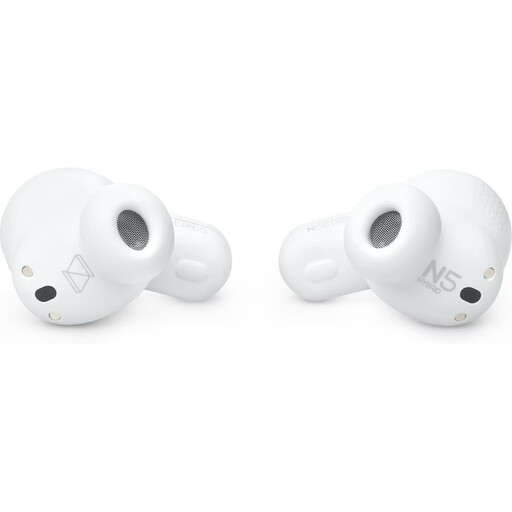
AKG N5 Hybrid true wireless earbuds in white

AKG N5 Hybrid True Wireless Earbuds

Wireless connections are specified for listening to backing tracks on the move; a 3.5 mm connection is also listed for a fixed practice space.

Features listed include Bluetooth 5.3, a 2.4 GHz USB-C dongle, an ENC microphone and a 3.5 mm connection. Bluetooth is not shown to be a low-latency option for live monitoring.

Joybuy
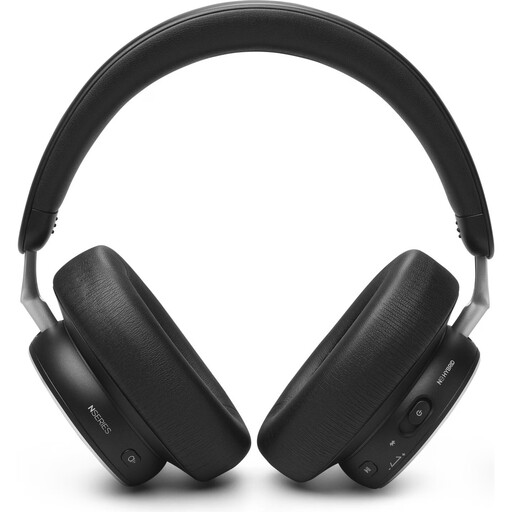
AKG N9 Hybrid over-ear headphones in black

AKG N9 Hybrid Over-Ear Headphones

The listed wireless and wired options may be useful if you switch between listening to backing tracks and practising in one place.

The product name lists Bluetooth 5.3, multipoint, a 55-hour battery, 40 mm drivers and a wired 3.5 mm option. Active noise cancellation is also specified, but that doesn’t guarantee a particular level of isolation for your individual fit.

Bluetooth is not the same as a wired connection if you want to hear your microphone feed live.

Joybuy
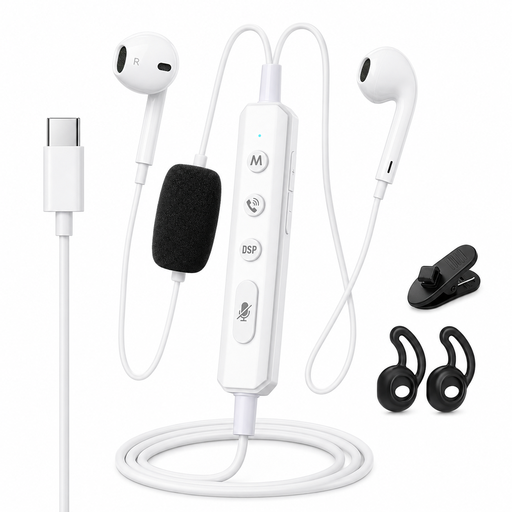
VoxorAI KM08 White headphones

VoxorAI KM08 White

The product description mentions an integrated sound card for real-time monitoring; before choosing, check that the connections and signal chain are compatible with your microphone.

Bluetooth, a 1.2 m cable, and Type-C and 3.5 mm connections are listed. The description does not specify Bluetooth latency.

Joybuy
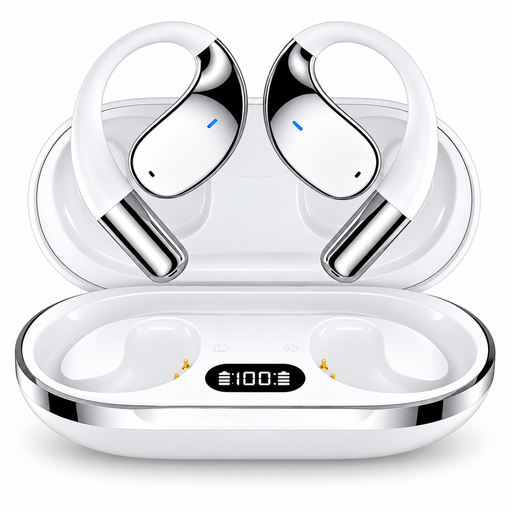
SROSS Bluetooth open-ear headphones

SROSS Bluetooth Open-Ear Headphones

The open-ear design lets ambient sounds into your listening experience differently from a closed-back model, and is less focused on isolating household noise.

Bluetooth and a translation function are listed in the product name. This does not demonstrate that the headphones are suitable for low-latency live monitoring.

Joybuy

Frequently asked questions

Do I need an audio interface to sing along to a backing track?

No, not just to listen to the backing track. If you also want to hear your microphone feed through your headphones, check your existing microphone and monitoring setup. Focusrite describes direct monitoring as a feature of suitable interfaces, not of every pair of headphones.

Can I use Bluetooth to hear my voice straight away?

Don’t assume you can just because a product is described as ‘studio’ headphones: Audio-Technica says Bluetooth latency is practically unavoidable. Check whether a cable or a dedicated low-latency wireless connection with a compatible transmitter would be a better option for your setup.

How can I reduce hearing strain when practising near household appliances?

Don’t automatically turn up the volume to drown out appliance noise. The WHO identifies sound level, listening duration and frequency of exposure to loud sound as factors that all matter, so check the fit and isolation of your headphones too.

What rules apply when buying Bluetooth headphones in Germany?

The EU Radio Equipment Directive 2014/53/EU provides a framework for placing radio equipment on the market. Check the information for the specific product; the directive alone does not prove that a particular listing meets its requirements.

What if the headphones don’t fit or are faulty after I buy them online?

In Germany, online purchases generally come with a 14-day right to cancel; the Verbraucherzentrale says the period usually starts when the contract is made or the goods are received. Exceptions apply, and statutory rights for faulty goods are separate from both this right and any voluntary guarantee.