Mixing in a quiet room
If you want to assess balance, spatial detail and stereo imaging without disturbing anyone, open-back headphones are worth considering. Musikhaus Korn, iZotope and RTINGS all describe this type of use.


For a jazz demo that you’ll be mixing mainly in a quiet room, open-back studio headphones are a sensible starting point for assessing space and stereo imaging. RTINGS considers open-back models more suited to mixing and mastering, while also pointing out that they leak sound and offer little isolation. If you’re recording in front of a microphone with the same pair, or need to block out background noise, closed-back headphones may be a better choice; semi-open doesn’t guarantee sufficient isolation. Also check the connection and fit, and, if possible, listen to the mix on another playback system for comparison.
If you want to assess balance, spatial detail and stereo imaging without disturbing anyone, open-back headphones are worth considering. Musikhaus Korn, iZotope and RTINGS all describe this type of use.
If you use the same pair for mixing and recording in front of a microphone, it’s important to minimise sound leakage while tracking. Musikhaus Korn and RTINGS describe the limited isolation of open-back models as a key difference.
If you use different audio outputs or spend long periods at your desk, you’ll need to consider compatible connections, achievable volume, fit and replaceable wear parts. Audio-Technica Deutschland, beyerdynamic Deutschland and Sennheiser provide details for individual models.
A good choice if: you’ll mainly be mixing in a quiet environment and want to assess spatial detail and stereo positioning.
The trade-off: RTINGS points out that open-back models leak sound and offer less isolation from background noise.
A good choice if: you record in front of a microphone with the same pair, or want to reduce distracting background noise. Musikhaus Korn describes this design as particularly suitable for reducing sound leaking into the microphone.
The trade-off: the spatial presentation may sound less natural than with an open-back model, so check your mix on another playback system as well.
A good choice if: you want to explore a middle ground and don’t need reliably strong isolation when recording with a microphone.
The trade-off: check the specific model to see whether sound reaches the microphone while you sing or play; the semi-open label doesn’t guarantee sufficient isolation.
| Buying priority | What to check | Who it matters most to |
|---|---|---|
| Balance, space and stereo imaging | Open-back design; check the mix on another playback system as well. | When I’m assessing the balance, spatial detail and stereo positioning of a jazz demo in a quiet room, mix playback is my main priority. Around 36% of consumers prioritise assessing balance, space and stereo imaging. |
| Isolation and sound leakage | Whether you’ll be recording in front of a microphone; how distracting background noise is in your workspace. | If I’m using the same headphones to sing or play while recording, I want to minimise headphone sound reaching the microphone and reduce background noise. Around 29% of consumers put isolation first when recording or working in a noisy environment. |
| Connection and volume | Plug and socket; whether your existing output can reach the volume you want. | If I switch between a computer and an audio interface, I want to make sure the plug and output are compatible and that I can achieve a usable volume. Around 21% of consumers prioritise compatibility with the equipment they already own. |
| Fit and long-term use | Check the fit for yourself; look for replacement earpads and other wear parts for the exact model. | During longer mixing sessions, I check that the headphones are genuinely comfortable and that worn parts can be replaced. Around 14% of consumers put comfort and long-term usability first. |
Open-back earcups let sound escape, and it can reach the microphone during recording.
Before you buy, decide whether you’ll also be recording in front of a microphone with the same pair. If you want to mix on open-back headphones and record separately, a second, closed-back pair may be worth considering.
Whether headphones will work with your computer or audio interface also depends on the output. A single model specification doesn’t tell you what volume you’ll get from your own device or whether the headphones are suitable for your mixing decisions.
Check the plug, adapter, impedance and sensitivity of the exact model against the device you already own.
Depending on the headphones and output, you may need a suitable headphone output or amplifier.
Headphones and speakers present the stereo field differently. Sound On Sound points out that headphones lack the crosstalk between the left and right channels.
If possible, check the demo on another playback system before making final panning decisions.
The DT 900 PRO X is an open-back model for listening and mixing; the closed-back DT 700 PRO X is designed for recording and monitoring, and the manufacturer also recommends it for mixing.
Audio-Technica Deutschland presents the open-back ATH-R30x as an entry-level home studio model and the ATH-R70x as an open-back reference headphone for mixing and mastering.
Sennheiser describes the open-back HD 490 PRO as a model for mixing and mastering, with different earpads for producing and mixing.
The K240 Studio is a semi-open option if you want to explore a middle ground between the two designs.
Sony Deutschland describes the open-back MDR-MV1 as suitable for stereo and spatial mixing.
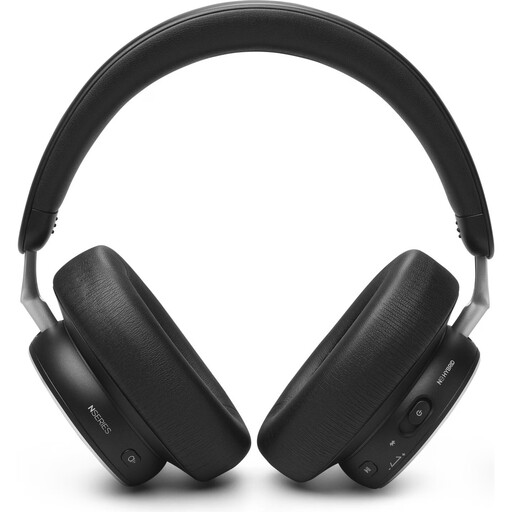
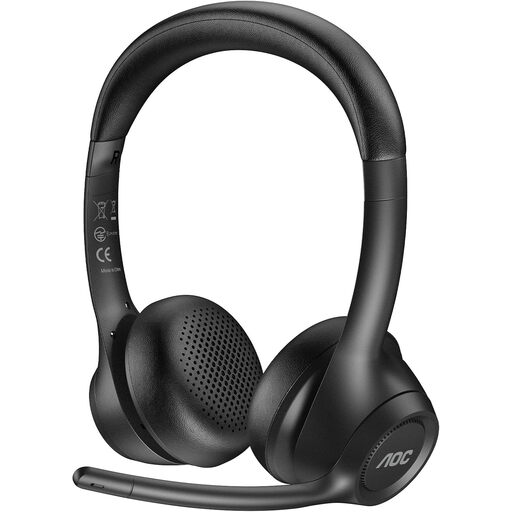
This selection includes a closed-back over-ear headphone with a wired option and a wireless headset with a microphone. If you mainly want to assess balance and stereo imaging, check the playback on your own setup; the product types alone don’t establish whether they’re suitable for mixing.
 No image available
As closed-back over-ear headphones with a wired option, they’re worth considering if you’re looking for a closed-back design for recording. Check the sound and volume on your own setup to see whether they work for your mix.
ANC; Bluetooth 5.3; 55-hour battery life; 40 mm neodymium drivers; virtual surround function; 3.5 mm wired option; foldable design; black.
 No image available
As a headset for voice communication, it may suit you if microphone functionality and a wired connection are your priorities. For mixing decisions, check the playback on another system as well.
The product specifications list 2.4 GHz, Bluetooth and 3.5 mm connections, as well as an ENC microphone with a rotating boom arm.
You can mix on headphones, but if possible, check the balance and stereo imaging on another playback system too. Sound On Sound points out that headphones present the stereo field differently from speakers.
Compare the socket with the plug and accessories supplied with the exact model. According to beyerdynamic, the DT 900 PRO X has a 3.5 mm plug and a 6.35 mm adapter; this doesn’t guarantee the volume you’ll get from your device.
Keep the volume at a comfortable level and take listening breaks: the German Environment Agency points out that both the intensity and duration of sound exposure can damage your hearing. If the earpads are worn, check whether replacements are available for your exact model.
No. The German Federal Ministry for the Environment lists authorised collection points, as well as manufacturers and retailers subject to the relevant legal requirements, as ways to return waste electrical and electronic equipment.