What should you look for when buying?
Closed-back studio headphones
A good choice if: you’re working within earshot of other people or background noise could mask subtle mix changes.
Trade-off: How well they isolate you in practice also depends on the fit; the design alone doesn’t prove that the sound profile is neutral.
Open-back or semi-open studio headphones
A good choice if: you want to assess spatial positioning and nobody at your genuinely secluded spot will be disturbed by sound leaking out.
Trade-off: Open-back models let more sound out and more ambient noise in; Beyerdynamic describes the DT 990 PRO as having relatively bright treble.
The percentages refer to each person’s main priority when comparing mixes in a quiet German library. Check the design at your own seat rather than assuming it alone guarantees faithful sound or consideration for others.
| Priority |
What to check before buying |
Who it matters most to |
| Sound leakage at the reading table |
Closed-back design and cushion fit; at your actual seat and usual volume, check what can be heard by others. |
If I’m working at a shared reading table, I don’t want to disturb others with my playback. Consumers who prioritise consideration for others and isolation are likely to account for around 36%. |
| Comparing mix changes |
Listen to familiar sections at a similar, moderate volume and assess the sound profile of the specific model. |
If I’m assessing tonal balance, levels or stereo positioning, I need familiar material to compare against, rather than drawing conclusions from the design or advertised frequency range alone. Consumers with this as their main priority are likely to account for about 29%. |
| Comfort during long listening sessions |
Try them on for as long as possible; check adjustability and whether replacement cushions are available for the exact model. |
When comparing tracks repeatedly, I want a fit that remains comfortable for me. Consumers who prioritise long-term comfort are likely to account for around 21%. |
| Connectivity and ease of use |
Check the output socket, any adapter you’ll need, cable length and whether your device provides enough volume. |
If I take my headphones between listening spots, I want them to connect easily to my laptop or audio interface. Consumers whose main priority is connectivity and portability are likely to account for about 14%. |
Joybuy headphones for comparing mixes
These Joybuy headphones are over-ear models for comparing mixes. Depending on the model, they offer wired connection options and various additional features.
 No image available
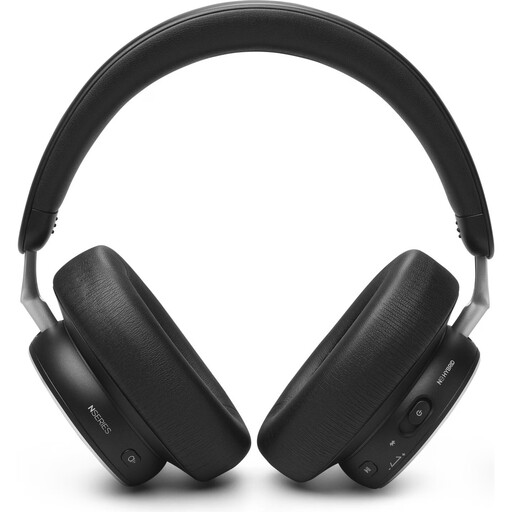
AKG N9 Hybrid over-ear headphones, black
The described closed-back over-ear design could be a good starting point if other people are within earshot; check for sound leakage at your own seat.
The product details list ANC, Bluetooth 5.3 with multipoint, a wired 3.5-mm option, a foldable design and a nominal impedance of 32 Ω.
Bear the described virtual surround output in mind when assessing spatial positions in a mix.
View at Joybuy
 No image available
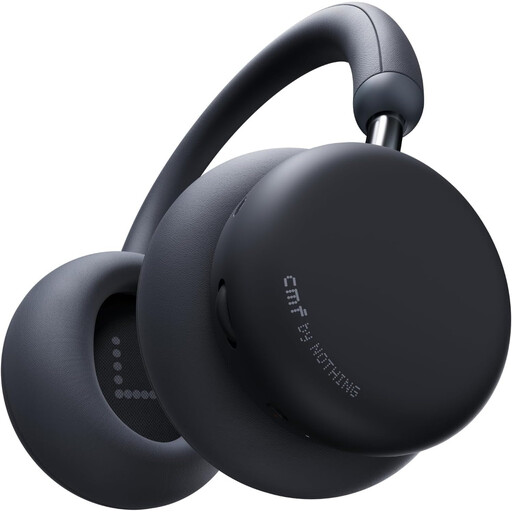
CMF Headphone Pro over-ear headphones, dark grey
The described closed-back over-ear design could be a good option if passive isolation matters in a shared listening space; check the fit for yourself.
The product details list 40-mm drivers, Bluetooth 5.4, LDAC, ANC, battery life of up to 100 hours and replaceable ear cushions.
The description lists a weight of 283 g. Decide for yourself whether the fit and weight will be comfortable during your planned listening sessions.
View at Joybuy
 No image available
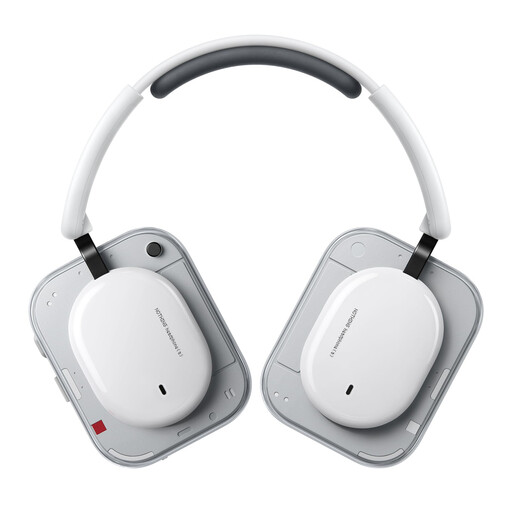
Headphone (a) Wireless Over-Ear Headphones, White
If your device has a 3.5-mm or USB-C connection, the product description lists wired connections via both options; check which one you plan to use.
The details list 40-mm drivers, ANC, Bluetooth, a detachable 1.2-m cable and a carry pouch.
View at Joybuy
Frequently asked questions
Are open-back headphones enough if the library is quiet overall?
Not on their own: the DT 990 PRO is open-back, and Beyerdynamic describes sound as escaping outwards. What matters is whether other people are within earshot at your particular seat and what rules apply there.
Do I definitely need an extra amplifier for high-impedance headphones?
There’s no general answer without knowing your playback device and the specific headphone variant. According to Focusrite, achievable volume depends on factors including the output, sensitivity, source material and listening environment. Check the combination at a moderate volume.
How can I compare mixes repeatedly while protecting my hearing?
Compare sections at a moderate volume and take listening breaks. The World Health Organization gives up to 40 hours a week at an average of 80 dB as an example of safe listening; at higher levels, the recommended time drops considerably. This is a listening guideline, not a threshold for approving headphones for sale.
What are my rights when buying online in Germany if the fit or sound isn’t right?
Distance sales contracts with consumers generally come with a statutory right to cancel. The cancellation period is generally 14 days and, for goods, usually starts when you receive them; statutory exceptions should be checked on a case-by-case basis. Your rights if a product is faulty are separate from this and from any voluntary guarantee.
Can I listen to a mix on headphones in any German reading room?
Check the rules at your specific library and whether sound leaks out at your seat. The University Library of Heidelberg’s user regulations state that individual provisions may be clarified by local implementing rules; this doesn’t establish a general permission for every reading room.


