Mixing at a shared desk
If conversations nearby are distracting or you want others to hear as little of your mix as possible, a closed-back design and a good fit are important things to consider.


If conversations are distracting at your shared desk or you’re recording with a microphone, well-fitting closed-back studio headphones are usually the better choice. Open-back headphones may be suitable if your workspace is quiet and sound leakage won’t disturb anyone. Whichever type you choose, check the kick and bass against familiar reference tracks rather than judging mixing suitability by the stated frequency range alone.
If conversations nearby are distracting or you want others to hear as little of your mix as possible, a closed-back design and a good fit are important things to consider.
If you judge kick and bass through headphones, you can use familiar reference tracks to check your mix. Sonarworks points out that listening through headphones lacks the physical sensation of a subwoofer.
If sound leakage isn’t a problem where you work, open-back headphones may be an option for making spatial mixing decisions. Audio-Technica describes the ATH-R50x as open-back reference headphones.
First, decide whether your workspace calls for sound isolation or can accommodate open-back headphones. Then check the bass reference, fit and connection to make sure they suit your setup.
| What matters | What to check before buying | Who should pay particular attention? |
|---|---|---|
| Isolation at your desk | Closed-back design and ear pad fit; if you’re recording, also consider whether sound could leak into the microphone. | If I want to block out conversations and keep sound from disturbing others, I pay particular attention to fit and isolation. Around 36% of consumers prioritise isolation. |
| Judging kick and bass | Compare them with familiar reference tracks, and don’t treat the stated frequency range as proof of neutral bass response. | If I’m assessing the bass in an electronic track, I want a familiar reference and don’t want to rely on the sound of one pair of headphones alone. Around 29% of consumers prioritise bass balance. |
| Spatial mix monitoring | With open-back models, check whether ambient noise and sound leakage are acceptable in your workspace. | If I prioritise spatial positioning in a mix, I’d only consider open-back headphones in a sufficiently quiet workspace. Around 21% of consumers prioritise spatial mix monitoring. |
| Comfort and connection | Check the fit, connection to your audio equipment and, if needed, cable length and whether the cable or ear pads can be replaced. | If I work at a shared desk for long periods, the fit and connection need to suit my equipment. Around 14% of consumers prioritise comfort and connection. |
Open-back models let in ambient noise and allow sound to escape. This can be disruptive in a busy shared workspace.
Choose open-back headphones only if you can work without being disturbed and the sound leakage is acceptable to others. Otherwise, start by comparing closed-back models.
A stated frequency range doesn’t show how balanced the kick and bass will sound through a particular pair of headphones. You also miss the physical sensation of bass from a subwoofer when listening on headphones.
Compare your mix with familiar reference tracks and listen to the balance between kick and bass at a moderate volume.
The DT 770 PRO comes in different impedance variants; the cable and ear pads may vary or be replaceable depending on the model.
Check that the exact model variant matches your device’s output, and make sure the plugs, adapters and replacement parts are suitable for your setup.
The closed-back DT 770 PRO and open-back DT 900 PRO X offer two designs for different working environments.
The closed-back ATH-M50x and open-back ATH-R50x differ in design, and therefore in how well they suit a shared or quiet workspace.
According to the manufacturer, the closed-back K271 MKII is designed for studio mixing with sound isolation and may also be worth considering if you record at your desk.
The closed-back, wired HPH-MT5 is another monitoring option for a shared workspace.
According to the manufacturer, the open-back HD 490 PRO is designed for mixing and producing where open-back headphones are suitable for the workspace.
The following over-ear headphones offer a wired playback option according to their product details. This information alone doesn’t prove that they deliver neutral sound for mixing or bass.
 No image available
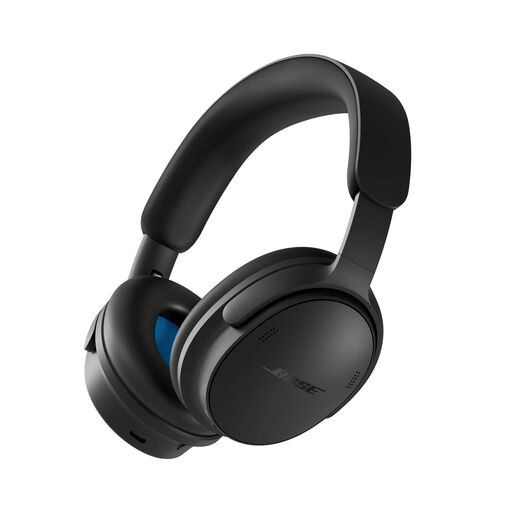
This model may suit you if you’re looking for a wired playback option at a shared desk; the product details don’t prove any particular level of accuracy for mixing or bass.
Bluetooth 5.4; 3.5 mm audio connection; detachable cable; noise cancelling.
 No image available
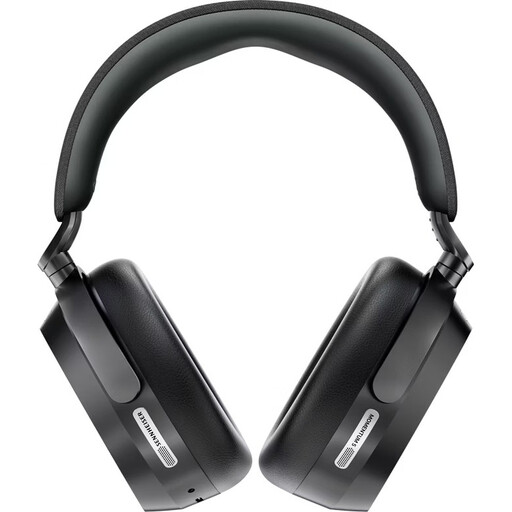
According to the product details, this closed-back over-ear model can be used with a wired connection; that doesn’t prove it delivers neutral sound for making mix decisions.
32 Ω; 3.5 mm connection and USB-C; wired and wireless use; swivelling ear cups.
Yes, especially if sound isolation matters at your shared desk. Compare the kick and bass with familiar reference tracks and, if possible, check the mix on another playback system too, as headphones convey bass differently from speakers with a subwoofer.
Check that your device’s headphone output is compatible with the plug and, if needed, the adapter supplied with your chosen model. The manufacturer lists a 3.5 mm plug with a 6.35 mm adapter for the DT 900 PRO X. The DT 770 PRO comes in different impedance variants, so don’t assume they’re interchangeable based on the model name alone.
Check the care instructions for the ear pads on your exact model. Sennheiser describes the HD 490 PRO pads as washable and replaceable; that doesn’t mean the pads on other models can also be washed.
The World Health Organization recommends considering volume and listening time together, and taking regular breaks. Its guideline of 80 dB for up to 40 hours per week is an example of sound exposure, not a performance rating or legal limit for a particular pair of headphones.
For a typical distance purchase made by a consumer, there is generally a statutory right to cancel, subject to the legal requirements and exceptions. Under sections 312g, 355 and 356 of the German Civil Code (BGB), the cancellation period is generally 14 days and, for purchases of goods, usually starts when you receive them. Your statutory rights if goods are faulty are separate from any voluntary guarantee. For relevant claims relating to goods, the limitation period is generally two years from delivery (section 438 BGB). The Federal Ministry of Justice and the Federal Office of Justice publish the relevant legislation; the consumer advice centre explains the difference between statutory rights and a guarantee.