Editing alongside colleagues
If you’re editing a live recording while others work at the same desk, low sound leakage and minimal disruption are important factors to consider.


If people are working or talking nearby, a well-fitting pair of closed-back studio headphones is usually the better starting point. They provide more isolation and typically let less sound escape. Open-back headphones may be a better choice if you can assess detail and spatial cues in a quiet space without disturbing anyone with your playback. Musikhaus Thomann and beyerdynamic explain the differences between these designs. Whichever you choose, make sure the fit, sound profile and connection suit your workspace.
If you’re editing a live recording while others work at the same desk, low sound leakage and minimal disruption are important factors to consider.
If you want to assess fine details and spatial cues, and have access to a quiet space, open-back headphones may also be an option.
For long listening sessions or when you often move between workstations, fit, portability and suitable connection cables all matter.
Best suited if: You’re editing alongside other people or want to reduce background noise. Musikhaus Thomann and beyerdynamic describe closed-back headphones as offering greater isolation.
Consider: Fit and seal affect how well they work. During long sessions, clamping pressure and heat may become more noticeable.
Best suited if: You can check sound detail and spatial cues in a quiet space without disturbing anyone.
Consider: Background noise reaches your ears more easily, and other people are more likely to hear your playback.
| What to consider | What to look for | Who it matters most to |
|---|---|---|
| Isolation | Check the design and fit; the word ‘studio’ alone says nothing about how well the headphones seal around your head. | If colleagues are working right next to me, I want less sound to leak out and to hear conversations less clearly. Around 36% of consumers prioritise isolation. |
| Sound detail | Listen to critical sections of your own recording; you can’t judge sound neutrality from a single frequency range alone. | If I want to assess edits and spatial detail, I need playback that I can evaluate with my own material. Around 29% of consumers prioritise checking detail. |
| Comfort | Assess clamping pressure, space around your ears and how warm the headphones feel over a realistic period of use. | During long editing sessions, I want to be able to wear my headphones without pressure or heat becoming a problem. Around 21% of consumers prioritise long-term comfort. |
| Connection and replacement parts | Check that the plug and cable reach suit your audio output; check the impedance and replacement parts available for the exact version. | If I move between workstations, I need the right connection and want to be able to replace worn parts easily. Around 14% of consumers prioritise connectivity and maintenance. |
How well headphones seal also depends on the fit. In tests of headphones from 2019/2020, the German Federal Institute for Occupational Safety and Health found no particular potential for the ANC models tested to specifically suppress background speech.
If conversations are your main distraction, assess the fit and the noise in your actual surroundings rather than relying solely on a product name or feature.
With open-back headphones, background noise reaches your ears more easily, and other people are more likely to hear your playback. On the other hand, closed-back designs can feel warmer or put more pressure on your ears during long listening sessions.
First consider whether you’re likely to disturb others or be disturbed yourself. Then weigh up sound quality, isolation and comfort.
Plugs, cable lengths and replaceable parts vary by model and version. Before buying, check that the connection suits your audio output and find out which replacement parts fit the specific model.
Replacement ear pads for the Audio-Technica ATH-M50x are sold individually, so you’ll need two for a pair.
The manufacturer’s specifications for the DT 770 PRO and DT 990 PRO illustrate the difference between closed-back monitoring and open-back editing.
According to the manufacturer, the ATH-M40x and ATH-M50x are closed-back monitoring headphones with detachable cables.
Sony lists the MDR-7506 on its German product page as professional headphones for studio and broadcasting environments.
Sennheiser describes the HD 280 PRO as closed-back, foldable headphones for recording, mixing and monitoring.
Yamaha describes the HPH-MT5 as closed-back, foldable monitor headphones with swivelling ear cups.
This selection features headphones related to the topic. For editing at a shared workstation, check the design, connection and suitability for assessing sound on each specific model.
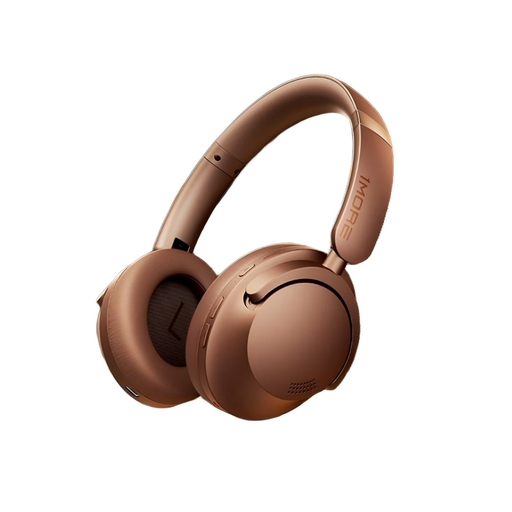 No image available
If you’re considering this model for listening back to a live recording, check the design, connection and fit at your editing desk first.
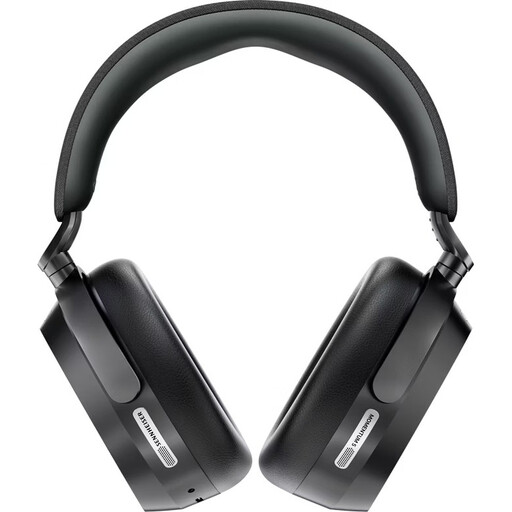 No image available
The closed-back design may be useful at a shared editing desk if you want to limit sound leakage. Also check whether the wireless design suits your workflow.
Closed-back; wireless.
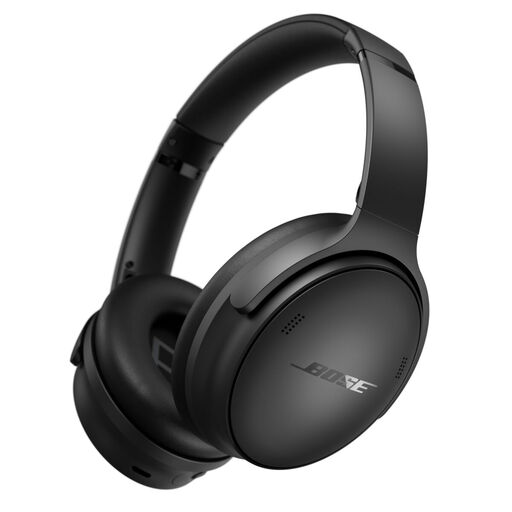 No image available
If you’re considering this model for listening back to live material, check whether the connection type and sound reproduction suit your editing needs.
Wireless; noise-cancelling.
It depends on whether background noise affects your judgement and whether other people can hear your playback. Open-back headphones provide little isolation. You should also follow the rules at your specific workplace.
No, you shouldn’t assume that in every case. Tests of headphones from 2019/2020 by the German Federal Institute for Occupational Safety and Health found no particular potential in the ANC models tested for specifically suppressing background speech. This wasn’t an individual test of every model currently on sale, and fit and the specific noises around you still matter.
First, check that the plug matches your audio output, then check the cable and replacement ear pads for the exact model. Some specific studio models, for example, are listed with 3.5 mm connections and sometimes 6.3 mm adapters. The ATH-M50x has detachable cables and replacement ear pads available individually.
Not necessarily for every type of headphone or accessory. According to European Union guidance, CE marking is only required when the harmonised rules applicable to the specific product call for it; otherwise, it must not be used. Check the relevant product information for the specific version.
No, not simply because they have a closed-back design. At a workplace, employers have a duty to protect employees when the statutory noise action values are reached under the relevant conditions. Section 8 of the Noise and Vibration Occupational Safety and Health Ordinance requires suitable personal hearing protection when the conditions set out in it are met. This doesn’t automatically classify ordinary studio headphones as hearing protection.