Checking for residual noise
When comparing the original with a noise-reduced version, you want to tell remaining tape hiss apart from newly introduced artefacts. iZotope warns against overdoing restoration.


In a student room with distracting noise or flatmates, a well-fitting pair of closed-back headphones is a sensible place to start. If you have a quiet space to yourself, open-back or semi-open models may also be an option. Compare the same unprocessed and processed sections at a controlled volume: iZotope warns against overdoing restoration, and no headphone design guarantees that residual noise or artefacts will be easy to hear. Also check the fit, connection and exact impedance variant against your existing playback device.
When comparing the original with a noise-reduced version, you want to tell remaining tape hiss apart from newly introduced artefacts. iZotope warns against overdoing restoration.
If room noise is distracting or you don’t want others to hear what you’re listening to, fit and passive isolation are important factors. Beyerdynamic points out that you can still hear your surroundings when using its open-back DT 990 PRO.
You need a variant with a connection and impedance that suit your playback device, as well as a comfortable fit for longer comparison sessions.
A good fit if: Room noise distracts you while listening, or you want to minimise sound leaking out.
Trade-off: Isolation also depends on the fit, and doesn’t guarantee neutral sound reproduction.
A good fit if: You work alone in a quiet place and neither ambient noise nor sound leakage is an issue.
Trade-off: You can still hear your surroundings; Beyerdynamic describes the DT 990 PRO’s treble as relatively sharp.
A good fit if: Your workspace is mostly quiet and you’re considering a semi-open model such as the AKG K240 MKII.
Trade-off: This design doesn’t guarantee a solution to noise or sound leakage in a shared room.
| Buying priority | What to look for | Who does it matter most to? |
|---|---|---|
| Residual noise and artefacts | Compare the same sections in the original and processed versions; don’t treat descriptions of sound as measurements of your own recording. | If I want to hear whether any hiss remains or the processing has introduced new artefacts, I compare the same sections in both versions. Around 33% of consumers put this assessment of sound first. |
| Room noise and consideration for others | Choose a closed-back, open-back or semi-open design to suit your room, and check how the ear pads fit. | If I have flatmates or distracting noise around me, I want to focus on quiet passages without disturbing others unnecessarily. That’s why around 27% of consumers prioritise isolation and consideration for others. |
| Fit and maintenance | Try the clamping force and fit for yourself if possible; check that replacement ear pads and cables are right for the exact model version. | For longer sessions, I look for a comfortable fit and check whether wear parts can be replaced. Around 20% of consumers give these factors priority. |
| Connection and compatibility | Check the socket, adapter and exact impedance variant against the device you already have. | If I want to work directly from a laptop or audio interface, the headphones and connection need to work with my existing device. Around 20% of consumers put this compatibility first. |
The sound tuning depends on the specific model. HIFI.DE notes that the Audio-Technica ATH-M50x has pronounced bass and a high clamping force; this assessment doesn’t automatically apply to other models from the brand.
Compare familiar sections, and don’t assume that comments about one model apply to an entire product range.
According to Beyerdynamic, you can still hear your surroundings when using the open-back DT 990 PRO, and sound can also leak out.
Take actual room noise and consideration for your flatmates into account when choosing a design. Semi-open doesn’t automatically mean fully isolated.
Variants, connections and replacement parts can differ. For example, Beyerdynamic lists the DT 770 PRO in 32, 80 and 250 Ohm versions.
Check the full model version, connection and compatible wear parts before buying.
Depending on the model and the device you already have, you may need a suitable adapter, replacement ear pads or a replacement cable.
The DT 770 PRO is a closed-back monitoring option, while the DT 990 PRO is open-back.
The ATH-M40x and ATH-M50x are closed-back, wired monitoring headphones with detachable cables.
The K271 MKII is closed-back, while the K240 MKII is semi-open, making the two models suitable for different room environments.
The HPH-MT5 is a closed-back, foldable studio headphone for a compact workspace.
The MDR-7506 is a wired reference option for studio and broadcast use.
The HD 280 PRO is a closed-back option with documented replacement ear pads.
For wired comparisons in your room: closed-back over-ear headphones supplied with an audio cable.
 No image available
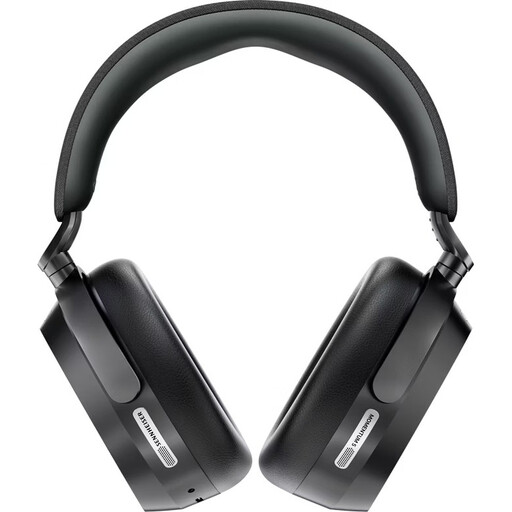
The closed-back design and supplied audio cable make these headphones a relevant choice for wired comparisons in your room; the design alone doesn’t prove that the sound tuning is neutral.
The product title lists Active Noise Cancellation with 8 microphones, Dolby Atmos, Bluetooth 5.4, up to 57 hours of battery life and a replaceable battery.
Compare the same sections in the original and processed versions. iZotope warns against overdoing restoration: tape hiss can be part of what you hear, while processing can introduce new artefacts. This is a working method, not proof of the performance of any particular headphones.
Not necessarily. First check your device’s output and the exact headphone variant. Beyerdynamic offers the DT 770 PRO in 32, 80 and 250 Ohm versions, and recommends them for different playback devices. You can’t work out how loud the headphones will be with an unspecified laptop from impedance alone.
Look for replacement parts using the full model and version details. Sennheiser, for example, lists an ear pad set for HD-280-PRO versions from 2016 onwards; compatibility with other versions isn’t guaranteed.
Don’t turn the volume up indefinitely. The WHO recommends low listening levels and breaks. Its guidelines suggest a maximum of 40 hours per week at an average of 80 dB, and four hours at 90 dB. These are safe listening recommendations, not a German statutory volume limit or a substitute for measuring the level at your ear.
Check the information for the specific product. For certain electrical and electronic devices, the Federal Network Agency checks factors including product identification, manufacturer details and safety information in German. According to the European Commission, CE marking is required only for products covered by relevant EU rules; it isn’t an independent quality mark. If a product is faulty, distinguish your statutory rights against the seller from a voluntary guarantee.