Access your notes on the go
If you mainly carry notes and PDFs between the studio and home, the capacity and connectors should suit your devices – without the need for unnecessary accessories.


For small folders of notes and PDFs, a USB flash drive with the right connectors is usually the simplest option. If you regularly copy larger project folders, consider an external SSD; for a sizeable archive that will mostly stay in one place, an HDD may also be suitable. Check the file system and how you’ll protect confidential files, too – and keep important notes in a separate location as well, because no single drive is a substitute for a backup.
If you mainly carry notes and PDFs between the studio and home, the capacity and connectors should suit your devices – without the need for unnecessary accessories.
If your files contain private or personal information, controlled access and a separate backup matter more than a headline speed claim.
If you regularly add larger files as well as notes, weigh up your storage needs and how often you’ll copy files, and consider where to keep a separate backup.
First, check the connectors and the size of your files. Then decide whether a basic flash drive will do, or whether the greater capacity and regular transfer of larger files make an SSD or HDD a better choice.
| What you need | What to check before buying | Who is this important to? |
|---|---|---|
| Carry small folders of notes | Compare the folder size with the drive’s capacity; choose a compatible connector. | If I mainly want to carry small sets of notes and PDFs without any hassle, I need a suitable, compact drive. Around 31% of consumers share this need. |
| Work across different devices | Check the USB ports and operating systems on both devices; back up files before formatting. | If I want to use the drive with different studio and personal devices, I need compatible connectors and a file system that works with my devices. Around 31% of consumers prioritise switching between devices. |
| Restrict access to documents | For confidential files, check for encryption or access controls that work on the computers you’ll use. | If I carry private or personal documents, I want to make it harder for others to access them. Around 23% of consumers put access protection first. |
| Larger folders and backups | Estimate your storage needs and how they may grow; keep a second copy separately and open important files from it to check they work. | If my project folders are growing, I need to plan for both the storage space and a separate backup. Around 15% of consumers prioritise larger archives and a usable second copy. |
Samsung says the maximum speeds quoted for the T9 depend on using a suitable host, compatible cables and UASP enabled. You can’t use those figures to work out how long a transfer will take on your computer, or when copying a folder containing lots of small notes.
First check the size of your files, your computer’s connector and the USB standard it supports. Then choose the speed you need.
If the drive is lost or damaged, important files may become inaccessible if you don’t have another copy. Germany’s Federal Office for Information Security recommends backing up your data regularly.
Keep a second copy separately and try opening important files from it.
Formatting deletes existing files. Apple explicitly warns about this risk.
Check in advance which file system your devices need, and back up any existing files elsewhere.
Seagate notes that the data recovery services it mentions aren’t available in every country. A voluntary warranty is subject to its own terms and conditions, and doesn’t give you an extra copy of your files.
Check what’s included with the specific product offered in Germany, and keep your own backup regardless.
The DataTraveler Exodia range offers a USB-A option, while the XS1000 is a compact SSD range for larger folders.
The Ultra Dual Drive Go is designed for switching between USB-A and USB-C devices; the Extreme PRO Portable SSD V2 is a separate SSD range.
The Portable SSD T7 and T9 are different SSD ranges for larger transfers on the go.
WD Elements Portable is an HDD option for a larger archive.
Expansion Portable is an HDD range powered via its USB cable.
This selection includes USB flash drives, external SSDs and a portable HDD for carrying study notes, storing larger project folders or keeping an archive. For each model, check that the connectors, capacity and protection features suit your devices and files.
 No image available
For larger folders or an archive, if you’d prefer a portable HDD to a USB flash drive or SSD.
2 TB; USB-C; USB 3.2 Gen 1; exFAT. The drive contains mechanical components, so avoid knocks and vibration.
 No image available
For larger project folders that you copy regularly, provided the computer you use supports the required connector.
1 TB; USB 3.2 Gen 2×2 Type-C. The product name quotes a transfer rate of 2,060 MB/s; according to the description, you’ll need a compatible high-speed host interface to reach the advertised speeds.
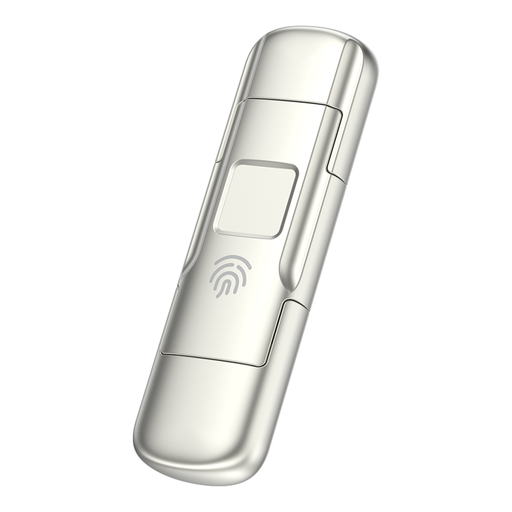 No image available
For switching between USB-A and USB-C devices; the product description lists encryption and fingerprint access for protected files.
256 GB; USB 3.2 Gen 1; USB-A and Type-C. Please note: according to the description, data in the protected partition may become inaccessible if both the administrator password and fingerprint recognition fail.
 No image available
For larger files or growing folders, if you’re looking for an external SSD with cables for different device connections.
2 TB; USB Type-C 3.2 Gen 2×2. According to the description, USB-C-to-C and USB-C-to-A cables are included.
 No image available
For carrying smaller files between devices with USB-A and USB-C connectors.
128 GB; USB-A and Type-C; swivel design. The product description states that it’s plug and play, with no software installation required.
First, check whether you’re allowed to use a personal storage device there and which USB port is available. For using a drive with both Mac and Windows, Apple lists exFAT as a formatting option for drives over 32 GB. Back up any existing files first, as formatting will delete them.
Wait for the transfer to finish, then eject the drive using the safe removal function. Microsoft recommends doing this in Windows with USB flash drives and external hard drives to help prevent data loss.
Not if it’s the only remaining copy of your important notes. Germany’s Federal Office for Information Security lists issues such as device failure and theft among the reasons to back up your data regularly. Keep another copy separately and check important files after copying them.
Your statutory rights against the seller are separate from any voluntary manufacturer’s or retailer’s guarantee. German consumer advice centres explain that, if a product is faulty, the first step is usually to request a repair or replacement. Also check the terms of any advertised guarantee.
The guidance from Germany’s Federal Office for Information Security and Federal Commissioner for Data Protection and Freedom of Information doesn’t impose a general requirement to buy an encrypted drive simply to copy your own notes. If you process other people’s personal data as part of an organisation or work activity, data protection requirements and the organisation’s rules may apply. The Federal Office for Information Security describes encrypting files, folders or storage devices as a way to protect them.