
Lieferung heute & morgen

Qualitätsgarantie
App herunterladen
Kategorien
A stunt scooter, also known as a trick scooter or freestyle scooter, is fundamentally different from a conventional kick scooter. While the latter is designed primarily for transport, a stunt scooter is specifically engineered to withstand the stresses of the skatepark and street tricks. Its design omits folding mechanisms and adjustable handlebars to ensure maximum stability and durability. Choosing the right model depends on technical parameters that should be tailored to the rider and their intended use.
The performance and safety of a stunt scooter are determined by the interplay of its components. An analysis of the technical specifications is therefore essential for making an informed purchasing decision.
The deck is the platform where the rider stands. Its dimensions and material are crucial for control and durability.
The handlebars are the central control element. Their material and shape are important for safety and comfort during jumps and landings.
The wheels and bearings determine the speed and ride feel.
The clamp connects the handlebars to the fork and is a safety-critical component. A Triple Clamp or Quad Clamp provides a very secure connection and effectively distributes the forces from landings. The durable and low-maintenance flex fender brake on the rear wheel has become the standard braking system for stunt scooters.
Based on an analysis of technical specifications and material composition, we present three models designed for different user profiles.
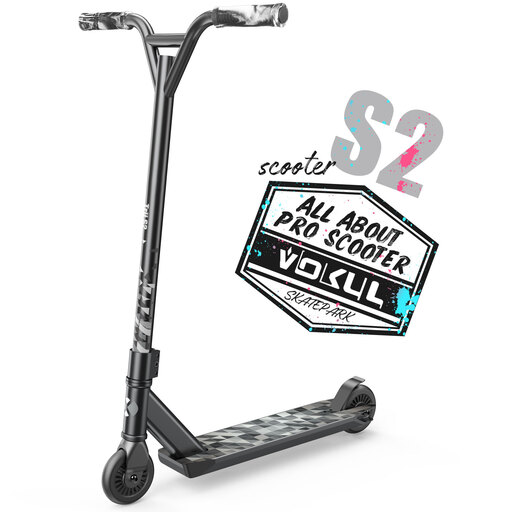
Why we recommend this product The VOKUL S2 is designed as a pro scooter for beginners. Its construction combines a 6061 aircraft-grade aluminium deck with 4130 Chromoly steel handlebars. This material combination provides the high stability needed for learning your first tricks. The 100 mm wheels support agile handling, while the triple clamp ensures a secure connection between the handlebars and the fork. Assembly only requires tightening three bolts, allowing for a quick start.
Pros:
Who it's for: This model is designed for children and teens aged 7 to 14 who are looking for a reliable stunt scooter for kids to safely learn basic tricks and techniques.
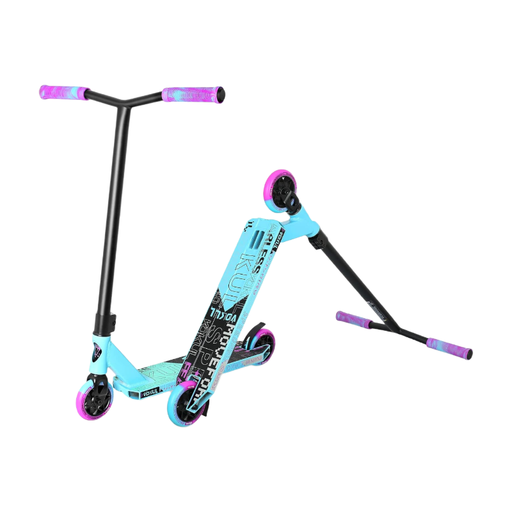
Why we recommend this product The VOKUL K1 is aimed at riders who already have some basic experience. Equipped with larger 110 mm aluminium-core wheels and ABEC-9 bearings, this scooter enables higher speeds and an exceptionally smooth ride. The T6-treated 6061 aluminium deck and one-piece fork are designed for the higher stresses of more demanding trick scooters, handling manoeuvres like tailwhips or barspins. The soft 145 mm TPR grips provide additional comfort and control.
Pros:
Who it's for: This trick scooter is suitable for intermediate riders from age 8, as well as teens and adults looking for a high-performance model for the skatepark and complex manoeuvres.
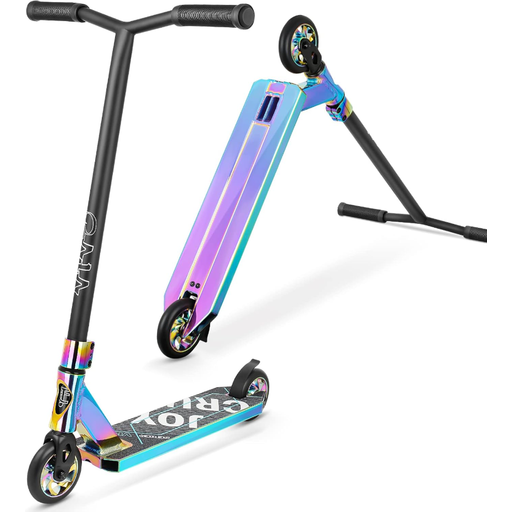
Why we recommend this product The Vokul V4 is positioned as a versatile model suitable for both beginners and early intermediate riders. The frame, constructed from a steel and aluminium alloy, is designed for a load capacity of up to 100 kg. The solid polyurethane wheels and non-slip deck ensure secure handling on various surfaces. The fixed handlebar design and rigid structure provide the direct power transfer and stability necessary for tricks.
Pros:
Who it's for: This model is suitable for teens from age 8 and adults looking for a durable and reliable all-rounder that is great for taking the first steps in freestyle as well as for use on pavements or in the park.
Choosing a scooter heavily depends on individual preferences, height, and intended use. If the models presented here don't fully meet your requirements, our main category offers a broader selection. Discover more options in our teen roller category.
1. What is the difference between a stunt scooter and a regular scooter? The main difference lies in the construction. A stunt scooter is non-folding, has a fixed handlebar height, and is made from more resilient materials like Chromoly steel and aircraft-grade aluminium. This build makes it robust enough to withstand the forces of jumps and landings, whereas a regular scooter is designed for comfort and transport.
2. What size stunt scooter should I get? As a general guideline, when standing on the deck, the scooter's handlebars should end up around the rider's hip or navel height. Handlebars that are too high make tricks harder to control, while bars that are too low lead to an uncomfortable posture. The deck length and width should also suit your shoe size and riding style.
3. From what age is a stunt scooter suitable for children? There are models specifically designed for children from around 7 years old. However, motor skills and the child's height are more important than age. It is crucial to choose a model that fits the child's size. Furthermore, wearing protective gear such as a helmet, knee pads, and elbow pads is strongly recommended, especially for beginners.