
Lieferung heute & morgen

Qualitätsgarantie

Willkommens-Angebote freischalten: KOSTENLOSE Lieferung | Bis zu 80 % RABATT | Kostenlose 30-Tage-JoyPlus-Testphase
App herunterladen
The world of stunt scooters can be overwhelming for parents and young riders alike. Which model is durable enough for the skatepark? What features are important for a beginner, and what does an advanced rider need? This guide is here to provide clarity. As a Joybuy Product Recommendation Officer, my mission is to give you objective information and a curated selection of models, helping you make an informed decision.
A stunt scooter, also known as a trick scooter or freestyle scooter, is specifically designed for jumps and tricks. Unlike conventional kick scooters, it is non-foldable and has a fixed-height handlebar to ensure maximum stability. Here are three key criteria to consider when making your choice.
The deck is the foundation of the scooter. For a beginner stunt scooter, a slightly wider deck is advantageous as it offers more stable footing. Advanced riders often prefer narrower decks for better maneuverability. The material is crucial for durability. High-end models use alloys like T-6061 aluminum or aircraft-grade aluminum (6061), which combine low weight with high strength. Also, pay attention to the maximum weight capacity, which is typically around 100 kg (220 lbs), to ensure safety.
A stunt scooter's wheels are smaller and harder than those on city scooters, typically ranging from 100 mm to 120 mm in diameter. They are usually made of durable polyurethane (PU) with a sturdy aluminum or plastic core. A critical quality indicator is the bearings. Their precision is rated on the ABEC scale. ABEC-9 bearings signify very high manufacturing precision, resulting in a smooth, fast, and low-friction ride—ideal for a scooter built for the skatepark.
The handlebar should be appropriate for the rider's height. As a rule of thumb, when standing on the deck, it should not be higher than the hip. T-bars or Y-bars made of steel or aluminum are common. An often-overlooked but vital detail is the compression system, which connects the handlebar, fork, and deck without any wobble. Systems like HIC (Hidden Internal Compression) are common in high-end pro scooters because they provide an exceptionally stable and durable connection, making it easier to perform tricks.
Based on these quality criteria, we have curated a selection of models suitable for various skill levels and age groups.
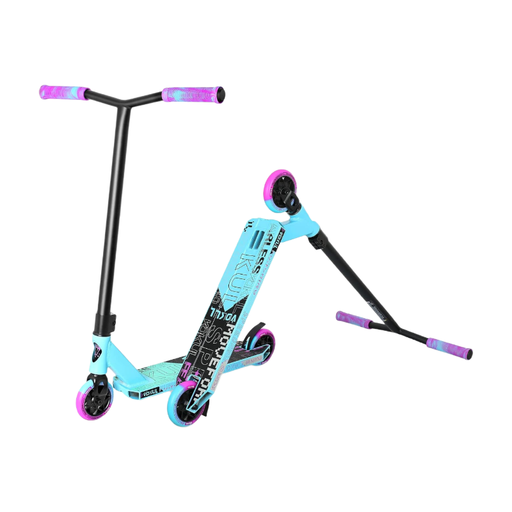
What Makes It Stand Out: The VOKUL K1 is designed for riders who have some experience and want to level up their skills. Its combination of a sturdy steel frame, a lightweight T-6061 aluminum deck, and larger 110 mm wheels allows for high speed and stability during advanced tricks like barspins or tailwhips.
Advantages:
Who It's For: Ideal for intermediate riders and teens aged 8 and up who are looking for a high-performance freestyle scooter for regular use.
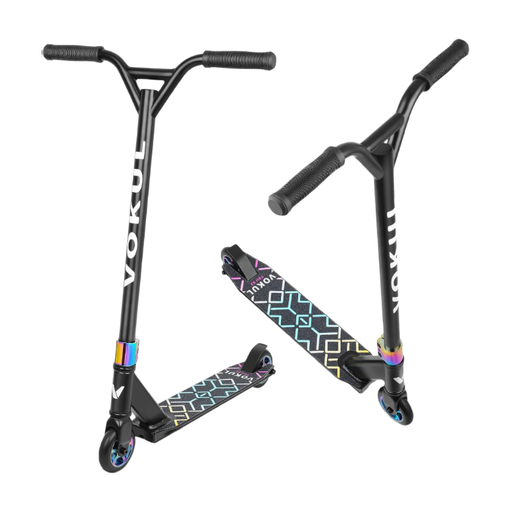
What Makes It Stand Out: The VOKUL S2 was developed specifically as a stunt scooter for kids and beginners. The wider, matte, non-slip deck (approx. 10 cm) makes it easier to maintain balance, while the 100 mm high-rebound PU+PC wheels ensure softer landings on those first jumps.
Advantages:
Who It's For: Perfect for kids and teens aged 6 to 12 who want to get started in the world of trick scooters.
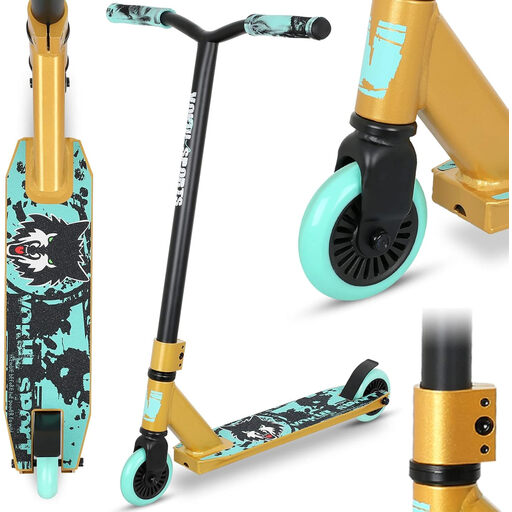
What Makes It Stand Out: This model combines a low weight with a very durable build, making it a great choice for young riders. At only approx. 3.6 kg (8 lbs), the scooter is easy to handle. The integrated HIC compression system, often found only on more expensive pro scooters, provides superior stability and a smoother ride.
Advantages:
Who It's For: An excellent choice for beginners aged 6 and up who are looking for a lightweight yet technically well-equipped trick scooter.
Didn't find the right model yet, or want to browse a wider selection? Explore our full range and find the perfect scooter for your needs.
? Discover More Kids' Trick Scooters Here
Most manufacturers recommend their entry-level models for children aged 6 or 8 and up. However, motor skills and the child's height are more important than age. To ensure good control, the handlebar should not be higher than the hip when standing on the deck.
A stunt scooter is built to handle the stress of the skatepark. It is non-foldable, has a fixed-height handlebar, a reinforced deck, and smaller, harder wheels. This design makes it extremely durable but less comfortable for long distances. A regular kick scooter is designed for transportation, focusing on comfort and portability.