
Lieferung heute & morgen

Qualitätsgarantie

Willkommens-Angebote freischalten: KOSTENLOSE Lieferung | Bis zu 80 % RABATT | Kostenlose 30-Tage-JoyPlus-Testphase
App herunterladen
In Germany, reliable bicycle lighting is not just a matter of safety, but also a legal requirement. However, the market is flooded with products featuring confusing technical specifications and marketing promises. Choosing the right set can quickly become overwhelming. This guide will help you identify the crucial features and avoid common purchasing mistakes, ensuring you are safe and clearly visible on the road.
Many cyclists invest in a lighting system that later turns out to be impractical or even non-compliant. Watch out for these typical pitfalls:
To make an informed decision, you should focus on the following practical and relevant parameters.
The German Road Traffic Licensing Regulations (StVZO) dictate the specific requirements for bicycle lighting in Germany. The most important feature is a glare-free beam pattern with a sharp cut-off line. This ensures the road ahead is optimally illuminated without endangering oncoming road users. When purchasing, always look for the "StVZO-zugelassen" (StVZO-approved) label and the corresponding K-number on the product.
While lumens describe the total amount of light emitted, lux measures the amount of light that arrives on a specific surface. For bicycle headlights, this is the more relevant value as it indicates how brightly the road is actually lit at a distance of 10 metres.
A modern LED bike light set should have an integrated battery that can be charged via a USB-C bike light port. This ensures compatibility with current charging cables for smartphones and laptops. Smart additional functions can further enhance comfort and safety:
Here are some recommendations tailored to the different needs of cyclists in Germany.
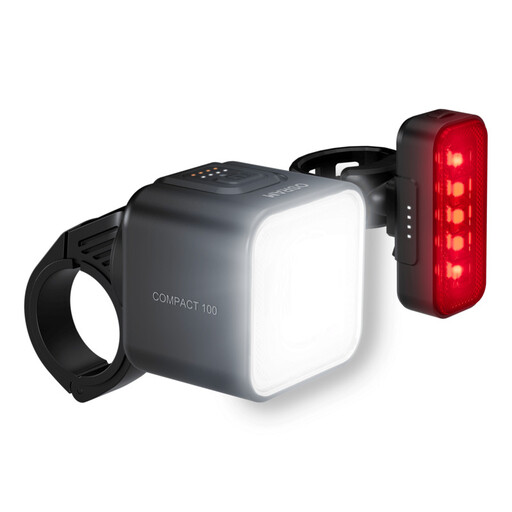
Why This Fits Their Persona: Ideal for daily commutes or long-distance tours where maximum visibility and smart safety features are required. The 100 lux reliably illuminates even unlit paths.
This set from OSRAM features official StVZO approval, a modern USB-C port, and delivers a true 100 lux of illuminance with a precise, glare-free beam pattern.
Integrated automatic mode to adjust brightness and a brake light on the rear light for enhanced safety in traffic.
Why This Fits Their Persona: An excellent choice for daily use in the city. The 50 lux is more than sufficient for lit streets, offering high reliability and safety without breaking the bank.
Offers the same StVZO compliance and USB-C charging convenience as more expensive models, but focuses on the essential features for the urban environment, avoiding unnecessary costs.
An excellent price-to-performance ratio. The long battery life of up to 14 hours in eco mode makes it a reliable companion for the entire week.
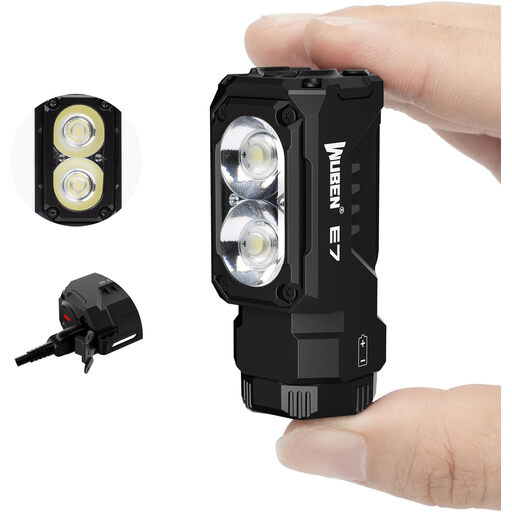
Why This Fits Their Persona: As a high-performance helmet light for mountain bike trails or a versatile torch for camping. Its high brightness is ideal for areas where StVZO regulations do not apply.
This product highlights the difference: it is an extremely bright torch, but is not StVZO-compliant. It must not be used as a primary bicycle light in road traffic, but it is an excellent supplement for off-road use.
Enormous brightness of 1800 lumens (according to the manufacturer) and a magnetic tail cap for hands-free attachment to metallic surfaces.
We have compiled a complete, real-time list of products that fully satisfy these strict selection criteria and UK safety regulations.
How can I identify an StVZO-approved bike light? You can recognise an approved light by the wavy line followed by the "K-number," which must be embossed on the housing or lens of the light (e.g., ~K 12345). This mark confirms that the product has been tested by the Federal Motor Transport Authority and meets the legal requirements for beam pattern and glare prevention.
How many lux does a good bike light need? This depends on the area of use. For rides in well-lit cities, 30 to 50 lux is generally sufficient to be seen and to spot obstacles in time. If you frequently ride on unlit country roads or forest paths, models with 70, 100, or more lux provide significantly better road illumination and thus more safety.
Am I allowed to use a bike light with a brake light function in Germany? Yes, since an amendment to the StVZO in 2017, rear bike lights with a brake light function are permitted in Germany. The function must be designed to light up significantly brighter than the normal tail light upon deceleration to effectively warn following traffic. The models presented here with this function are compliant.