
Lieferung heute & morgen

Qualitätsgarantie

Willkommens-Angebote freischalten: KOSTENLOSE Lieferung | Bis zu 80 % RABATT | Kostenlose 30-Tage-JoyPlus-Testphase
App herunterladen
In Germany, a reliable bike light isn't just a matter of personal safety—it's a legal requirement. Anyone who regularly rides at dusk, at night, or in poor visibility needs an StVZO-approved bike light. However, the market is flooded with technical jargon and marketing promises that make choosing difficult. This guide will help you understand the crucial features and avoid common purchasing mistakes.
Many cyclists invest in lighting sets that later turn out to be impractical or non-compliant. Pay attention to these three points to avoid a bad investment:
To find the right StVZO-compliant bike light set, focus on these objective criteria.
The most important feature for legal use on German roads is approval from the German Federal Motor Transport Authority (KBA). You can identify an StVZO-approved bike light by the engraved or printed K-number (a wavy line followed by the letter "K" and a number). This certification guarantees that the front and rear bike lights meet defined requirements for the light beam, brightness, and glare-free properties. Without this K-number, the light is not permitted within the scope of the StVZO.
Illuminance, measured in lux, determines how well you can see the path ahead. The legal minimum requirement is 10 lux. However, higher values are recommended for different environments:
Modern sets offer various light levels to adapt the brightness to the surroundings and optimise battery life.
A high-quality lithium-ion battery is standard today. Pay attention to the charging time and capacity. A USB-C port ensures fast and convenient charging. For commuters and tour riders in particular, additional features can further enhance safety:
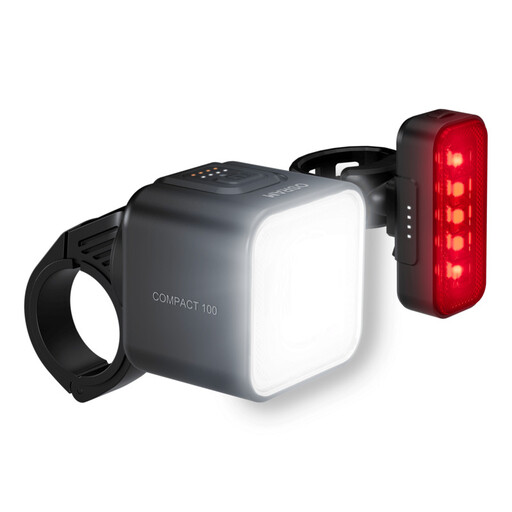
Why This Fits Their Persona: Ideal for riders who frequently travel on poorly lit routes and prioritise maximum safety. The intelligent extra features offer convenience and a significant boost in visibility in dense traffic or on long tours.
The set delivers a clear, StVZO-compliant 100 lux, features a modern USB-C port, and provides realistic battery runtimes for its different modes (e.g., 4 hours at full power).
Long beam distance of up to 95 metres (according to OSRAM). Smart rear light with automatic brake light function and a light sensor on the front light for automatic brightness adjustment.
Why This Fits Their Persona: Perfect for the daily commute or for rides in predominantly well-lit urban and suburban areas. It offers solid, compliant performance without costly extra features.
Focuses on the essentials: 50 lux illuminance, StVZO approval, and USB-C. The long battery life of up to 14 hours (according to OSRAM, in Eco mode) is especially practical for commuters.
Excellent value for money for a name-brand set. The 50 lux is a significant upgrade over the legal minimum and provides good visibility in most everyday situations.
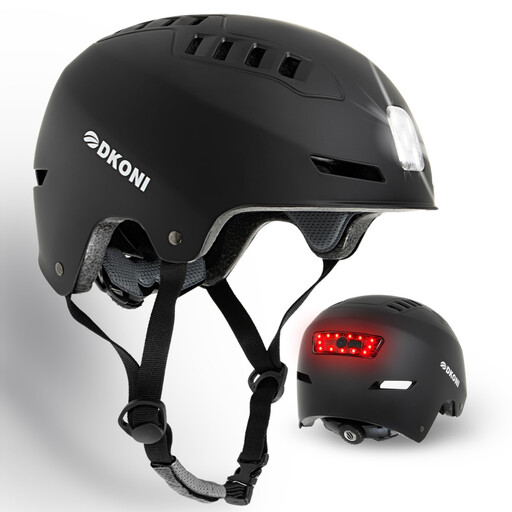
Why This Fits Their Persona: For cyclists who want to maximise their visibility beyond the basic StVZO requirements. The high position of the helmet lights makes them visible above car roofs in city traffic and increases recognisability at intersections.
This product is correctly positioned as an additional safety measure. It does not replace an StVZO-approved lighting set but complements it to enhance all-round visibility.
Integrated front and rear lights directly in the helmet. Various flashing modes on the rear light to increase attention. USB-rechargeable for ease of use.
We've compiled a complete, up-to-date list of products that fully meet these strict selection criteria and German safety regulations.
Approval according to the German Road Traffic Licensing Regulations (StVZO) means that a light meets specific technical requirements. The most important feature is a defined light beam with a sharp cut-off line. This ensures that the road is effectively illuminated without dazzling oncoming road users. Every approved light carries an official K-number from the Federal Motor Transport Authority (KBA).
Choosing the right illuminance (lux) depends on your typical riding profile. As a rule of thumb:
No. A helmet with integrated lighting is a sensible additional safety measure to increase your own visibility. However, it does not replace the legally required, StVZO-approved main lighting (headlight and rear light) that is firmly mounted to the bike. The lights on the helmet are for "being seen," while the StVZO-compliant light is for "seeing" and illuminating the path without glare.