
Lieferung heute & morgen

Qualitätsgarantie

Willkommens-Angebote freischalten: KOSTENLOSE Lieferung | Bis zu 80 % RABATT | Kostenlose 30-Tage-JoyPlus-Testphase
App herunterladen
A StVZO bike rear light needs to do more than just glow red. On the road, legal approval, secure attachment and a power supply that suits your cycling routine all matter. If you regularly ride in the dark, in the rain or on poorly lit paths, you shouldn't base your decision solely on brightness ratings or a low price.
Many cheap LED bike rear lights offer numerous flashing modes. For a bicycle used on public roads, what matters is whether the model is explicitly StVZO-approved. A general statement like "suitable for bicycles" doesn't replace a mention of approval.
Look for clear product labelling and check whether the rear light is intended for use on German roads. Depending on the design and usage, an additional flashing light may be judged differently under the law compared with an approved steady light.
Calling a bike rear light waterproof is often imprecise. Protection classes such as IPX4 or IP54 describe protection against splashing water and dust, not the light's technical approval. A water-resistant housing is useful for riding in the rain, but on its own it says nothing about compliance with the German Road Traffic Licensing Regulations (StVZO).
A rechargeable rear light needs regular charging. With a battery-operated bike rear light, you'll need suitable replacement batteries instead. If there's no battery indicator or charge indicator, it can be hard to judge the remaining run time. Even the maximum run time stated on the data sheet depends on the mode, temperature and battery condition.
For use on German roads, the product should be explicitly described as StVZO-approved or intended for StVZO bicycle lighting. The rear light must be clearly visible from behind and sit securely on the bike. Before every ride, check that the light hasn't shifted and isn't obscured by luggage, clothing or a child seat.
A bike rear light with brake light can inform following road users that you're slowing down. With an e-bike rear light with sensor, it's especially important how the detection works and whether the function remains active in all light modes. It doesn't replace the rider's attentiveness or a sufficient safety distance.
With the OSRAM model from our selection, the brake light function remains active in the "Automatic" and "Steady" modes, according to the product information. The integrated sensor detects braking and signals it with a brighter light pulse. For legal use, the manufacturer's specific details and the product's approval marking should remain decisive.
For commuters, tool-free mounting is practical, provided the bracket fits the seat post diameter. So check the stated dimensions. Equally important are:
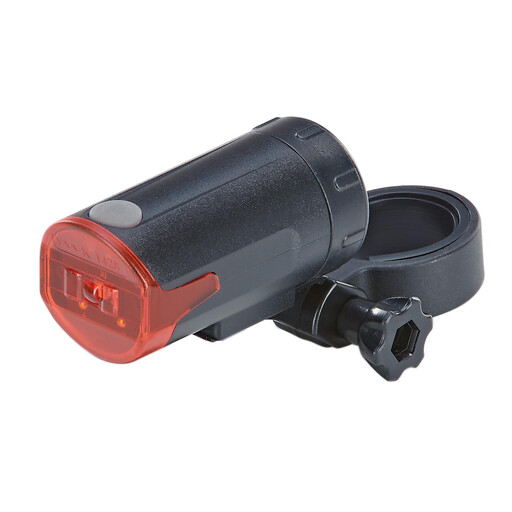
Why this product suits the profile: This battery-operated bike rear light is designed for users who want to change batteries quickly and don't need a USB-C charger.
A battery indicator shows a low charge level. The stated IPX4 protection rating is for splashing water; the housing must not be submerged.
StVZO-approved, tool-free mounting for seat posts with a diameter of 25.4 to 31.8 mm and a screw-in battery compartment.
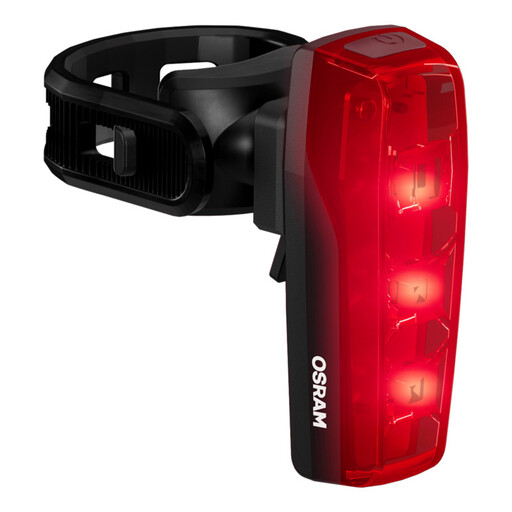
Why this product suits the profile: USB-C charging, two light modes and the integrated brake light function suit regular rides with frequent starting and braking.
The product information explicitly mentions StVZO approval, a charge indicator and a brake light function. This makes it easy to verify key features before buying.
Up to 13 hours of battery life according to product information, USB-C charging time of three hours, IP54 and tool-free attachment.
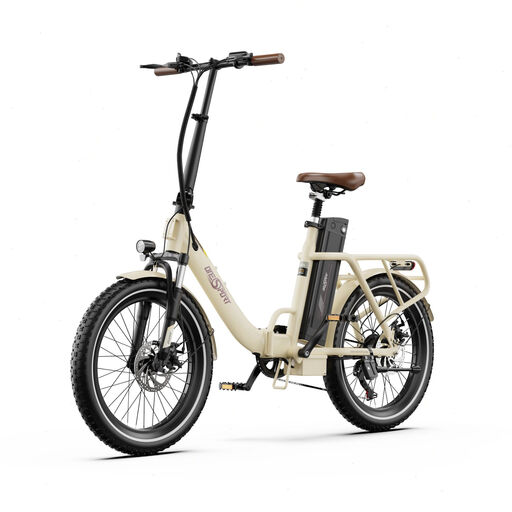
Why this product suits the profile: If you're choosing an e-bike with an existing lighting system, you should check the bike's technical specifications and the specific StVZO design of the rear light together.
The product page describes the bike but doesn't provide complete details about the rear light in the information available. For road use, an additional check of the lighting is therefore necessary.
48 V system, 17 Ah battery, stated range of up to 120 km in assistance mode and 20 × 3-inch tyres.
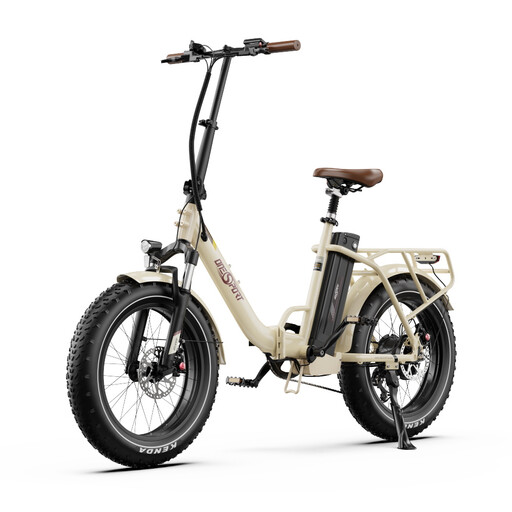
Why this product suits the profile: For frequent e-bike rides with wider tyres and hydraulic brakes, the vehicle choice can be relevant; the rear light must still be checked separately for StVZO features.
The available product data doesn't contain a complete rear light specification. This avoids mistakenly equating vehicle data with confirmed lighting approval.
48 V system, 18 Ah battery, up to 120 km in assistance mode, 20 × 4.0-inch tyres and hydraulic brakes according to product information.
We've put together a complete, regularly updated list of products that fully meet these strict selection criteria and the safety regulations in force in the EU.
A rear light with a brake light function can be suitable for road use if the specific model is approved and marked accordingly. Always check the manufacturer's information regarding StVZO approval. The brake light function doesn't replace anticipatory riding.
The run time depends on the selected mode, outside temperature and battery condition. With the OSRAM LEDSBIKE RACE REAR, up to 13 hours is stated according to product information. The charging time via USB-C is three hours according to the same information. For commuters, it's advisable to charge the rear light regularly and keep an eye on the charge indicator.
USB-C is suitable for users who charge regularly and already use compatible chargers. A battery-operated bike rear light is practical if you need to swap batteries quickly while out and about. What matters most is your own riding profile, the availability of spare batteries and a clearly visible charge or battery indicator.