
Lieferung heute & morgen

Qualitätsgarantie

Willkommens-Angebote freischalten: KOSTENLOSE Lieferung | Bis zu 80 % RABATT | Kostenlose 30-Tage-JoyPlus-Testphase
App herunterladen
For cyclists in Germany, regulation-compliant lighting is not just a legal requirement but a critical safety factor. However, the market for bike lights is flooded with marketing promises and technical specs that confuse more than they clarify. Many cyclists invest in a new StVZO-compliant bike light set, only to find it doesn't meet their expectations or, worse, isn't even legal for road use. This guide will help you avoid the most common purchasing pitfalls and make an informed decision.
Before you invest in a new LED bike light set, you should be aware of the typical issues that can lead to a bad purchase.
To ensure your new front and rear bike light is reliable and road-legal, focus on these three core features.
The most important feature is approval according to the German Road Traffic Licensing Regulations (StVZO). Look for the official approval mark: a wavy line followed by a "K" and a number (e.g., K~12345). Only lights with this K-number are cleared for use on bicycles on German roads. This mark guarantees that the headlight does not dazzle oncoming traffic and produces a defined light field.
While lumens describe the total light output of a lamp, lux measures the illuminance on a specific area. For cycling, the lux value is more relevant as it indicates how brightly the road is lit at a distance of 10 metres. A 50 lux bike light offers a good compromise between brightness, battery life, and price for use in the city and on lit paths. More important than the raw value, however, is a homogenous light field that illuminates both the near and far zones well, without creating an overexposed "hotspot" in the middle.
A modern, rechargeable lighting set should feature a USB-C port. This standard not only allows for faster charging times but also lets you use the same cable as your smartphone or other devices. Pay attention to the manufacturer's stated battery life in the various lighting modes. A good battery should last for several hours in eco mode to be prepared for longer tours or multi-day commutes without daily recharging.
Here are some product options that demonstrate what matters when making a selection and which products are suitable for which purpose.
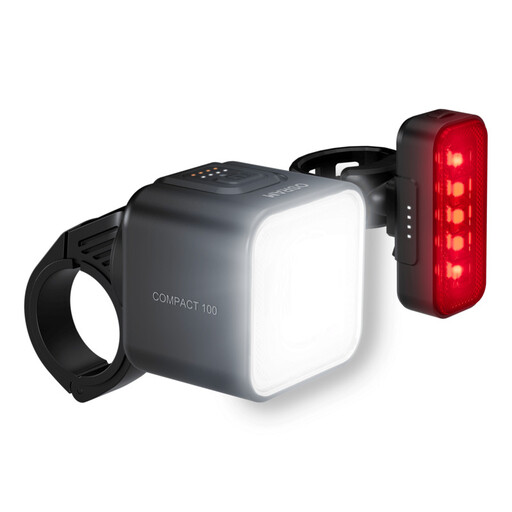
Why This Fits Their Persona: This set is designed for cyclists looking for a reliable, straightforward, and road-legal solution for their daily commute or city rides. It meets all essential requirements without any superfluous features.
It has official StVZO approval, a practical brightness of 50 lux, and a modern USB-C charging port. This allows it to bypass all three major pitfalls.
Complete set from OSRAM with front and rear lights. Tool-free installation and a long battery life of up to 14 hours in eco mode.
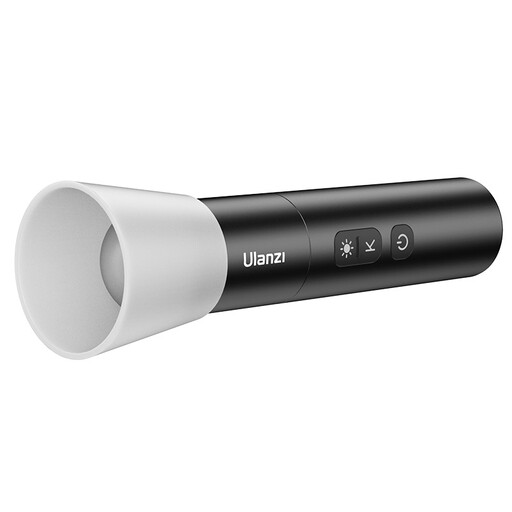
Why This Fits Their Persona: This product is a video light, ideal for cyclists who record videos off public roads. The adjustable colour temperature and brightness enable creative lighting scenarios for photo and video shoots.
Warning: This product is not StVZO-compliant and must not be used as a bicycle headlight in traffic. It falls directly into the approval trap, as it is designed for a different purpose (photography).
High flexibility in colour temperature (2000K-5500K) and brightness. Compact and lightweight, ideal as an accessory light for creative projects off the road.
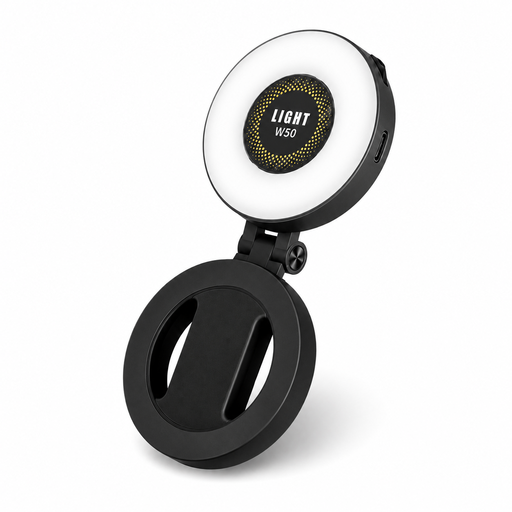
Why This Fits Their Persona: This magnetic ring light is specifically designed for creating selfies, TikToks, or for video calls. It attaches directly to a smartphone and provides flattering facial illumination.
This is not a bike light. It is exclusively for photography and has neither the brightness and range required for road traffic nor StVZO approval. It is a classic example of a product that is often mistakenly considered for the wrong purpose.
Improves the quality of selfies and videos with soft, adjustable light. Magnetic attachment for easy handling with compatible smartphones.
We've compiled a complete, up-to-date list of products that fully meet these strict selection criteria and German safety regulations.
1. How do I recognise an StVZO-approved bike light? An approved light must bear an engraved or printed approval number from the German Federal Motor Transport Authority. This consists of a wavy line, the letter "K," and a multi-digit number (e.g., K 12345). If this mark is missing, the light is not approved for use on German roads.
2. Is 50 lux sufficient for city riding? Yes, for most urban and suburban environments with existing street lighting, a 50 lux headlight is an excellent choice. It provides sufficient illumination of the road to spot obstacles in time without excessively draining the battery. For rides in complete darkness, such as on unlit forest or country paths, models with a higher lux rating may be more suitable.
3. How long does the battery in a rechargeable bike light set really last? The actual battery life depends heavily on the selected light mode. The manufacturer's specifications often refer to the most energy-efficient mode (eco mode). In full power mode, the runtime can be significantly shorter (e.g., 4 hours instead of 14 hours). Check the specifications for the different brightness levels to get a realistic estimate for your typical usage.