
Lieferung heute & morgen

Qualitätsgarantie

Willkommens-Angebote freischalten: KOSTENLOSE Lieferung | Bis zu 80 % RABATT | Kostenlose 30-Tage-JoyPlus-Testphase
App herunterladen
Anyone who regularly cycles in Germany knows the importance of reliable lighting. A high-quality LED bike light with a battery that complies with the StVZO is not an option, but a necessity for your own safety and for adhering to legal regulations. However, the market is flooded with products whose marketing promises are often more dazzling than their beams. This guide will help you identify the crucial features and avoid common purchasing mistakes.
Before making a purchase, you should be aware of the typical problems that arise with low-quality products. These not only lead to frustration but can also compromise your safety on the road.
To make an informed decision, focus on the following three technical features. These define the quality, safety, and practicality of modern bike lighting.
An StVZO-approved bike light is mandatory in Germany for use on bicycles in public road traffic. This approval is identifiable by the so-called K-number—a wave symbol followed by the letter "K" and a series of numbers—which must be embossed directly onto the housing or lens of the lamp.
This approval guarantees two essential properties:
While lumens measure the total amount of light a lamp emits, lux measures the illuminance that actually arrives on a specific surface. For road illumination, lux is the more relevant value. A bike light with 30 lux already provides very good illumination for most daily rides in the city and on lit paths. For rides on unlit country roads, models with 50, 70, or more lux can be beneficial.
A modern bike light set with a battery should be practical and durable. A bike light that is USB rechargeable offers maximum flexibility. It can be easily charged via a laptop, a power bank, or a standard wall adapter. Look for a lithium-ion battery, as it offers high energy density and low self-discharge. The mount should allow for tool-free installation, be robust, and guarantee a secure fit even with vibrations. This is especially important for commuters and e-bike light users who frequently attach and detach their lights.
Instead of making a one-size-fits-all recommendation, we have curated products for different user groups.
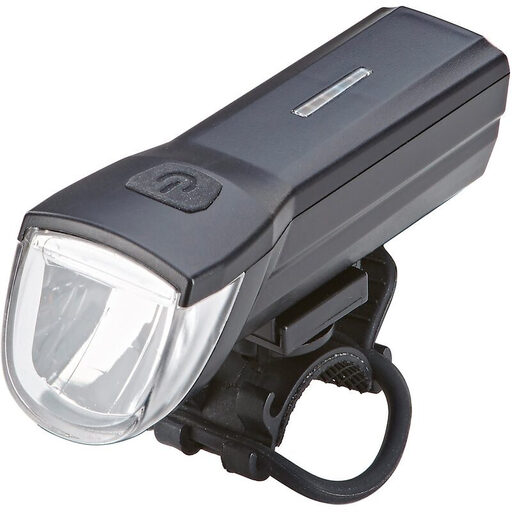
Why This Fits Their Persona: Ideal for the daily commute to work or for running errands in the city. The light is compact, easy to use, and meets all legal requirements for urban traffic.
This model is explicitly StVZO-approved, preventing glare. The integrated Li-ion battery with a charge level indicator prevents sudden failures, and the silicone mount ensures a firm, vibration-proof fit.
Two brightness levels (30 lux and 15 lux) to adapt to lighting conditions and extend battery life. Charging is straightforward via a micro-USB cable.
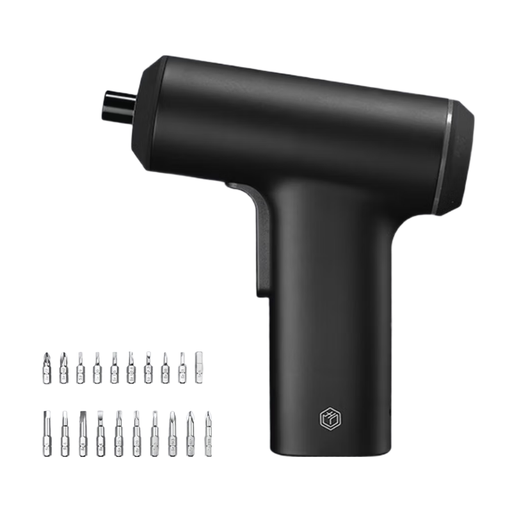
Why This Fits Their Persona: For cyclists who enjoy installing accessories or performing minor maintenance themselves. This tool simplifies the mounting of light brackets, mudguards, or luggage racks.
Avoids the frustration of using the wrong tools or stripping screw heads. The controlled torque and LED light enable precise work, even in hard-to-reach areas of the bike frame.
Compact and cordless thanks to a 2000mAh battery. The integrated LED ring light illuminates the work area without shadows, which is a great advantage when fine-tuning components.
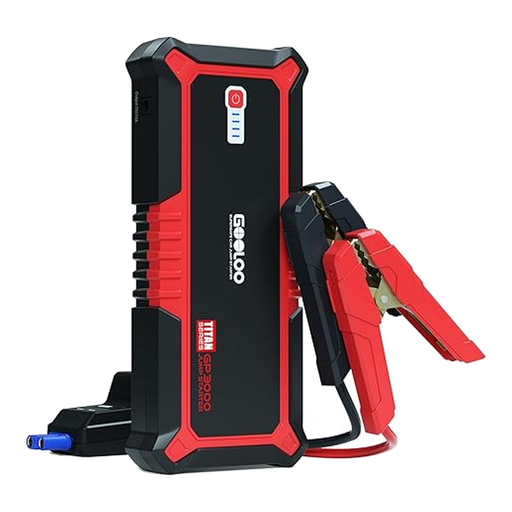
Why This Fits Their Persona: For cyclists who drive to remote trails or bike paths. This device ensures you won't be stranded in the car park with a dead car battery after a long ride.
Prevents the unforeseen problem of a dead car battery, which can abruptly end a cycling trip. It provides independence from roadside assistance, especially in remote areas with no mobile signal.
Serves not only as a jump starter but also as a powerful power bank with USB fast-charging to recharge your bike computer, smartphone, or even your bike light on the go.
We have compiled a complete, up-to-date list of products that fully meet these strict selection criteria and German safety regulations.
Approval according to the German Road Traffic Licensing Regulations (StVZO) means that a bike light has been tested and cleared for use in public road traffic in Germany. It features a specially shaped beam pattern that illuminates the road without blinding oncoming traffic and is marked with a K-number.
For most rides in the city and on well-lit paths, a bike light with 30 lux is a solid choice, offering sufficient sight and visibility. Those who frequently ride on unlit country roads or in the forest will benefit from models with 50 lux or more for a longer and wider illumination.
The battery life heavily depends on the battery's capacity and the selected brightness level. A good LED bike light with a battery should last at least 3-4 hours in its brightest mode. In power-saving mode, the runtime can often increase to over 8-10 hours. Look for models with a battery level indicator to avoid being surprised by a dead battery.