Long-distance runners focused on fuelling
You’re planning your carbohydrate intake for a long run or race and don’t want to replace your usual running fuel with a sugar-free snack without checking first.


When planning your carbohydrate intake for long runs, don’t choose a sugar-free chocolate bar based on its name alone: the German Nutrition Society highlights the role of carbohydrates in endurance sports. As a snack away from exercise, one may be an option if you can tolerate its ingredients and portion size. ‘Sugar-free’ and ‘no added sugar’ are different claims.
You’re planning your carbohydrate intake for a long run or race and don’t want to replace your usual running fuel with a sugar-free snack without checking first.
You’re looking for a sweet snack for everyday enjoyment or to have some time before or after a run. What matters is whether you want to avoid added sugar or keep an eye on your total sugar intake.
You pay particular attention to sugar substitutes before exercise and don’t want to try a new product for the first time on a long-run day. The consumer advice centre warns that sugar substitutes can have a laxative effect in larger quantities.
First decide whether you’re looking for a chocolate snack or fuel for a long run. Only then can you work out which information on the bar matters for your needs.
A good fit if: you’re looking for a snack with a very low total sugar content to enjoy away from exercise.
Bear in mind: Check which sugar substitutes are used and whether you can tolerate them. The consumer advice centre says they can have a laxative effect in larger quantities.
A good fit if: you want to avoid added sugar and are buying a snack rather than specifically planned running fuel.
Bear in mind: This claim doesn’t mean the product contains no sugar. For example, Lindt declares 9,0 g of sugar per 100 g for its milk chocolate with no added sugar.
A good fit if: you’re choosing fuel for a long training run or race.
Bear in mind: The German Nutrition Society describes carbohydrates as important in endurance sports. You can’t tell which products or quantities will fit your plan just from the ‘sugar-free’ claim.
| Criterion | What to check | Who it matters to |
|---|---|---|
| Carbohydrates for long runs | Compare carbohydrates and fat in the nutritional information, per 100 g and per portion. Check whether the product fits into the running fuel you’ve already tried and tested. | For a long run, I want to plan my carbohydrate intake rather than rely on the name of a chocolate bar. Around 42% of consumers would see running fuel as their main reason for buying. |
| Sugar claims | Compare ‘sugar-free’ or ‘no added sugar’ with the ‘of which sugars’ line per 100 g. EU Regulation (EC) No 1924/2006 sets a maximum of 0,5 g of sugar per 100 g or 100 ml for the ‘sugar-free’ claim. | If I’m mainly concerned about total sugar content, ‘no added sugar’ on the front isn’t enough for me. Around 33% of consumers would make the sugar claim their most important criterion. |
| Tolerance before exercise | Check the ingredients list and look out for information about sugar substitutes. Don’t try a new product for the first time on race day. | With a sensitive stomach, I want to know how I react to a bar before planning to have it close to a long run. For around 25% of consumers, tolerance would be the main consideration. |
The two claims answer different questions. Lindt states that its milk chocolate with no added sugar contains 9,0 g of sugar per 100 g.
If total sugar content matters to you, compare the claim on the front with the ‘of which sugars’ line in the nutritional information.
Maltitol, xylitol and other sugar substitutes can have a laxative effect in larger quantities, according to the consumer advice centre. This is particularly relevant when eating before or during exercise.
Check the ingredients and warnings, and try a new product and your chosen portion during a regular training session first.
A sugar-free chocolate snack doesn’t automatically answer the question of how you want to take on carbohydrates during a long run.
Keep the choice of an everyday snack separate from planning your running fuel. For the latter, the nutritional information and how well you tolerate the product matter more than its name.
Xucker’s range includes chocolate made with xylitol instead of sugar.
Frankonia has a product range labelled ‘NO SUGAR ADDED’. The brand says its chocolate is sweetened with maltitol.
Lindt offers selected chocolate products labelled ‘no added sugar’.
These cereal bars, chocolate bars and chocolate slabs are useful for comparing pack sizes and sugar claims for a snack. This selection isn’t a recommendation to use them as marathon fuel without checking first.
 No image available
This cereal bar could be an option for a portioned chocolate snack away from your run. The pack contains six bars of 20 g each; ‘no added sugar’ doesn’t mean ‘sugar-free’. Check the sugar information and ingredients on the pack.
 No image available
If you’re looking for an individually portioned cereal bar with white chocolate as a snack, this version is worth comparing. The pack contains six bars of 20 g each. Check the ‘of which sugars’ figure and ingredients rather than assuming ‘no added sugar’ means sugar-free.
 No image available
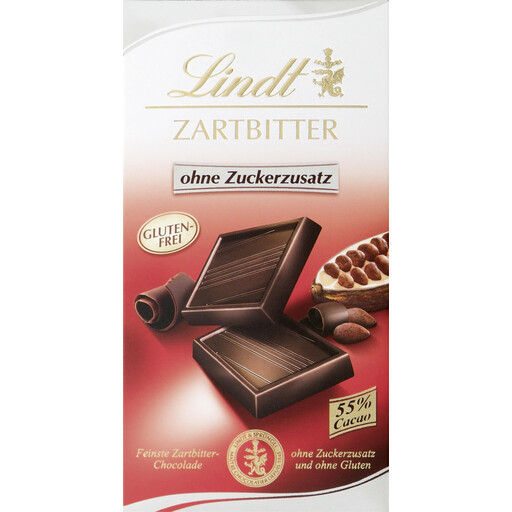
This 100 g bar is a snack option for shoppers comparing dark chocolate with no added sugar. Check the ‘of which sugars’ figure per 100 g to see whether it meets your total sugar target. For running fuel, other nutritional information and how well you tolerate it also matter.
 No image available
This 50 g bar could be a portioned chocolate snack, provided its ingredients suit you. The original product title uses ‘Sugar Free’, but this bar is listed as containing 4,3 g of sugar per 100 g. Check the current labelling before classifying it as sugar-free, and don’t try it for the first time before a long run.
 No image available
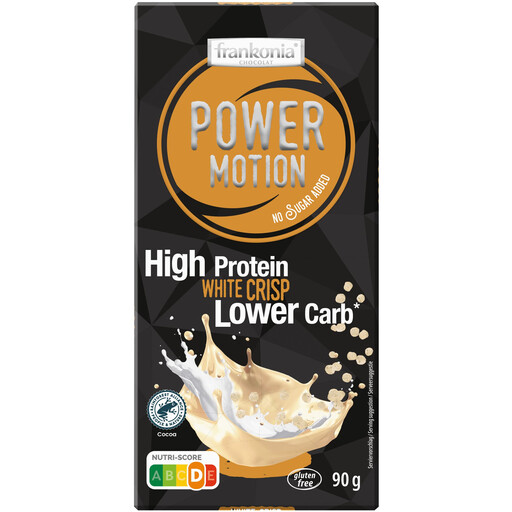
This 90 g chocolate is useful for comparing snacks with no added sugar, but its name alone doesn’t make it running fuel. Check the nutritional information per 100 g and per portion, as well as any information on sugar substitutes on the pack.
No. EU Regulation (EC) No 1924/2006 sets a limit of no more than 0,5 g of sugar per 100 g or 100 ml for the ‘sugar-free’ claim. A product with no added sugar may still contain sugar, so always check the ‘of which sugars’ line.
Not without checking the nutritional information and your running-fuel strategy. The German Nutrition Society highlights the role of carbohydrates in endurance sports; the ‘sugar-free’ claim alone doesn’t show whether a bar will suit your planned carbohydrate intake.
Sugar substitutes can have a laxative effect in larger quantities, according to the consumer advice centre. If a bar contains maltitol, xylitol or other sugar substitutes, check the ingredients and information on the pack, and don’t try it for the first time on race day.
Compare the ingredients, portion size and nutritional information for carbohydrates, ‘of which sugars’ and fat per 100 g and, where given, per portion. Also check whether the front says ‘sugar-free’ or ‘no added sugar’, and which sugar substitutes are used.