If your late-night chocolate snack really needs to be “sugar-free”, the declared sugar content is what matters: under EU rules, it must be no more than 0.5 g per 100 g. “No added sugar” is a different claim and can still mean a higher sugar content. Also check the sweeteners, allergen information and how much you plan to eat.
Which option is right for you?
If you take “sugar-free” literally
You want chocolate for a late-night snack that meets the EU threshold of no more than 0.5 g of sugar per 100 g. So the claim on the front of the pack isn’t enough: you compare the nutrition information and ingredients.
If you’re looking for chocolate with no added sugar
You want to avoid added sugar, but don’t need a strictly sugar-free bar. In that case, check the actual sugar content: Lindt declares 1.0 g of sugar per 100 g for its dark chocolate with no added sugar, and 9.0 g per 100 g for its milk chocolate version.
If you’re looking for a plant-based recipe
You’re looking for chocolate labelled as vegan. With Veganz Bio No Added Sugar, you should also check the sugar content and precautionary allergen information: REWE lists 0.8 g of sugar per 100 g and says it may contain traces of almond, hazelnut and milk.
What should you look for when buying?
First decide whether you need the strict “sugar-free” claim or are looking for chocolate with no added sugar. For a small late-night snack, the sweeteners, ingredients and portion you have in mind can also make a difference.
| Criterion | What to check when buying | Who it matters most to |
|---|
| Sugar-free threshold |
Compare “of which sugars” per 100 g with the EU threshold of no more than 0.5 g. “No added sugar” is no substitute for this check. |
If “sugar-free” is a must for me, I want to check the nutrition table. Around 33% of consumers put this strict sugar-free goal first. |
| Sweeteners |
Read the ingredients list and check for any warning about effects from excessive consumption. Also consider how much you plan to eat. |
For a late-night snack, I want to know which sweeteners are included and which warnings are relevant to my choice. This is the main concern for around 33% of consumers. |
| Recipe and allergens |
Check vegan or gluten-free claims, as well as the ingredients and precautionary allergen information on the specific pack. |
A plant-based recipe matters to me, but I also need to take possible traces of milk or nuts into account. Around 17% of consumers base their choice primarily on ingredients and allergens. |
| Portion and energy |
Compare the energy per 100 g and the pack size; a whole bar may be more than the portion you have in mind. |
I only want to eat a small amount of chocolate, and I don’t want to assume that “no added sugar” means low in energy. Portion size is the top priority for around 17% of consumers. |
Common misunderstandings
-
Assuming “no added sugar” means “sugar-free”
Chocolate with no added sugar can contain more than 0.5 g of sugar per 100 g. Lindt declares 1.0 g per 100 g for its dark chocolate version with no added sugar.
If you’re looking for strictly sugar-free chocolate, check the “of which sugars” figure per 100 g rather than relying on the product name alone.
-
Overlooking sweeteners and warnings
The alternatives reviewed include sweeteners such as maltitol and erythritol. Several of these products carry a warning that excessive consumption may have a laxative effect.
Compare the ingredients and check the warning on the specific pack, especially if you’re sensitive to these ingredients.
-
Assuming less sugar means fewer calories
The sugar content alone doesn’t tell you how much energy a chocolate bar contains. For example, REWE declares 428 kcal per 100 g for Veganz Bio No Added Sugar.
Check the energy information too, and consider how much you’d like to have as a snack.
-
Assuming “vegan” means there are no traces of allergens
According to its product labelling, Veganz Bio No Added Sugar, sold as vegan by REWE, may contain traces of almond, hazelnut and milk.
If you need to avoid certain allergens, follow the ingredients and precautionary allergen information on the specific pack.
Brands and product ranges to help you choose
No Sugarsugar
The dark chocolate bar listed by REWE contains at least 70% cocoa and declares 0.5 g of sugar per 100 g.
- This sugar content meets the EU threshold for the “sugar-free” claim.
- REWE lists 29 g of polyols per 100 g and a warning that excessive consumption may have a laxative effect. Check the precautionary allergen information on the pack too.
Lindt
The Lindt milk and dark chocolate bars featured here are labelled as having no added sugar and contain maltitol.
- Lindt declares 1.0 g of sugar per 100 g for its dark chocolate and 9.0 g per 100 g for its milk chocolate, making it easy to compare the varieties using the same nutritional measure.
- Both figures are above the sugar-free threshold. Check the ingredients, possible traces of nuts and the warning about the effects of excessive consumption on the relevant pack.
Veganz
The Bio No Added Sugar product listed by REWE is labelled as vegan and gluten-free.
- The product labelling lists 0.8 g of sugar per 100 g and erythritol as a sweetener.
- Its sugar content is above the strict sugar-free threshold; according to REWE, it may contain traces of almond, hazelnut and milk.
Milka
The Alpine milk chocolate bar described by EDEKA24 is included here as an example of classic milk chocolate, not as a sugar-free option.
- The ingredients and nutrition information make it easy to see how this differs from the sugar-free option you’re looking for.
- EDEKA24 lists sugar as the first ingredient and declares 55 g of sugar per 100 g for this variety.
Ritter Sport
The Crunchy Flakes bar described by EDEKA24 is an example of classic chocolate, not an option with no added sugar.
- For this specific variety, you can compare the ingredients and sugar content directly with what you’re looking for.
- EDEKA24 lists sugar as an ingredient and declares 50 g of sugar per 100 g.
Chocolate with no added sugar at Joybuy
These products fit the selection of chocolate labelled “no added sugar”. If you’re looking for a strictly sugar-free option, the sugar content on the individual pack is still what matters; the claim alone isn’t enough.
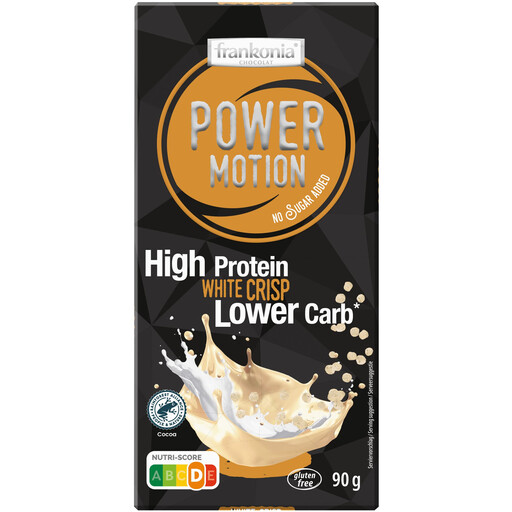 Image unavailable
Frankonia Chocolat Power Motion No Sugar Added White Crisp, 90 g
A good choice if you’re looking for the White Crisp version with no added sugar and plan to have some from the 90 g pack as a snack. Before buying, compare the sugar content per 100 g, along with the ingredients and warnings. “No Sugar Added” doesn’t mean “sugar-free”.
View at Joybuy
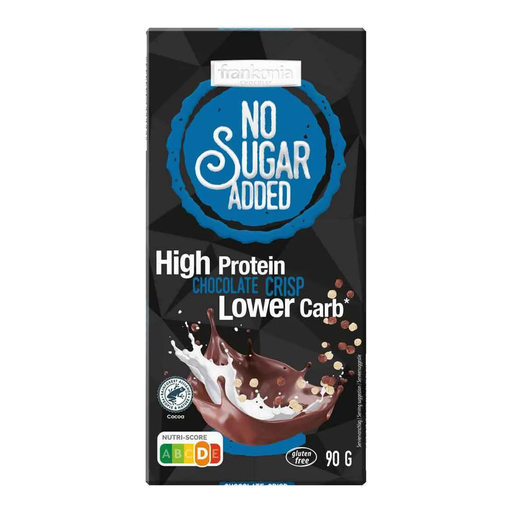 Image unavailable
Frankonia Chocolat Power Motion No Sugar Added Chocolate Crisp, 90 g
This Chocolate Crisp version could be the one for you if you’d prefer chocolate with no added sugar to the White Crisp variety. The pack contains 90 g. When planning your portion, check the nutrition information, ingredients and suitability warnings on the specific pack.
View at Joybuy
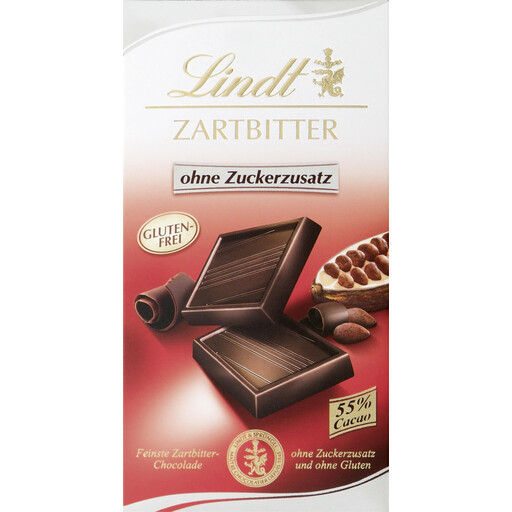 Image unavailable
Lindt No Added Sugar Dark Chocolate, 100 g
A 100 g dark chocolate bar for anyone looking for chocolate with no added sugar but who doesn’t need a strictly sugar-free option. Lindt declares 1.0 g of sugar per 100 g for its equivalent dark chocolate bar with no added sugar. Also check the ingredients, allergen information and nutrition values on the specific pack to plan your portion.
View at Joybuy
Frequently asked questions
Does “no added sugar” mean the same as “sugar-free”?
No. Under EU rules, the “sugar-free” claim requires no more than 0.5 g of sugar per 100 g; chocolate with no added sugar can contain more. Lindt declares 1.0 g per 100 g for its dark chocolate bar with no added sugar and 9.0 g per 100 g for its milk chocolate version.
What should I look out for in chocolate with sweeteners?
Check the ingredients and warning on the specific bar, especially if you’re sensitive to certain sweeteners. Several of the products featured here contain maltitol or erythritol and carry a warning that excessive consumption may have a laxative effect.
Is chocolate with no added sugar automatically low in calories?
No. The claim about added sugar doesn’t tell you how much energy the chocolate contains. If you’re planning a small evening portion, compare the energy per 100 g and the pack size.
Is vegan chocolate with no added sugar automatically free from traces of milk and nuts?
No. REWE says that Veganz Bio No Added Sugar, which is labelled as vegan, may contain traces of almond, hazelnut and milk. If you need to avoid these allergens, check the labelling on the specific pack.


