For people with a strict sugar limit
If ‘sugar-free’ is a must-have for you, ‘no added sugar’ isn’t enough. Compare the sugar value per 100 g with the 0.5 g limit, and check which sweeteners have been used.


If you’re specifically looking for sugar-free chocolate as a gaming snack, check the ‘of which sugars’ value first. Under European Union Regulation (EC) No 1924/2006, the ‘sugar-free’ claim can only be used for solid foods containing no more than 0.5 g of sugar per 100 g. ‘No added sugar’ does not mean the same thing. The portion you plan to eat, nutritional values, sweeteners used, ingredients and allergen information also matter when choosing.
If ‘sugar-free’ is a must-have for you, ‘no added sugar’ isn’t enough. Compare the sugar value per 100 g with the 0.5 g limit, and check which sweeteners have been used.
If you’d rather choose a particular type of chocolate than stick to the strict sugar-free limit, bars labelled ‘no added sugar’ may also be an option. Total sugar can vary by type: REWE Deutschland lists 1 g of sugar per 100 g for Lindt dark chocolate, while Lindt Deutschland gives 9 g per 100 g for its milk chocolate version.
If you’re looking for a vegan or gluten-free bar, or need to avoid certain allergens, check the label on the specific product. A suitable recipe doesn’t replace checking for possible traces or looking at the type and amount of polyols used.
First decide whether you need to stick to the strict sugar-free limit or simply want to avoid added sugar. You can then compare the type of chocolate, portion size, sweeteners and ingredients.
| Criteria | What to check | Who it matters to |
|---|---|---|
| Sugar-free limit | Check the ‘of which sugars’ value per 100 g. Under European Union Regulation (EC) No 1924/2006, the ‘sugar-free’ claim can only be used for solid foods containing no more than 0.5 g of sugar per 100 g. | If I specifically want sugar-free chocolate while gaming, the bar I choose must meet this limit. For around 36% of consumers, this strict requirement is the priority. |
| Type of chocolate | For products with no added sugar, compare total sugar and energy per 100 g; the claim alone doesn’t tell you either. | I want a particular dark or milk chocolate option, even if it isn’t sugar-free. Around 29% of consumers mainly prioritise this choice without added sugar. |
| Polyols and portion size | Look for sweeteners, polyols and information on the packaging. When choosing a snack, consider how much you actually plan to eat. | I want to keep an eye on portion size and polyol information during a long gaming session. This is the main consideration for around 21% of consumers. |
| Recipe and allergens | Check the label on the specific product for the recipe characteristics you’re looking for, ingredients and possible traces. | I’m looking for a bar with the right recipe information and also need to check allergen details. This check takes priority for around 14% of consumers. |
These claims describe different things. Lindt Deutschland gives its milk chocolate with no added sugar as containing 9 g of sugar per 100 g, which is above the sugar-free limit.
If this limit is important to your choice, check the ‘of which sugars’ value per 100 g on the packaging.
Low sugar doesn’t automatically mean low energy. For the options considered here, REWE Deutschland and Lindt Deutschland give values ranging from 428 to 510 kcal per 100 g.
As well as comparing sugar values, check the energy information and think about the portion you plan to have as a snack.
Bars sweetened with erythritol or maltitol may contain polyols. The consumer advice centre notes that consuming large amounts of sugar substitutes can have a laxative effect; some of the products considered here carry similar warnings.
Read the ingredients list, nutritional information and packaging warnings together rather than making your decision based on the sugar claim alone.
A vegan or gluten-free label doesn’t answer every question about possible traces. The Veganz bar listed by REWE Deutschland is described as vegan and gluten-free, but may contain traces of almonds, hazelnuts and milk.
If particular allergens matter to you, always check the ingredients and trace warnings on the specific packaging.
If you need to stick to the strict sugar-free limit, this brand’s dark chocolate, listed by REWE Deutschland, is one specific option to compare: it contains 0.5 g of sugar per 100 g.
Lindt offers dark and milk chocolate labelled ‘no added sugar’. The two options are not the same when it comes to total sugar content.
The No Added Sugar organic chocolate listed by REWE Deutschland is an option if you’re looking for a vegan and gluten-free recipe but don’t necessarily need a strictly sugar-free bar.
Xucker offers different types of chocolate, including bars and drops. According to Xucker, its products are sweetened with sugar alternatives such as xylitol or erythritol.
This selection includes a Lindt dark chocolate bar and two different Frankonia Crisp options labelled ‘no added sugar’ or ‘No Sugar Added’. If you’re looking for strictly sugar-free chocolate, also check the sugar value per 100 g for each option.
 No image available
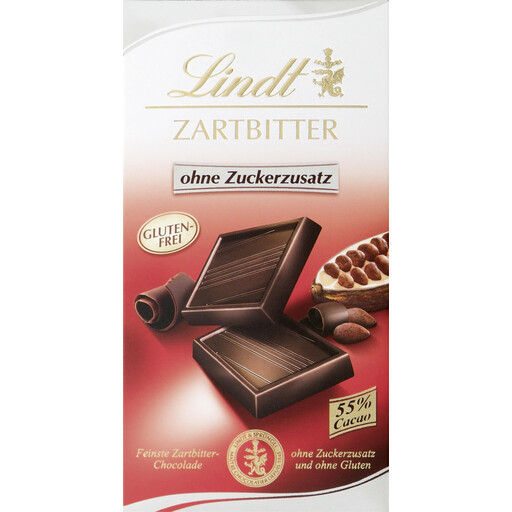
A dark chocolate bar for people looking for a no added sugar option, but who don’t necessarily need strictly sugar-free chocolate.
For Lindt dark chocolate with no added sugar, REWE Deutschland gives 1 g of sugar per 100 g and lists maltitol as the sweetener. This sugar value is above the limit for the ‘sugar-free’ claim.
Before buying, check the ingredients and allergen information on the specific packaging. REWE Deutschland also warns that this option may have a laxative effect if consumed in excess.
 No image available
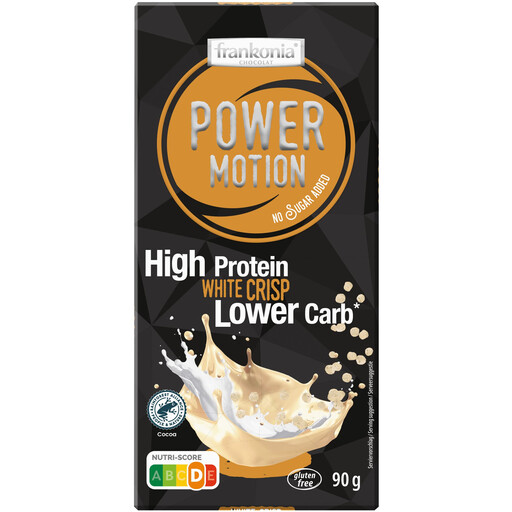
A white crisp chocolate option for people who’d prefer something different from a dark chocolate bar while gaming, with a ‘No Sugar Added’ claim.
The pack weighs 90 g. The product name alone doesn’t prove that the chocolate is sugar-free; check the ‘of which sugars’ value per 100 g and read the ingredients and allergen information.
 No image available
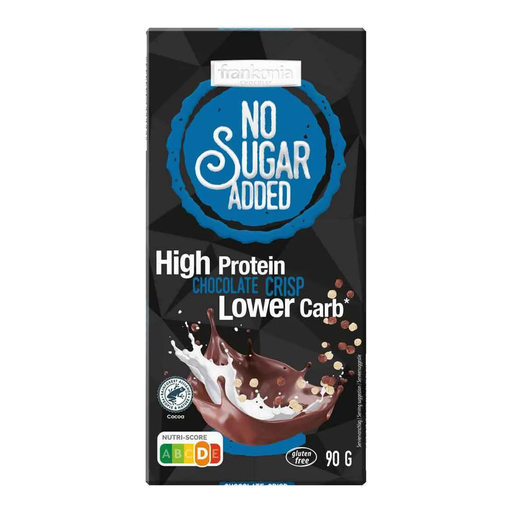
A chocolate crisp option for people looking for a product labelled ‘No Sugar Added’ rather than a classic chocolate bar.
The pack weighs 90 g. If the sugar-free limit is important to your decision, check the sugar value per 100 g on the specific packaging. Also check the ingredients and allergen information.
Under European Union Regulation (EC) No 1924/2006, this claim can only be used for solid foods containing no more than 0.5 g of sugar per 100 g. For a chocolate bar, the ‘of which sugars’ value per 100 g is what matters, not just the type of sweetener used.
No. Chocolate with no added sugar can still contain sugar: REWE Deutschland gives Lindt dark chocolate with no added sugar as containing 1 g of sugar per 100 g, while Lindt Deutschland gives 9 g per 100 g for the equivalent milk chocolate version. Both values are above the sugar-free limit.
No, the sugar value alone doesn’t tell you that. REWE Deutschland gives its listed sugar-free NO SUGAR SUGAR dark chocolate as containing 476 kcal per 100 g. Compare the energy information for the specific products and take your planned portion into account.
Bars containing sugar substitutes such as maltitol or erythritol may carry a warning about excessive consumption. The consumer advice centre also notes that consuming large amounts of sugar substitutes can have a laxative effect. So check the ingredients and warning on the specific packaging.
No. If particular allergens or traces matter to you as well, check the full label. For example, the Veganz chocolate listed by REWE Deutschland as vegan and gluten-free may contain traces of almonds, hazelnuts and milk.