If a hotel wants to describe the chocolate on its breakfast buffet as ‘sugar-free’, the specific variety must contain no more than 0.5 g of sugar per 100 g under EU Regulation (EC) No 1924/2006. ‘No added sugar’ and ‘no refined sugar’ do not automatically meet this requirement. Guests should also be able to access the ingredients, allergen information and sweetener warnings for every variety on offer.
Which hotels is this relevant to?
Hotels that explicitly label chocolate as sugar-free
Any hotel wishing to call the chocolate on its buffet ‘sugar-free’ must check the sugar content of every variety it serves. EU Regulation (EC) No 1924/2006 sets a limit of no more than 0.5 g of sugar per 100 g.
Hotels offering an alternative with no added sugar
If you want to offer guests chocolate sweetened in a different way, make sure you distinguish ‘no added sugar’ from ‘sugar-free’. For varieties containing maltitol, it’s also important to check the information on the individual pack.
Buffets serving unpackaged chocolate
When chocolate is served unpackaged, guests need easy access to information about allergenic ingredients. Germany’s Food Information Implementing Regulation requires the relevant information to be displayed prominently, clearly and legibly.
What should you look for when choosing?
First decide what claim you want to make at the buffet. Then compare the nutritional information and labelling on the specific chocolate.
| What you need |
What to check before buying |
Who it matters to |
| Sugar-free claim |
Sugar per 100 g in the specific variety; under EU Regulation (EC) No 1924/2006, ‘sugar-free’ means no more than 0.5 g. |
If you want to offer chocolate explicitly labelled ‘sugar-free’, you need a suitable nutritional value rather than a product name that sounds similar. This is the top priority for around 50% of consumers. |
| Chocolate with no added sugar |
Compare the exact product name, sugar per 100 g and the sweetener used. |
If your main aim is to serve a sweet-tasting alternative at breakfast, a strict sugar-free claim may not be your priority. Around 30% of consumers put this option first. |
| Information at the buffet |
Make allergen information and any relevant sweetener warnings accessible for every variety served. |
When chocolate is laid out unpackaged, I want to be able to see which information matters for my choice. This need for information is a priority for around 20% of consumers. |
Which mistakes can you avoid?
-
Assuming ‘no added sugar’ means ‘sugar-free’
These terms do not mean the same thing when it comes to sugar content. Lindt Germany lists 1.0 g of sugar per 100 g for its dark chocolate bar with no added sugar and 9.0 g for the milk chocolate version. Both exceed the sugar-free limit set by EU Regulation (EC) No 1924/2006.
Only label chocolate as sugar-free if the nutritional information for the exact variety you are serving shows no more than 0.5 g of sugar per 100 g.
-
Taking ‘no refined sugar’ to mean low in total sugar
Lindt Germany describes EXCELLENCE Cacao Pur as having no refined sugar, but lists 13.0 g of sugar per 100 g.
For varieties like this, check the nutritional information before making a claim on your buffet.
-
Overlooking sweetener warnings at a self-service buffet
Germany’s consumer advice centre notes that consuming large amounts of sugar substitutes can have a laxative effect. Both of the Lindt bars mentioned that contain maltitol carry a warning about excessive consumption.
Check the warning on the pack you have purchased and make relevant product information available when serving the chocolate.
-
Using the allergen information for one variety on another
Recipes and ‘may contain’ statements can differ between chocolate varieties. One shared label is therefore not a reliable way to provide information about every variety on display.
Make sure the information at the buffet matches the labelling for each variety you are actually serving.
Brands to consider
Lindt
Lindt Germany’s product information makes it possible to compare different claims: dark and milk chocolate with no added sugar, and EXCELLENCE Cacao Pur with no refined sugar.
- Lindt Germany lists sugar levels of 1.0 g, 9.0 g and 13.0 g per 100 g for these varieties, respectively.
- None of these three figures meets the sugar-free limit of no more than 0.5 g per 100 g. The warning about excessive consumption should also be noted for the two bars containing maltitol.
Xucker
Xucker describes its chocolate as made with xylitol instead of sugar. Its range includes chocolate drops and a Crispy Chocolate bar in a pack of 12.
- These formats offer different ways to portion chocolate at the buffet.
- Whether an individual variety can be labelled ‘sugar-free’ depends on its sugar content per 100 g. Check its ingredients and allergen information too.
Chocolatier Krönner
Chocolatier Krönner describes its hand-poured chocolates as having no added sugar, with different sweeteners used depending on the variety.
- The range could suit hotels looking to offer guests a choice of different recipes.
- Here too, ‘no added sugar’ does not prove that a product qualifies as sugar-free. The nutritional information for the variety you choose is what counts.
Chocolate with no added sugar at Joybuy
These chocolates could be considered for a buffet selection with no added sugar. Whether to label a variety ‘sugar-free’ is a separate decision, based on its sugar content.
 No image available
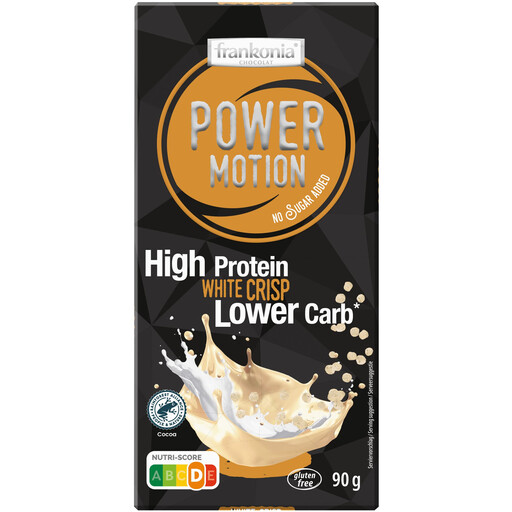
Frankonia Chocolat Power Motion White Crisp, 90 g
An option if you’re looking for white chocolate with no added sugar and a crunchy texture for your buffet.
The 9.0 g of sugar per 100 g listed for this variety is above the sugar-free limit. Before serving, check the pack for allergen information and the maltitol warning.
View at Joybuy
 No image available
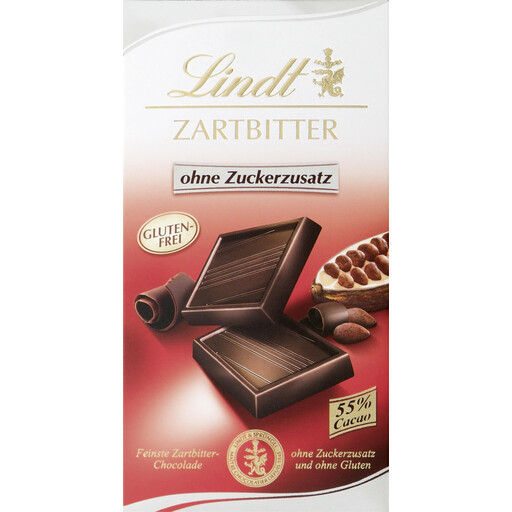
Lindt dark chocolate with no added sugar, 100 g
For a buffet that wants to offer a dark chocolate bar with no added sugar but does not need to make a sugar-free claim.
Lindt Germany lists 1.0 g of sugar per 100 g, so this variety is above the sugar-free limit. Check the allergen information and maltitol warning on the pack you have purchased.
View at Joybuy
 No image available
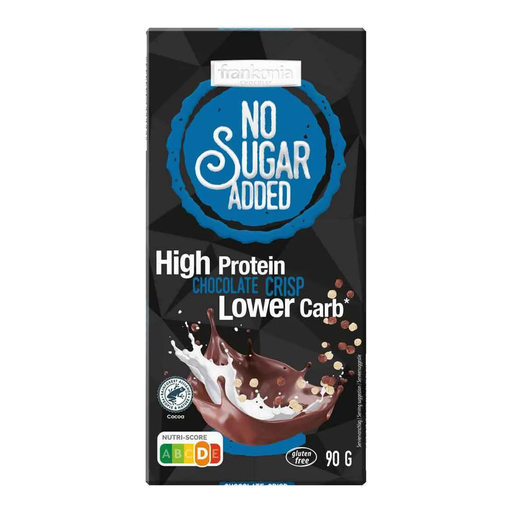
Frankonia Chocolat Power Motion Chocolate Crisp, 90 g
A crunchy chocolate option with no added sugar for hotels considering another recipe alongside a white chocolate variety.
If you are considering a sugar-free claim, the sugar content per 100 g on the specific pack is what matters. Check the allergen information and maltitol warnings on the pack too.
View at Joybuy
Frequently asked questions
Does ‘no added sugar’ mean the same as ‘sugar-free’?
No. Under EU Regulation (EC) No 1924/2006, a product labelled ‘sugar-free’ can contain no more than 0.5 g of sugar per 100 g. The words ‘no added sugar’ alone do not mean that it meets this limit.
Can chocolate with no refined sugar be labelled ‘sugar-free’ at the buffet?
Not on the strength of that claim alone. Despite containing no refined sugar, Lindt Germany lists 13.0 g of sugar per 100 g for EXCELLENCE Cacao Pur. The sugar content of the specific chocolate determines whether it can be labelled ‘sugar-free’.
Do guests need allergen information for unpackaged chocolate?
Yes. The required information about allergenic ingredients must be provided for unpackaged chocolate. Under Germany’s Food Information Implementing Regulation, it must be displayed prominently, clearly and legibly. Make sure it reflects the varieties actually on display.
What should you know about chocolate containing maltitol or xylitol?
Check the ingredients, sugar content and any relevant warnings for the specific variety. Germany’s consumer advice centre notes that consuming large amounts of sugar substitutes can have a laxative effect. The name of the sweetener does not replace checking the nutritional information.


