Which chocolate is right for whom?

Hosts with a strict sugar-free requirement

If you want to offer a chocolate bar that is explicitly sugar-free, check the “of which sugars” figure per 100 g. Lebensmittelklarheit sets the limit for this claim at 0.5 g; “no added sugar” doesn’t answer the same question.

Guests who are happy with “no added sugar”

Bars with a higher sugar content may also be suitable here. Lindt Deutschland lists 1.0 g of sugar per 100 g for its dark chocolate and 9.0 g for its milk chocolate. So the exact variety makes a difference.

Party groups looking for a vegan option

REWE describes Veganz Bio Schokolade No Added Sugar as vegan. However, its sugar content of 0.8 g per 100 g is above the figure Lebensmittelklarheit gives for “sugar-free”. If anyone has allergies, it’s also important to check the trace warnings.

What should you look for when buying?

First, decide whether your New Year’s Eve party needs a product that is strictly “sugar-free”, or whether “no added sugar” is enough. Then check separately for vegan options and any ingredients or allergen trace warnings.

What matters What to check Who it matters to
Explicitly sugar-free Compare the “of which sugars” figure per 100 g with the maximum of 0.5 g specified by Lebensmittelklarheit; check the ingredients list for sweeteners. If I want to put an explicitly sugar-free bar on the party table, “no added sugar” isn’t enough for me. Around 46% of consumers put this strict requirement first.
No added sugar Compare the sugar content per 100 g and ingredients for the specific variety; Lindt Deutschland lists 1.0 g for dark chocolate and 9.0 g for milk chocolate. I’m looking for a bar with no added sugar, even if it still contains some sugar. This is the main priority for around 27% of consumers.
Vegan option Check the vegan label, sugar content and trace warnings for the specific bar. For my guest list, I mainly want to offer chocolate labelled as vegan; I don’t assume that this also means it’s sugar-free or suitable for people with allergies. Around 18% of consumers put this first.
Sweeteners and allergen traces Check the ingredients, allergen and trace information, and any warnings about excessive consumption on the packaging. With several guests, my main concern is being able to identify which ingredients and trace warnings may matter to individual people. This is the top priority for around 9% of consumers.

Which common misconceptions can make choosing harder?

  • Assuming “no added sugar” means “sugar-free”

    These claims don’t mean the same thing. Lindt Deutschland lists 1.0 g of sugar per 100 g for its dark chocolate with no added sugar, and 9.0 g for its milk chocolate with no added sugar. Both are above the 0.5 g limit Lebensmittelklarheit gives for “sugar-free”.

    If “sugar-free” is a requirement, check the “of which sugars” figure per 100 g rather than relying on the front of the pack.

  • Assuming the sugar content tells you everything about nutritional value

    The sugar figure doesn’t tell you the energy content or serving size of a bar. Comparing products using this figure alone means overlooking other nutritional information.

    Check sugar and energy per 100 g separately, and consider how the bar will be portioned at your party.

  • Overlooking sweetener warnings

    According to Verbraucherzentrale, consuming large amounts of sugar alcohols can have a laxative effect. Depending on the product, the bars described contain sweeteners such as maltitol or erythritol; several product descriptions warn against excessive consumption.

    Keep the packaging with its ingredients and warnings available when serving, so guests can check the information for themselves.

  • Assuming “vegan” or “sugar-free” means allergen-free

    The vegan Veganz bar described by REWE may contain traces of almonds, hazelnuts and milk. Possible traces of various ingredients are also listed for No Sugarsugar dark chocolate.

    If anyone has allergies, check the specific pack and choose another bar if its information isn’t suitable for a guest.

Brands and chocolate bars to consider

No Sugarsugar

The dark chocolate described by REWE is a dark chocolate bar labelled as sugar-free.

  • REWE lists 0.5 g of sugar per 100 g for the 100 g bar, with at least 70% cocoa.
  • It contains erythritol and steviol glycosides. The product information lists possible traces of lactose, cereals containing gluten, tree nuts and peanuts, as well as a warning about excessive consumption.

Lindt

Lindt Deutschland describes dark and milk chocolate bars with no added sugar; the sugar content varies by variety.

  • Lindt Deutschland lists 1.0 g of sugar per 100 g for its dark chocolate and 9.0 g for its milk chocolate. Both are options if “no added sugar” is enough.
  • Both figures are above the sugar-free limit specified by Lebensmittelklarheit. The bars described contain maltitol; check the information about possible traces of nuts and almonds, as well as warnings about excessive consumption.

Veganz

REWE describes its Bio Schokolade No Added Sugar as a vegan, gluten-free bar.

  • The specific 80 g bar is labelled vegan and contains no added sugar.
  • REWE lists 0.8 g of sugar per 100 g and possible traces of almonds, hazelnuts and milk. This means the bar doesn’t meet the sugar-free figure specified by Lebensmittelklarheit.

Frankonia

The hazelnut chocolate described by Frankonia Schokoladenwerke is labelled “no added sugar”.

  • This specific hazelnut variety is an example of a bar where the no-added-sugar claim needs to be considered separately from the sugar content.
  • This hazelnut bar contains 10 g of sugar per 100 g and lists milk, hazelnuts and soya. This information doesn’t apply to all Frankonia products.

Joybuy: chocolate bars labelled “no added sugar”

These two Joybuy products are chocolate options for a New Year’s Eve party if “no added sugar” is suitable for your needs. If you specifically need a sugar-free bar, check the sugar content per 100 g on the packaging of each variety.
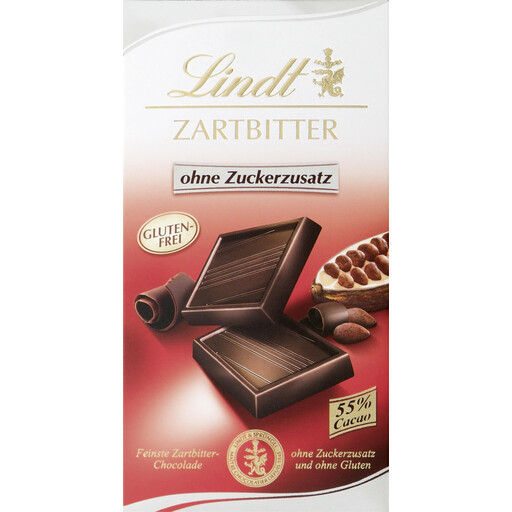
Lindt dark chocolate with no added sugar, 100 g

Lindt dark chocolate with no added sugar, 100 g

A dark chocolate bar for guests who are happy with “no added sugar”, but not for those with a strict sugar-free requirement.

Lindt Deutschland lists 1.0 g of sugar per 100 g and at least 55% cocoa for this variety; it is sweetened with maltitol. If anyone has allergies, check the ingredients and trace warnings on the specific pack.

View on Joybuy
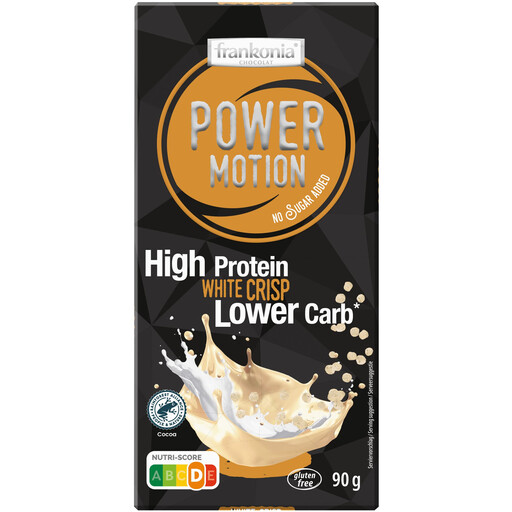
Frankonia Chocolat Power Motion No Sugar Added White Crisp, 90 g

Frankonia Chocolat Power Motion No Sugar Added White Crisp, 90 g

A white crisp chocolate option for your party selection if a bar labelled “No Sugar Added” is suitable.

The pack contains 90 g. Before serving, check the sugar content per 100 g, ingredients and allergen information for this specific variety; information about Frankonia’s hazelnut bar doesn’t apply to White Crisp.

View on Joybuy

Frequently asked questions

What sugar content should you look for in a bar labelled sugar-free?

Lebensmittelklarheit sets the limit for the “sugar-free” claim at 0.5 g of sugar per 100 g. Check the “of which sugars” figure in the nutritional information; a no-added-sugar claim isn’t a substitute for this figure.

Does “no added sugar” mean the same as “sugar-free”?

No. A bar with no added sugar can still contain sugar. Lindt Deutschland lists 1.0 g of sugar per 100 g for its dark chocolate with no added sugar, and 9.0 g for its milk chocolate with no added sugar, so check the variety you want.

Why is it important to keep the packaging handy when serving bars with sweeteners?

The packaging may include information that guests need to know before eating the chocolate. According to Verbraucherzentrale, consuming large amounts of sugar alcohols can have a laxative effect. Leaving the ingredients and product information somewhere visible lets guests check it before helping themselves.

Is a vegan chocolate bar automatically sugar-free or free from allergen traces?

No, you need to check each claim separately. REWE lists 0.8 g of sugar per 100 g for the Veganz Bio Schokolade No Added Sugar, which is labelled vegan, and says it may contain traces of almonds, hazelnuts and milk.