For shoppers with a specific sugar limit
If ‘sugar-free’ is your priority, the sugar content per 100 g is what counts. A 100% cocoa bar may appeal if you prefer chocolate that’s intense and not very sweet.


If ‘sugar-free’ matters to you, check the ‘of which sugars’ figure per 100 g: the Verbraucherzentrale sets the limit at no more than 0.5 g, which Lindt EXCELLENCE 100% meets exactly, according to Lindt Germany. Chocolate with no added sugar can contain more sugar. For a car journey, portion size, sweeteners, ingredients and protection from heat also matter.
If ‘sugar-free’ is your priority, the sugar content per 100 g is what counts. A 100% cocoa bar may appeal if you prefer chocolate that’s intense and not very sweet.
If you’d rather take milk chocolate, dark chocolate or bars instead of a 100% cocoa bar, compare the sugar content and sweeteners in each variety, as well as checking whether it says ‘no added sugar’.
A single bar is easy to pack for a stop along the way. When choosing snacks for your journey, the ingredients, portion information and storage instructions matter just as much as the format.
First decide whether you want to meet the sugar limit for ‘sugar-free’ or avoid added sugar. Then choose between a bar and a chocolate slab for your journey.
| What to consider | What to check | Who it matters to |
|---|---|---|
| Sugar content | Compare the ‘of which sugars’ figure per 100 g with the Verbraucherzentrale’s stated limit of no more than 0.5 g for ‘sugar-free’. | I want to rely on a specific sugar figure, even if the chocolate that meets it tastes less sweet. Around 40% of shoppers put this firm limit first. |
| No added sugar | Read the sugar content and ingredients. For products containing maltitol or xylitol, also check the consumption advice. | I want to avoid added sugar ingredients used for sweetening, but prefer sweeter chocolate to a 100% cocoa bar. This is the main consideration for around 40% of shoppers. |
| Portion for your journey | Check the weight of each bar, the ingredients and the storage instructions. Keep chocolate away from heat while travelling. | When packing, a single portion is what matters most to me; a bar with protein information may also be worth considering. Around 20% of shoppers prioritise convenience on the go and portion size. |
These claims don’t describe the same sugar content. Lindt Germany states that its milk chocolate bar with no added sugar contains 9 g of sugar per 100 g; the Verbraucherzentrale sets the limit for ‘sugar-free’ at no more than 0.5 g per 100 g.
If you want to stick to a specific limit, check the ‘of which sugars’ figure per 100 g in the nutrition information rather than relying on the front of the pack.
Lindt products containing maltitol and the Xucker bar containing xylitol carry a warning that excessive consumption may have a laxative effect. This is particularly relevant on a long car journey.
Before buying, check the ingredients and consumption advice on the specific pack.
Added sugar alone doesn’t tell you the full nutritional story: Lindt Germany states that its milk chocolate with no added sugar contains 510 kcal per 100 g.
If you want to compare nutritional values, also check the energy and fat figures per 100 g and take your planned portion into account.
Chocolate can melt at higher temperatures, making a bar messier to eat on the go.
Pack chocolate snacks away from sunlight and heat, and don’t leave them in a hot car during a longer stop.
Lindt offers EXCELLENCE 100% as well as milk and dark chocolate with no added sugar. When choosing between these bars, the sugar content matters more than the fact that both avoid added sugar.
Frankonia’s No Sugar Added range includes chocolate and bar formats, including a Chocolate Brownie bar.
The Crispy Chocolate bar is an individually portioned snack for shoppers who want a bar rather than a chocolate slab.
NEOH describes products in its range as ‘ZERO Added Sugar’. If you choose a particular variety for your journey, compare its product information individually.
This selection includes chocolate, chocolate bars and cereal bars for your journey, with product names that refer to added sugar or portion sizes. If you have a specific sugar limit, always check the figure on the individual pack: ‘no added sugar’ doesn’t mean ‘sugar-free’.
 No image available
The 50-g bar is easy to pack as an individual portion for your journey.
The ‘Sugar Free’ claim in the original product name doesn’t replace checking the ‘of which sugars’ figure per 100 g. Also check the ingredients and consumption advice on the pack.
 No image available
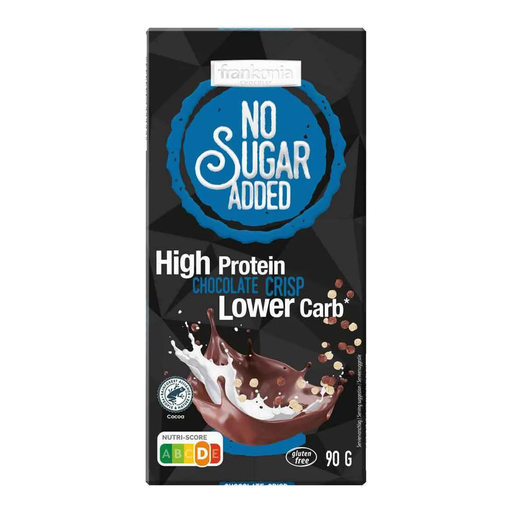
The 90-g pack may suit you if you want to take chocolate with no added sugar and portion it yourself.
If you have a specific sugar limit, compare the ‘of which sugars’ figure per 100 g. Also check the ingredients and storage instructions before your journey.
 No image available
The pack of twelve 45-g protein bars is a handy choice if you want to pack individual bars for different parts of your journey.
The product name states that it contains 30% protein and has no added sugar. If ‘sugar-free’ is your priority instead, check the sugar content per 100 g on the pack.
 No image available
The six 20-g cereal bars are an option for small, individually measured portions on the go – but they’re not a substitute for a chocolate bar if that’s the type of product you’re looking for.
The product name says that no sugar has been added. Even so, compare the ‘of which sugars’ figure per 100 g and check the ingredients on the specific pack.
 No image available
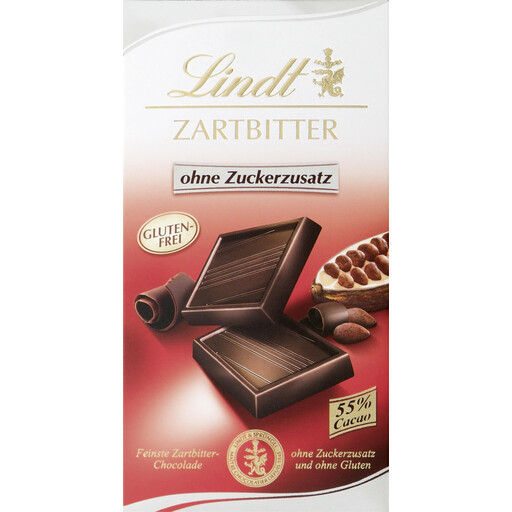
The 100-g bar may suit you if you’d prefer dark chocolate with no added sugar rather than individual bars for your journey.
The dark chocolate variety listed by REWE contains 1 g of sugar per 100 g, which is above the Verbraucherzentrale’s stated limit for ‘sugar-free’. Before setting off, decide how you’ll portion the bar and keep it away from heat.
‘Sugar-free’ refers to the sugar content: the Verbraucherzentrale sets the limit at no more than 0.5 g per 100 g. ‘No added sugar’, on the other hand, describes the ingredients and doesn’t mean the chocolate contains no sugar. If you have a specific sugar limit, always compare the nutrition information.
No. Lindt Germany states that its milk chocolate bar with no added sugar contains 9 g of sugar per 100 g, while the dark chocolate variety listed by REWE contains 1 g per 100 g. Both figures are above the Verbraucherzentrale’s stated limit of 0.5 g per 100 g.
The packaging for the products described that contain maltitol or xylitol warns that excessive consumption may have a laxative effect. Before your journey, read the ingredients and advice for the variety you choose, especially if you haven’t tried it before.
Keep chocolate bars and slabs away from sunlight and heat, and follow the storage instructions on the pack. Xucker warns that its Crispy Chocolate bar may melt at higher temperatures; don’t leave snacks like these in a hot car during longer stops.